
Collin McCloskey grew up in the Dallas Fort Worth area and met his co-founder Aadhi Boopalam in a biomedical engineering lab at UT Austin. They bought a van to shuttle students between 6th Street and campus housing, and it grew into Transport ATX, a fleet that reached three states and 50,000 rides. Late-night driver calls led them to build an AI agent, and a van that would not start during peak demand turned it toward maintenance.
HoneyRuns is Riggs, an AI fleet maintenance agent that reads telematics such as Samsara fault codes and mileage, texts drivers, books the shops a fleet already uses and turns invoices into service records once the owner approves. It started at $2 per vehicle a month with no markup on repairs and is moving to per-task pricing. About 1,000 vehicles are connected today, according to McCloskey.
Key takeaways
- McCloskey and Boopalam built HoneyRuns after running Transport ATX, a student van fleet that grew to three states and 50,000 rides, and losing a van to a breakdown nobody owned.
- Riggs works over text message instead of a dashboard because drivers, techs and shop owners answer texts all day, and every dashboard the founders used only added work.
- Right now a person approves every action, and the plan is a per-fleet dial so routine jobs like an oil change can move to do it and tell me.
- McCloskey says HoneyRuns' moat is the decision history: a record of what was proposed, what the owner changed and how it turned out.
- HoneyRuns wants 10,000 connected vehicles and 10,000 completed tasks in the next 12 to 18 months, up from about 1,000 vehicles today.
Before any of this
Startup.talk:Where did you grow up, and what was childhood like?
McCloskey:I grew up in the Dallas Fort Worth area and spent most of my childhood outside. Being outdoors felt like having a whole world to figure out, with no instructions and no limit on what you could make of it. I think that's where my creativity comes from.
I stayed in Texas through college at UT Austin, and I still prioritize getting outside to think and explore. It keeps the creative juices flowing.
Startup.talk:What first got you into building things?
McCloskey:I loved building with Legos as a kid. In college at UT Austin, Aadhi and I did a lot of case competitions together, and those showed me you could build a business the same way: take a real problem, put the pieces together and make it work.
Startup.talk:What was your first job, and what did it teach you?
McCloskey:I started a powerwashing business in high school. I knocked on doors to get the jobs, then went back and did the work myself.
It taught me how to sell to a stranger face to face, and that the job isn't done until the customer sees it done.
The road to HoneyRuns
Startup.talk:What made you start HoneyRuns?
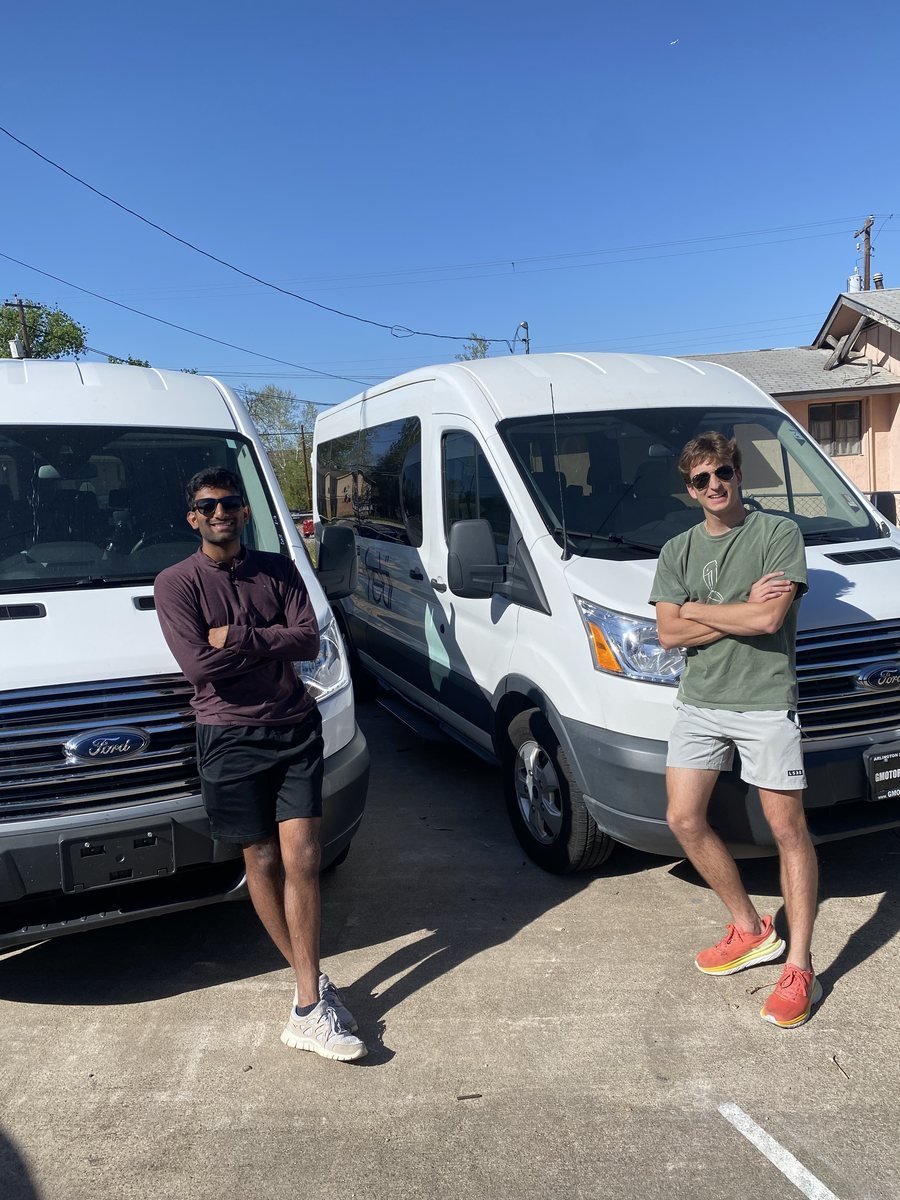
McCloskey:In college we bought a van and started shuttling students between 6th Street and where everyone lived, late at night. Then football games and other events. That became Transport ATX, and we grew it to 3 states (Texas, Louisiana and Georgia) and 50k rides.
The hard part was the calls. Drivers would call us at midnight on a Friday, so either we were awake (usually at the bars) or we slept with the ringer on. Most of those questions were already answered in our SOPs, and we knew AI could answer them, so we built an agent to support our drivers after hours. That's where HoneyRuns started.
As the fleet grew, maintenance became the bottleneck. We had all the software: telematics, a fleet management system, dashboards showing every alert. We still had a van sit during peak demand because it wouldn't start and nobody owned it. So we pointed the agent at maintenance. We still run that fleet on HoneyRuns, and now we do the same for other fleets and the repair shops that service them.
Startup.talk:What did you see in fleet maintenance that convinced you an AI agent could take the work over?
McCloskey:The signals were already there. Telematics tells you the fault code and the mileage. The problem is everything after that: somebody has to decide if it can wait, find a shop, get the driver to bring the vehicle in, and chase down the invoice.
Every fleet we talk to says a version of the same thing. A regional fleet manager told us, "Getting responses from people that are out in the field is really difficult." Another fleet lead said the techs don't read emails, and a rental fleet told us that when they send a driver 40 texts, the driver blocks the number.
That work is coordination between busy people, and coordination is something an agent can actually do.
“That work is coordination between busy people, and coordination is something an agent can actually do.”Collin McCloskey
Startup.talk:Why did you build Riggs around text messages instead of another dashboard?
McCloskey:Because that's where the people doing the work already are. Drivers, techs and shop owners answer texts all day; they don't log into portals. One fleet lead told us his techs don't even read emails.
We were also sick of dashboards. We had plenty at Transport ATX, and every one of them gave us more work. Riggs is the first thing we've used that takes work off your plate and keeps you updated, and texting lets him reach everyone without asking them to learn anything new.
Startup.talk:How did you and Aadhi Boopalam decide to build HoneyRuns together?
McCloskey:Aadhi and I met freshman year at UT Austin in a biomedical engineering lab. We both interned at big companies and did case competitions together, and at some point we decided we wanted to take a shot at doing our own thing together.

The product
Startup.talk:Why the name HoneyRuns?
McCloskey:When we launched the van business in Louisiana, we were boots on the ground with our lead driver, Doug. The team talked in runs: "I gotta run these kids to the airport," "I have to run this van to the shop." So a run became our word for a task.
HoneyRuns is the hive version of that. We pull in all the data, and Riggs is kind of the queen bee, monitoring, dispatching and finishing tasks for the team.
Startup.talk:How does Riggs decide what maintenance is due and which shop to book?
McCloskey:Riggs reads what the fleet already has: mileage and fault codes from telematics like Samsara, plus the vehicle's maintenance history. He checks a signal against that context before doing anything with it, so a one-off code doesn't turn into a shop visit.
Then he bundles related work into one trip and sends it to the shop or mobile mechanic the fleet already uses. Today he drafts the booking and the owner approves it.
Startup.talk:Where does the fleet owner stay in control, and what does Riggs do on its own?
McCloskey:Right now Riggs proposes and a person approves every action. Some things always come back to a human: safety calls, spend over the owner's limit (around $750 by default), anything you can't undo, and anything that touches a customer relationship.
The plan is a dial the owner controls per fleet. As Riggs's calls prove out, routine stuff like an oil change can move to "do it and tell me."
Startup.talk:How do telematics systems like Samsara feed into the workflow?
McCloskey:Telematics is where a run starts. Samsara, Geotab and Motive give us location, mileage, fault codes and engine data. Riggs turns that into a run: is this real, what needs doing, who does it, and when can the vehicle be down. When the work is done, the invoice gets turned into a service record so the history stays complete.
Startup.talk:Why did you choose $2 per vehicle a month and no markup on repairs?
McCloskey:We started at $2 a vehicle a month to keep the bill simple. We're moving to per-task pricing, billed on completed work.
That's the whole point of Riggs: you pay when something actually gets done (an oil change booked and finished, an invoice entered into your records). There's still no markup on repairs, so the fleet pays their shop what they already pay.
Startup.talk:What do you deliberately leave out of HoneyRuns?
McCloskey:We leave out the dashboard. Fleets already have plenty of those, and every alert you add is more work for somebody.
Riggs is an agent. We don't want to bury you in alerts; the goal is to take the work off your plate and tell you when it's done.
Positioning
Startup.talk:Who is HoneyRuns for, and what job does it do for them? Describe the person who gets the most value.
McCloskey:HoneyRuns is for service fleets of roughly 10 to 400 vehicles (HVAC, plumbing, electrical, delivery, charter), where somebody spends hours a week chasing maintenance: texting drivers, calling shops and keying in invoices.
The person who gets the most value is the ops or fleet manager who gets yelled at when a truck goes down. One told us, "I don't have time to be on the phone all day looking for a vendor in a specific market." Another said, "I don't wanna be the point of failure." Riggs takes the chasing off their plate.
Startup.talk:How do you view your positioning relative to Fleetio, Samsara's maintenance tools, Whip Around and fleet management companies that run maintenance for you? Is there another competitor you think of first?
McCloskey:Fleetio is where maintenance gets recorded and Samsara is where the signal comes from. We work with both. The part in between (deciding, booking, reminding the driver, closing out the invoice) is what we do.
Fleet management companies run maintenance through their own network. Riggs books the shops a fleet already uses, with no markup on repairs.
Startup.talk:What is your core moat in fleet maintenance?
McCloskey:Our moat is the decision history. Every run records what was proposed, what the owner approved or changed, and how it turned out. Over time that's a record of how each fleet actually makes maintenance calls, and it's what lets Riggs take on more without asking.
Being wired into a fleet's existing systems helps too. Once you're inside someone's operation, ripping it out is a pain.
“Our moat is the decision history.”Collin McCloskey
Startup.talk:What are some of the use cases for HoneyRuns that are not obvious and can add a lot of value to users? List as many as possible.
McCloskey:Riggs reads repair paperwork. On a 7,000-trailer fleet, he went through 30 repairs from 4 vendors and matched 223 of 223 invoice lines to the right vehicle. Along the way he flagged a $434.55 charge that looked billed twice and $2,500 with nothing written on the work order.
He takes a Samsara alert the last mile. When a fault code fires, Riggs gets the van into a shop the fleet already uses, follows it until it's back and keeps the record.
He fills mobile shops' calendars. Shops use Riggs to catch service that's coming due on fleets they already serve, and at one pest control fleet, monthly spend with their mobile shop went up 22%.
He holds drivers accountable. Transport ATX still runs on HoneyRuns mostly for that.
There's also one we didn't plan for: a fleet director told us Riggs has been a huge help with his job search.
Startup.talk:What is the one detail in HoneyRuns you are proudest of?
McCloskey:Riggs has a personality. He talks like your team, he knows how each person likes to communicate, and he reaches them that way.
It's a little thing with a big impact. Drivers, shops and the office all stay happy because nobody has to learn a new way of talking.
Launch
Startup.talk:What did you learn from launching on Product Hunt?
McCloskey:We launched on Product Hunt twice: in February as "We help mobile auto mechanics generate revenue faster," and in March as "IoT detects it. AI plans it. A technician fixes it." Each got a handful of upvotes and comments, and not a lot came of it.
The lesson was about timing: build up marketing momentum first, so there are people ready to show up on launch day. The other lesson was audience. Our buyers are fleet managers and repair shop owners, and most of them aren't on Product Hunt.
Startup.talk:Which feedback from the launch surprised you?
McCloskey:A comment from Matteo Agius-D'Arrigo, someone we didn't know. He said he'd seen so many fleet companies struggle with this exact pain, and that when a driver has to manually alert the business, it's already too late.
That's what we lived at Transport ATX: a van that wouldn't start during peak demand, nobody owning it, and the business out around $3k a day. It was good to see someone outside our world describe the problem the same way we do.
The hard part
Startup.talk:How many people use HoneyRuns today?
McCloskey:About 1,000 vehicles are connected and using Riggs right now, across fleets and the mobile repair shops that service them.
Startup.talk:What is a challenging time you had building HoneyRuns?
McCloskey:The hardest part has been adoption. The industry isn't known for being on the bleeding edge of technology, and bridging that gap is the challenge. People are worried about what happens when they turn something new on, and shops want to see it working before they believe it. Early on we didn't have the case studies to show them.
We're bootstrapped, so slow enterprise deals hurt (I wish those went a little faster).
“The hardest part has been adoption.”Collin McCloskey
Startup.talk:Who believed in you before there was anything to show? What did they say or do?
McCloskey:The angel who backed our first startup believed in us early. That company made collapsible helmets for electric scooters, and COVID hit about a week after we got the funding, so it didn't make it. The same angel had 2 school buses they'd bought cheap at auction and told us we could use them. That's how the transportation business started, and that business is where HoneyRuns came from.
More recently we brought on Travis Mjolsnes (formerly of RepairSmith) as an advisor. He's well known in the industry, and that's helped a lot.
Startup.talk:How do drivers and repair shops react to working with an AI agent?
McCloskey:In their words:
"It doesn't get lost. That's what you guys are really doing." (mobile repair shop owner)
"My mind's going a 100 miles an hour right now." (business development manager at a national tire and service chain, during a demo)
"This is awesome. I love a system like this integrating with AI." (fleet lead at the same chain)
"You literally tell the driver when to take it with the AI." (independent repair shop owner)
"HoneyRuns and Riggs gives me some time back." (fleet leader at a services contractor)
"It will really remove a very large percentage of our engagement with our email because we're just doing everything here." (same fleet leader)
"He literally gave me the business the next day." (mobile shop owner, after showing a fleet manager how they track his vehicles)
"Riggs has been a huge help with the search." (a fleet director, about his job hunt)
What it is all for
Startup.talk:What would make you say HoneyRuns has succeeded?
McCloskey:I'll feel like we've succeeded when Riggs has coordinated 10,000 oil changes across fleets in the US. At that point he's seen enough real work to get really good at it, and fleets can hand him more.
Startup.talk:What will running a vehicle fleet look like when agents handle most of the coordination?
McCloskey:Somebody still owns the fleet and sets the rules: spend limits, which shops, which vehicles can't be down on a Tuesday. The agents handle the back and forth between drivers, shops and the office.
The ops manager's day goes from chasing texts to reviewing the handful of exceptions that actually need them.
The road ahead
Startup.talk:What are your milestones for the next 12 to 18 months?
McCloskey:In the next 12 to 18 months, we want 10,000 connected vehicles, up from about 1,000 today, and Riggs completing 10,000 maintenance tasks for fleets.
We also want him doing more kinds of work: onboarding new vehicles and drivers, paperwork and data entry, and reporting, on top of scheduling maintenance.
Startup.talk:And where do you want HoneyRuns to be in five years?
McCloskey:In five years, I want Riggs to be a network for the industry, kind of like Boardy. He already knows the fleets, the vendors and the people in them, so he can connect them: fleets with shops and people looking for jobs with people hiring, and he can handle the transactions in between.
Startup.talk:What are your hopes and fears for a post AGI world?
McCloskey:My hope is that it makes everyone's life a lot easier. The midnight driver calls, the chasing, the retyping of invoices: agents take that, and people get to spend their time on creative, intellectual work instead of redundant tasks.
My fear is about speed. We need to grow fast enough to build critical mass before the ground moves under us.
This interview was conducted in writing and has been edited lightly for length and clarity.
About HoneyRuns
HoneyRuns is an AI fleet maintenance agent, Riggs, built by Collin McCloskey and Aadhi Boopalam in Austin, Texas, that coordinates drivers, shops and invoices for service fleets.
| Attribute | Verified Detail |
|---|---|
| Company | HoneyRuns |
| Founder(s) | Collin McCloskey |
| Country | USA |
| From | Dallas Fort Worth, Texas |
| Education | UT Austin |
| First job | Powerwashing business |
| Based in | Austin, Texas |
| Education | UT Austin (biomedical engineering lab) |
More founder interviews
 ScaScan
 FirstLook
 LoupeKit
 Jotted
For founders
Building something? Want to share your journey?
Tell us how it started, what nearly broke it and where it is headed. We will turn it into a story like this one.
Share your journeyFor readers
Want to read more human stories behind the startups?
New founder interviews and stories, as they are published.
Follow us on LinkedIn