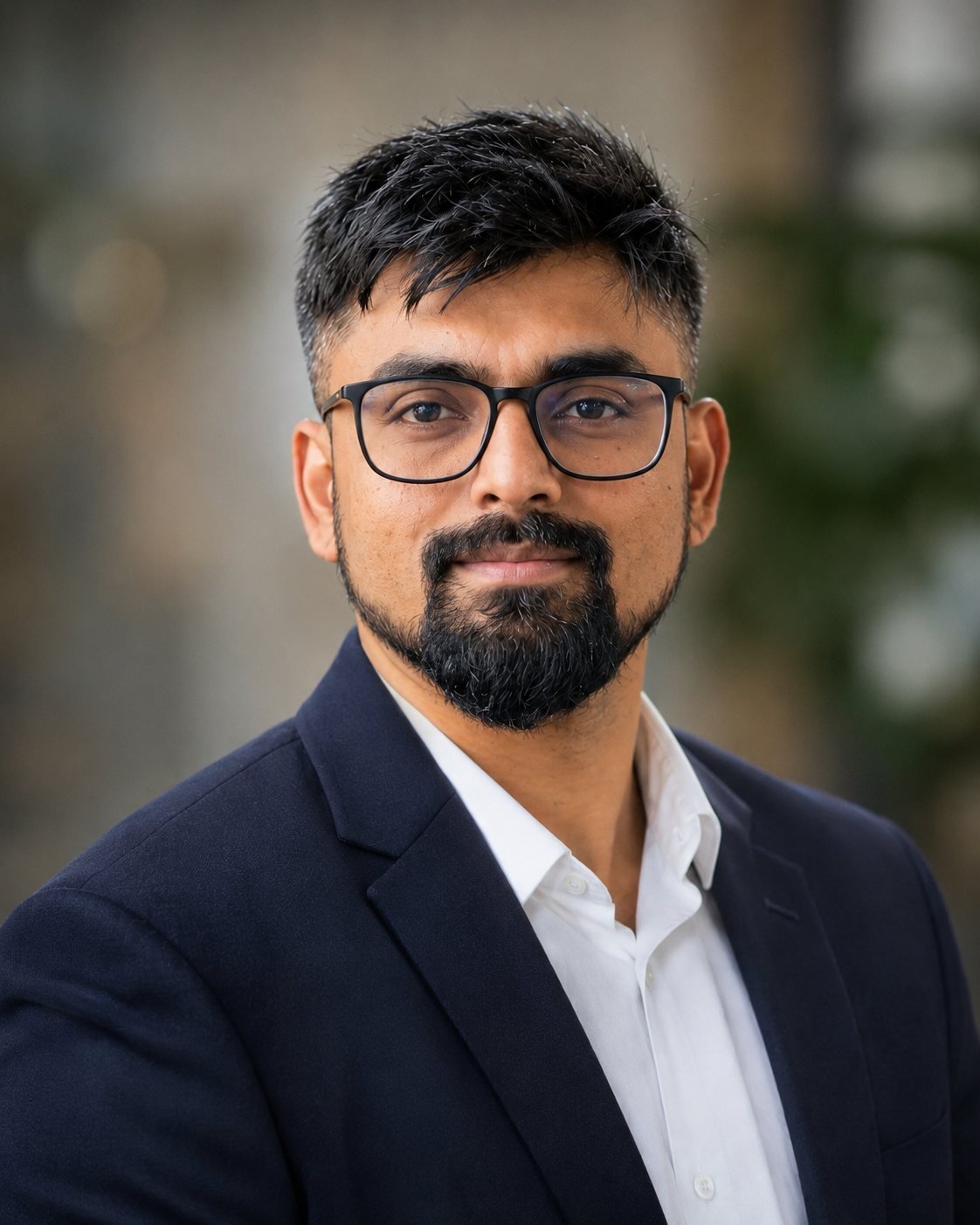
Machhindra Neupane was born in 1993 and grew up in Sitapaila, Kathmandu, where his parents had moved from a village in Nuwakot in search of a better life. The family was not wealthy, but his friends had computers, and he was playing Need for Speed by 1997. At school he doubted he would pass his School Leaving Certificate; he went on to earn a Bachelor of Information Management with first division at the National College of Computer Studies. Since 2017 he has built Android and Flutter apps at Himalayan Tech, Bidhee, Podamite Nepal and KrispCall, and today he works remotely as a Senior Android Engineer at DialBird.
ScaScan began as an Android document scanner and became a brand: free browser tools that process files on your own device, ScaScan Restaurant, which turns a photo of a printed menu into a QR menu with ordering, an AI keyboard, a habit app and a media authenticity checker. He builds it alone around his day job, with AI coding tools, and he is unusually candid about where it stands. We spoke about the LinkedIn video that led to his billing partner, why a free menu builder nobody used became a restaurant platform, and why, in his media checks, human review is the last step, not the first.
Key takeaways
- ScaScan is a privacy-first brand: 25+ free browser tools that process files locally where possible, plus ScaScan Restaurant, ScaScan AI Keyboard, UpHabit AI and the Media Signal Analyser.
- Machhindra builds it alone, around a full-time remote job as a Senior Android Engineer at DialBird, using AI coding tools to move without a team.
- Today: about 100 to 500 monthly users and no paying customer yet. Paddle payments are live, and the Google for Startups Cloud Program gave about $2,000 in credits.
- His targets: 1,000 to 3,000 monthly users and $100 to $500 in monthly recurring revenue within 12 months, then 5,000 to 10,000 users and $1,000 to $3,000 within 24 months.
Before any of this
Startup.talk:Where did you grow up in Nepal, and what got you into programming?
Neupane:I grew up in Sitapaila, Kathmandu. My parents originally came from a village in Nuwakot and moved to Kathmandu in search of a better life. I was born in 1993, and we were not a wealthy family. My parents worked hard, often working for wealthy families, but I grew up surrounded by people who had access to things we couldn't afford.
Interestingly, even though my family was poor, I was exposed to technology at a very young age because of my friends. I remember playing Need for Speed around 1997 and FIFA in the early 2000s. I also got to experience things like Toyota cars through my friends.
So, while I didn't personally own those things, I had the opportunity to experience them. Growing up in that environment gave me a different perspective. I could see what technology was capable of, even though my family couldn't afford it.
That early exposure made me curious about technology. Over time, my curiosity developed into an interest in computers and programming. Eventually, I became a software developer, and today I'm building my own technology products through ScaScan.
Looking back, I think growing up in a financially struggling family while being surrounded by technology played an important role in shaping who I am today.
Startup.talk:You studied at the National College of Computer Studies in Kathmandu. What did those years teach you?
Neupane:My journey at the National College of Computer Studies (NCCS) taught me something much more important than just academic knowledge. It taught me that hard work and determination can change your life.
To understand that, I have to go back to my school days. Honestly, I was never a strong student. I struggled with my studies, and at one point, I wasn't even confident that I would pass my School Leaving Certificate (SLC) examination.
But something unexpected happened during the final months before my SLC exams. My performance in mathematics suddenly started improving. Even today, I find it difficult to explain exactly how that happened. I started doing very well in mathematics and accounting, scoring around 80 to 90 or above in those subjects. Those marks helped improve my overall SLC results.
After that, I joined NCCS for my +2 education in Management. English was still a challenge for me, and I wasn't naturally good at every subject. But I kept working hard and eventually passed with a first division, around 60%.
For someone who once doubted whether he could even pass his school examinations, achieving first division was a dream come true.
After completing my +2, I decided I didn't want to continue studying only management. I was interested in technology, so I chose Bachelor of Information Management (BIM) at the same college. It was a combination of information technology and management, which gave me the opportunity to explore both fields.
My bachelor's journey wasn't easy either, but I continued putting in the effort and eventually graduated with first division again.
Looking back, NCCS taught me two things. Academically, it introduced me to information technology and helped me build the foundation for my future career. Personally, it taught me that your past academic performance doesn't determine your future.
I was once a student who wasn't sure he could pass his SLC. Years later, I completed my bachelor's degree with first division and went on to build a career in software development.
For me, that transformation is the most valuable lesson I took from NCCS.
“I was once a student who wasn't sure he could pass his SLC.”Machhindra Neupane
Startup.talk:You started as a junior Android developer in 2017. What was your first app?
Neupane:Actually, my first Android application wasn't a professional project. It was a simple expense-tracking app that I built myself while studying at the National College of Computer Studies (NCCS), probably during my fourth or fifth semester of my bachelor's degree.
At that time, I was just beginning to explore Android development. I wanted to understand how a real application worked, so I started building an expense tracker.
The app was quite simple. I used SQLite as a local database to store expenses offline. I learned how to create database tables, save and retrieve records, and display information in lists.
What made that project special to me was that I was figuring things out on my own. I wasn't just studying programming concepts anymore. I was actually applying them to build something that worked.
After that, I developed another Android application for credit management, which helped me gain more practical experience.
My professional Android development journey began in 2017 at Himalayan Tech, where I worked on a school management system. Later, I had opportunities to work on other projects, including Mero Lagani and Fence AI.
Looking back, that first expense tracker was a very small application compared to the projects I've worked on throughout my career. But it was important because it gave me my first practical experience of building an Android application from scratch.
That simple project was where my Android development journey really began.
Eight years of mobile apps
Startup.talk:You built apps at Himalayan Tech, Bidhee and KrispCall. Which project taught you the most?
Neupane:Honestly, I don't think I can choose one particular project or company that taught me the most. Every project was different, and each gave me an opportunity to apply my knowledge, explore new technologies, and solve different problems.
My professional journey started at Himalayan Tech in 2017. Interestingly, although I wanted to become an Android developer, I couldn't immediately get an Android development role. Instead, I worked with Angular for around seven months before moving into Android development, where I worked on a school management system.
Later, at Bidhee, I worked on a ride-sharing application. After that, I contributed to Mero Lagani, a stock-market application, while working at Podamite Nepal.
Another important part of my journey was KrispCall, where I worked on a VoIP application. That project involved both Android and Flutter development. It was also where I transitioned into Flutter while continuing to work with native Android functionality and plugins.
But there is something important about how I see my career.
I have always believed in learning things myself. Even in the early stages of my career, I had the curiosity and confidence to explore technologies independently. I didn't necessarily need someone to teach me everything step by step. When I faced something unfamiliar, I tried to understand it and figure out how to make it work.
I'm not saying I knew everything when I started, or that I haven't learned anything since then. Of course, my practical experience has grown significantly. But the fundamental mindset I had as a beginner is still the same today.
Technology changes, frameworks change, and projects become more complex. But my approach has always been to explore, experiment, and learn independently.
So, if you ask me which project taught me the most, I would say every project contributed to my experience, but self-learning has been the biggest influence on my development as an engineer.
I believe that mindset is also what eventually gave me the confidence to start building my own products.
Startup.talk:You now work as a senior Android engineer for DialBird, an international company. How did that change the way you work?
Neupane:Honestly, joining DialBird didn't significantly change the way I work because I was already familiar with international development practices during my time at KrispCall.
Although KrispCall is a Nepal-based company, its customers are international. We already followed professional software development practices, including Scrum, daily stand-up meetings, sprint planning, retrospectives, and team collaboration.
During my final seven to eight months at KrispCall, I was already handling responsibilities similar to those of a senior developer. Although I wasn't formally given the senior developer title due to internal organizational circumstances, my team trusted me with senior-level responsibilities.
When the opportunity at DialBird came, I went through their technical assessment, passed it, and was hired as a Senior Android Engineer.
Interestingly, KrispCall and DialBird operate in the same industry and offer competing communication products. Because of that, the transition was quite natural for me. I was already familiar with the technology, the industry, and the development processes.
So I wouldn't say joining DialBird completely changed my working style. The biggest difference was that my experience and responsibilities were now formally recognized through a senior engineering position.
For me, career growth isn't just about changing companies or getting a new title. It's about developing your abilities, taking responsibility, and consistently proving what you can do.
Startup.talk:You have advised Nepali developers to aim for a global stage. Why does that matter to you?
Neupane:I believe Nepali developers should aim for the global market because talent should not be limited by geography.
Let me give you my own example. My English was never very good. Even during my school days, I struggled with it. But just like my mathematics suddenly started improving before my SLC examinations, my English has also gradually improved over time.
Even today, I don't speak English like a native speaker, and I don't think I need to. I can understand English, communicate my ideas, and work with international teams. That's what matters.
I think many Nepali developers underestimate themselves because of language barriers or a lack of confidence. But you don't need perfect English or a foreign accent to work internationally. You need technical skills, good communication, and, most importantly, honesty.
For me, honesty and trust are extremely important. There are unreliable people everywhere, whether in Nepal or abroad. If you are honest about your abilities, take responsibility for your work, and deliver what you promise, you can build trust with international clients.
Another important factor is financial growth. Many Nepali developers already work with international clients through Nepal-based companies. We follow the same development practices, use the same technologies, attend Scrum meetings, and solve similar technical problems.
So my question is simple: If we are already doing work that meets international standards, why should we limit ourselves to the local market and local salary expectations?
I'm not saying Nepali companies are bad or that developers shouldn't work for them. They provide valuable opportunities. But if someone has the skills to compete globally, they should explore those opportunities instead of limiting themselves geographically.
Today, with AI tools like ChatGPT and other technologies, learning and communication have become easier than ever. We have more resources to improve our skills and solve problems independently.
I don't believe there is some fundamental difference between a Nepali developer and a developer working in Europe, Australia, or the United States. We all work with programming languages, frameworks, software architectures, and development standards.
The real difference is often access to opportunities, confidence, and financial rewards.
That's why I encourage Nepali developers to think globally. Improve your skills, develop your English communication, be honest about what you can do, and don't be afraid to approach international companies or clients.
You don't need to be perfect to start working globally. You need to be capable, honest, responsible, and willing to improve.
I believe Nepali developers have the potential to compete internationally, and they should have the confidence to explore that potential.
From tools to ScaScan
Startup.talk:Where did the idea for ScaScan come from?
Neupane:ScaScan actually started with a very simple idea. Initially, I was developing an Android scanning application inspired by apps like CamScanner. At that time, I was thinking about building a scanning tool, not an entire platform.
But as I continued developing it, my thinking started to change. I realized that I didn't want ScaScan to be limited to just one application or one specific purpose. I wanted to build a brand where I could create different kinds of useful tools and products.
That's when I started exploring browser-based tools that people could use for free.
At that time, AI was not as advanced or accessible as it is today. ChatGPT and DeepSeek were available, but AI coding agents were not as common or capable as they are now. I used my own programming knowledge, along with the available technologies, to start building free online tools.
One thing I always wanted to focus on was privacy, security, and honesty. I believe people should be able to use useful technology without unnecessarily compromising their personal information.
Even the name ScaScan reflects part of that thinking. It comes from the idea of scanning, examining, and understanding things. For me, it's also connected to truthfulness. I want ScaScan to represent tools that people can trust, rather than something misleading or fake.
But my vision for ScaScan is much broader than scanning.
I don't want to define ScaScan as only an image-processing platform, an AI platform, or a restaurant-management product. Today, we have free browser tools and products like ScaScan Restaurant, but tomorrow it could be something completely different.
I want ScaScan to be a place where I can continue experimenting, developing ideas, and turning them into useful products.
Right now, I know ScaScan is still small. We haven't built anything revolutionary yet, and I don't want to pretend otherwise.
But who knows what the future holds? Maybe one day, one of the most useful or innovative tools will come from ScaScan.
That is the real idea behind ScaScan. I don't want to limit what it can become before I've even had the opportunity to explore its full potential.
Startup.talk:Why the name ScaScan?
Neupane:The name ScaScan originally came from the idea of scanning. When I first started the project, I was developing an Android document-scanning application inspired by CamScanner, so I wanted a name connected to scanning.
But as my vision grew, the meaning of ScaScan also became broader.
For me, scanning is not just about scanning documents or images. It's also about examining things, understanding information, and finding the truth.
I wanted ScaScan to represent something people could trust. That's why privacy, security, and honesty became important parts of the brand.
I also didn't want a name that would limit us to one particular technology or industry. Today, ScaScan offers free browser-based tools, AI-powered features, and products like ScaScan Restaurant. In the future, it could include many completely different products.
So, although the name started with a simple document scanner, today it represents a much bigger vision.
For me, ScaScan is not just the name of an application. It's a brand where we can continue exploring ideas, building useful technology, and creating products that people can trust.
Startup.talk:You started with free browser tools that never upload files. Why build them that way?
Neupane:The main reason was privacy, security, and trust. These have been important parts of my vision for ScaScan from the beginning.
When I started building free browser tools, I had a simple question in my mind: Why should someone have to upload their personal files to a server just to perform a simple task?
For example, if someone wants to crop an image, compress a photo, or convert a file, many of these operations can be performed directly in their browser. There is no need to send their personal data somewhere else.
As a developer, I knew that modern browsers were capable of handling many of these tasks locally. So I wanted to use that technology to create tools that were free, simple, and privacy-friendly.
Another advantage was that browser-based processing could reduce server costs. Since I was building ScaScan with limited financial resources, this approach made sense both technically and financially.
But I also want to clarify something. Not every ScaScan product works entirely inside the browser. Some advanced AI features and SaaS products require server-side processing. My philosophy is that if something can be processed locally, we should try to process it locally. If a server is necessary, we should be transparent about it.
For me, privacy is not just a marketing feature. It's about respecting users and their data.
I want people to trust ScaScan because of how our products actually work, not just because we tell them to trust us.
That's the thinking behind our free browser tools, and it's a principle I want to carry forward as ScaScan grows.
“I want people to trust ScaScan because of how our products actually work, not just because we tell them to trust us.”Machhindra Neupane
Startup.talk:How do you build ScaScan alongside a full-time engineering job?
Neupane:Actually, the way I manage both is quite practical. I currently work remotely as a Senior Android Engineer at DialBird. Because of my experience and the nature of my work, I can usually complete my professional responsibilities in around four to five focused hours per day.
Once I finish my DialBird responsibilities, I dedicate the remaining time to ScaScan. I also have two days off each week, and I use much of that time to develop and improve ScaScan.
Another important factor is AI. Today, we have powerful tools like ChatGPT and other AI coding assistants that have completely changed how independent developers can build software.
I don't necessarily have to write every line of code manually anymore. My main responsibility is to come up with ideas, understand the requirements, define how a feature should work, and provide the right technical context and instructions to AI tools. They help me turn those ideas into working implementations much faster.
Of course, my years of programming experience are important here. I need to understand the architecture, evaluate the generated code, identify problems, and make sure everything works correctly. AI helps with implementation, but the technical decisions and responsibility remain mine.
This approach allows me to make progress on ScaScan without needing a large development team. What previously might have taken me several days of manual coding can sometimes be accomplished much faster with the right instructions and AI assistance.
So, for me, building ScaScan alongside a full-time job is possible because of three things: remote work flexibility, effective time management, and the ability to combine my programming experience with AI tools.
I take my responsibilities at DialBird seriously, but I also use my available time to build something of my own. That's how I'm gradually developing ScaScan while continuing my professional career.
Startup.talk:You work with Raynetic Tech Solutions on billing. How did that partnership start?
Neupane:The partnership with Raynetic Tech Solutions actually started through LinkedIn, and there's an interesting story behind it.
When I initially started ScaScan, my focus was on providing free online tools. I was building everything independently, and at that stage, ScaScan wasn't generating any revenue.
Since I'm based in Nepal, I didn't want to spend money registering and maintaining a company before the business had even started earning. I wanted to focus my limited resources on building useful products first.
However, as ScaScan started expanding, I realized that free tools alone wouldn't be enough to support my long-term vision.
I wanted to introduce advanced AI features, including image generation for restaurant menus, background processing, and media authentication tools. In the future, I also want to explore other products, such as VoIP and ride-sharing applications.
Developing and maintaining these services requires financial resources. I realized that ScaScan needed a sustainable business model and a way to accept international payments.
Interestingly, I connected with the person behind Raynetic Tech Solutions through LinkedIn. He had seen one of the videos I created and was impressed by my work. That's how our communication started.
We gradually got to know each other, discussed our ideas, and eventually began working together through Raynetic Tech Solutions.
I explained my situation and what I wanted to achieve with ScaScan, and he agreed to support me. That partnership helped me move toward offering paid services and handling international billing.
For me, the most interesting part is that the relationship didn't begin with a formal business proposal. It started because someone discovered my work, appreciated what I was doing, and we built a connection through LinkedIn.
It also taught me that sharing your work publicly can create unexpected opportunities. Sometimes, a simple video can lead to a meaningful business relationship.
Today, that collaboration is helping me develop ScaScan beyond its original collection of free tools while keeping my focus on building useful products for a global audience.
The product
Startup.talk:Who is ScaScan for, and what job does it do for them? Describe the user who gets the most value.
Neupane:I believe ScaScan is for everyone who can benefit from technology. My vision is not to limit it to one type of user, application, or industry. I want ScaScan to become a technology brand that develops practical solutions for different human needs.
One of my main motivations is to make technology more accessible, privacy-friendly, and efficient.
Today, AI is becoming part of almost everything. People use it for image generation, background removal, photo editing, and many other tasks. But I believe not every operation needs to depend on a powerful cloud-based AI model.
Modern devices already have significant processing capabilities. If we can perform certain operations directly in the browser or on the user's device, why should we unnecessarily upload personal files or depend on large remote systems?
That's one of the ideas behind ScaScan. I want to explore how we can use local processing and smaller AI models wherever practical. This can help protect privacy, reduce unnecessary server usage, and potentially reduce the computing resources and environmental impact associated with some tasks.
Of course, some advanced features require cloud-based AI, and I want ScaScan to support those technologies too. The goal is to choose the right technology for the problem rather than depend on the biggest model for everything.
Another important part of ScaScan is helping people and businesses solve real problems.
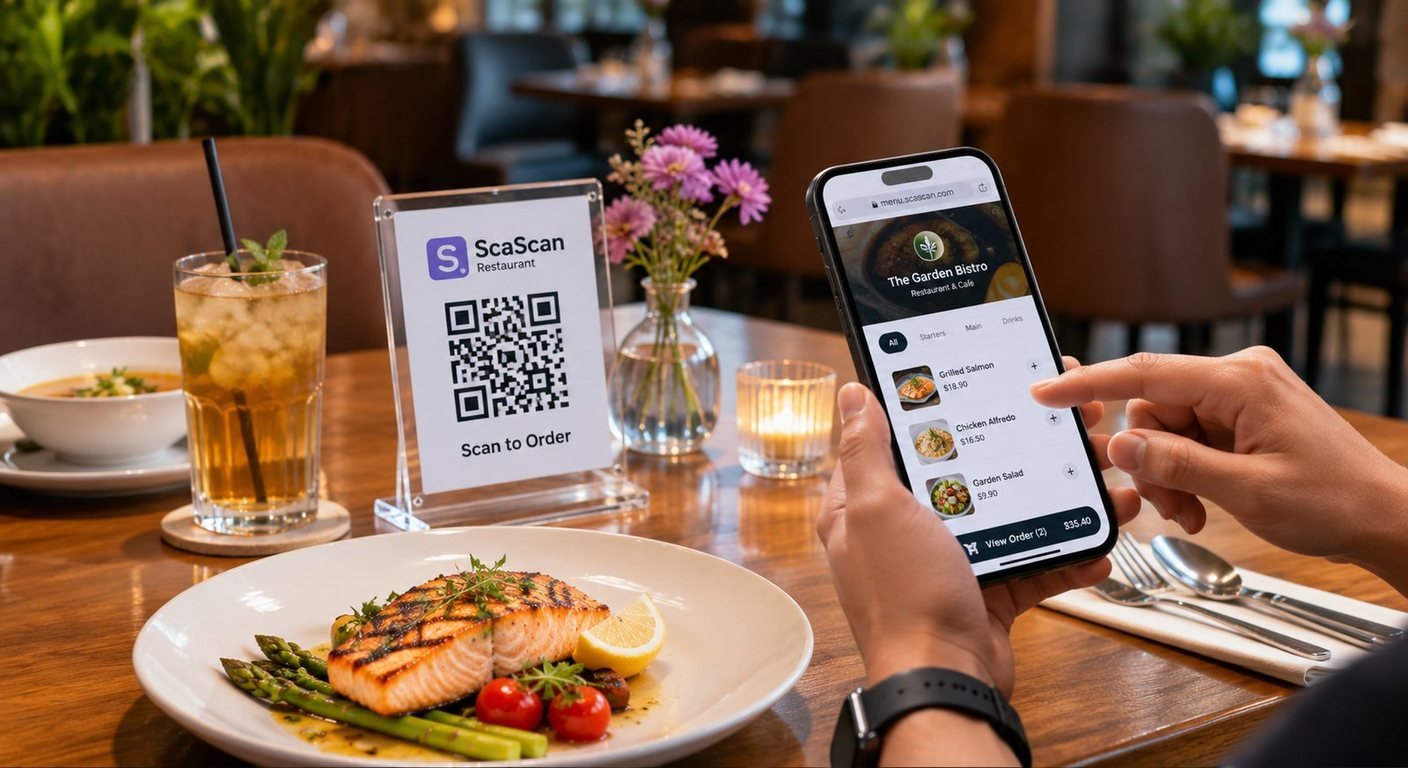
For example, ScaScan Restaurant helps restaurant owners create digital menus, generate QR codes, and manage customer orders without needing to develop their own software.
But restaurants are only one example. ScaScan is not intended to be just a restaurant-management company. I want to build different applications and services under the same brand, whether they involve AI, digital media, communication, business management, or entirely new ideas.
The people who get the most value from ScaScan are those who need practical technology but don't want unnecessary complexity, expensive solutions, or compromises to their privacy.
I also want to keep useful tools free wherever that's financially sustainable, while offering paid services for features that require ongoing infrastructure and AI processing.
Ultimately, I don't want ScaScan to be defined by one product. I want it to be defined by the problems it solves and the value it creates for people.
Today, ScaScan is still small, but my ambition is to keep exploring new ideas and building useful technology that can benefit people around the world.
Startup.talk:How do you view your positioning relative to MenuTiger and Menubly for restaurant menus, and iLoveIMG and TinyPNG for image tools? Is there another competitor you think of first?
Neupane:I respect platforms like MenuTiger, Menubly, iLoveIMG, and TinyPNG because they have already built successful products that solve real problems. But my original thinking behind ScaScan was a little different.
Let me explain how ScaScan Restaurant actually started.
Initially, I wasn't planning to build a restaurant ordering system or a paid SaaS product. My idea was much simpler. I wanted to create a completely free menu builder for small restaurants.
A restaurant owner could design a menu using ScaScan, export it as a PDF, upload that PDF to Google Drive, and generate a QR code linking to it. Customers could then scan the QR code and view the menu.
That was the entire concept. Restaurants wouldn't need to purchase hosting, maintain a complicated system, or pay a monthly subscription just to share their menus digitally.
When I explored the market, I noticed that many restaurant menu solutions were built around paid services. I wanted to offer a simpler alternative, especially for small restaurant owners who might not need an advanced management system.
But something interesting happened. People weren't using my free menu builder as much as I had expected.
As time passed and AI technology became more accessible, I started thinking about expanding the product. Instead of offering only a basic menu designer, I explored how AI could help restaurant owners create menus from photos, generate food images, and manage their menus more easily.
Gradually, that simple offline menu builder evolved into ScaScan Restaurant, which now includes hosted digital menus, QR-based ordering, and restaurant order management.
So ScaScan Restaurant wasn't originally planned as a direct competitor to MenuTiger or Menubly. It evolved from a simple free tool into a more complete restaurant solution.
I still want to preserve the original idea. Restaurant owners who only need to design and export a menu should have access to free tools without being forced into a paid subscription. More advanced services, such as hosting and online ordering, can be part of our paid offerings because maintaining those services requires infrastructure and ongoing costs.
The same philosophy applies to our image-processing tools.
When I look at platforms like iLoveIMG and TinyPNG, I appreciate what they have built. But with ScaScan, I'm particularly interested in privacy, local processing, and efficient use of technology.
I believe that if a task can be performed directly on a user's device, we should explore that option rather than unnecessarily uploading files to servers or using large cloud-based AI models.
That's why many ScaScan tools are designed to process files locally in the browser wherever practical.
I don't have one company that I consider my biggest competitor because ScaScan is not limited to restaurant software or image tools.
Today, we have free browser tools, AI features, and ScaScan Restaurant. In the future, I want to explore other products, including communication platforms and different business applications.
I'm also realistic about our position. ScaScan is still small, and established companies have much larger user bases and resources.
But my goal is not simply to copy what those companies have built.
I want ScaScan to become a technology brand that starts with simple human problems, provides free solutions wherever possible, and gradually develops more advanced products when there is a genuine need.
That's how ScaScan Restaurant evolved, and that's the philosophy I want to continue following.
Startup.talk:What is your core moat that prevents MenuTiger, iLoveIMG or anyone else from replicating your feature set?
Neupane:Honestly, I don't believe there is any technology that another company cannot replicate. If MenuTiger, iLoveIMG, or another established company wants to copy one of our features, they probably can. They have more resources, larger teams, and established customer bases.
But I don't think building a successful technology company is just about having features that nobody else can copy.
For me, ScaScan's strength comes from the way I approach problems.
For example, when I initially developed our menu builder, I wasn't thinking about subscriptions or competing with restaurant SaaS companies. I simply wanted small restaurant owners to design a menu for free, export it as a PDF, upload it to Google Drive, and share it through a QR code.
Later, that product evolved into ScaScan Restaurant, with AI features, hosted menus, and an ordering system. But the original free menu-building concept still exists.
Similarly, with our image-processing tools, my first question is whether we can solve the problem directly on the user's device. If we can, why unnecessarily upload their files to a server or use expensive cloud AI?
That's why privacy, efficient computing, and accessibility are important parts of ScaScan.
Another advantage is my development experience. I've worked with Android, Flutter, and different software systems for years. Today, I combine that experience with AI coding tools to turn ideas into working applications much faster than I could through manual development alone.
I don't need to build a large team every time I want to experiment with a new idea.
And unlike a company focused on one specific product category, I don't want to limit ScaScan to restaurant management or image processing. I want to explore different problems and develop solutions wherever I see opportunities.
However, I also understand that these things are not an unbeatable competitive moat. Other developers can use AI, build privacy-focused tools, and launch new products too.
ScaScan is still at an early stage. We haven't yet built the large customer base, brand recognition, or ecosystem that would make it difficult for someone to compete with us.
I believe those advantages have to be earned over time by building reliable products, understanding users, improving continuously, and gaining their trust.
So, I wouldn't say my moat is a feature that competitors cannot copy. My goal is to build a company that people continue to choose because they trust its products, appreciate its approach, and find genuine value in what it creates.
Features can be copied. Building and maintaining that trust is a much longer process, and that's what I want to focus on with ScaScan.
“Features can be copied. Building and maintaining that trust is a much longer process”Machhindra Neupane
Startup.talk:What are some of the use cases for ScaScan that are not obvious and can add a lot of value to users? List as many as possible.
Neupane:I think the interesting thing about ScaScan is that even a simple tool can solve problems beyond its original purpose.
For example, our background remover isn't useful only for photo editing. A small online seller can use it to prepare product images without paying a professional designer.
Our image privacy tools can help people check whether a photo contains sensitive metadata, such as location information, before sharing it publicly.
Our media analysis tools can help journalists, researchers, and ordinary internet users investigate potentially AI-generated or manipulated content. Of course, AI detection isn't always conclusive, but these tools can provide useful signals.
Another interesting example is ScaScan Restaurant.
Initially, I built a completely free menu builder. A small restaurant could design a menu, export it as a PDF, upload it to Google Drive, and generate a QR code. It didn't need to purchase an expensive restaurant management system just to offer a digital menu.
Later, that evolved into a more advanced restaurant platform with AI-assisted menu creation, hosted menus, and customer ordering.
But even the free menu builder can be useful beyond restaurants. Small cafes, home-based food businesses, catering services, and temporary food stalls could use similar digital menus.
I also see opportunities in education, freelancing, and small businesses. Students can use image and document utilities, freelancers can prepare digital assets, and small businesses can create QR codes and other materials without purchasing complicated software.
One area I'm particularly interested in is using the computing power people already have.
Today, almost everyone talks about using larger AI models, but I believe some tasks can be completed directly on users' devices or with smaller models. That can help protect privacy, reduce operating costs, and avoid unnecessary cloud processing.
These are only a few examples.
My broader vision is that ScaScan shouldn't be limited to the obvious purpose of each tool. I want to keep exploring how existing technology can be used to solve different human problems.
Sometimes, a simple free tool can provide more practical value to someone than an expensive, complicated application. That's the kind of opportunity I want ScaScan to explore.
Startup.talk:The Menu Builder turns a photo of a printed menu into a live QR menu. What was hardest to get right?
Neupane:Actually, converting a photo of a printed menu into a digital menu is not the most difficult part anymore, especially with how powerful AI models have become.
I think the interesting part is how I designed the system from the beginning.
When I initially developed ScaScan Menu Builder, it was completely offline. There was no server database or hosted ordering system. I simply wanted restaurant owners to create their menus, design them, export them as PDFs, and share them through QR codes.
But because of my software engineering experience, I decided to use a structured JSON format to manage the menu data from the beginning.
Everything, including categories, menu items, descriptions, prices, and image references, was organized in JSON.
That architectural decision became very useful later.
When I started introducing AI-powered menu scanning, I didn't need to completely redesign the application or change its underlying data structure.
The process is quite straightforward. A restaurant owner uploads a photo of a printed menu. AI analyzes the image and extracts the information, including food names, categories, descriptions, and prices. That information is then converted into the same JSON structure the Menu Builder already understands.
Once the JSON is generated correctly, the existing system can use that data to create the digital menu, apply different designs, and prepare it for publishing.
That's the beauty of the architecture. The Menu Builder doesn't really care whether the JSON was created manually by the restaurant owner or generated automatically using AI.
Of course, AI extraction isn't always perfect. Different menu layouts, image quality, and unclear text can affect the results, so users still need the ability to review and correct the information.
But the most important thing is that I didn't have to rebuild the entire system when AI became more capable.
If you ask me what was hardest to get right, I would say it was creating a flexible foundation that could evolve without breaking the original product.
At the beginning, I was just building a free offline menu designer. I didn't know it would eventually become an AI-powered menu creation and restaurant ordering system.
Looking back, choosing JSON as the common data structure was one of the most useful technical decisions I made. It allowed me to introduce new capabilities while keeping the core architecture largely unchanged.
For me, that's an important lesson in software engineering: sometimes a simple architectural decision made early can make future development much easier.
Startup.talk:You also built an AI keyboard and UpHabitAi. How do they fit with ScaScan?
Neupane:Both ScaScan AI Keyboard and UpHabit AI fit naturally into my vision for ScaScan because, for me, ScaScan is about using technology to improve people's lives.
I never wanted ScaScan to be limited to one application or one industry. My goal is to build different tools that help people solve problems, improve their abilities, and develop better habits.
For example, ScaScan AI Keyboard focuses on improving communication. It helps people write better using AI-powered features such as grammar correction, translation, professional tone, and text improvement.
I believe communication is an important part of personal and professional growth. Not everyone is confident in English or writing, but that shouldn't prevent them from expressing their ideas effectively. ScaScan AI Keyboard helps make that process easier.
UpHabit AI takes a different approach. It focuses on understanding and improving people's habits.
The idea behind UpHabit AI is to analyze people's habits and behavioral patterns, identify areas where they could improve, and provide useful AI-powered suggestions.
Instead of simply tracking habits, I want it to help people understand their behavior and make positive changes in their daily lives.
That's also where the name ScaScan connects with the product. Just as scanning helps us examine and understand something, UpHabit AI applies that idea to personal habits. It helps people examine their routines, recognize patterns, and discover opportunities for improvement.
Although these two applications solve different problems, they share the same underlying philosophy.
ScaScan AI Keyboard helps people improve how they communicate, while UpHabit AI helps people improve how they live and manage their habits.
I don't believe AI should exist only to generate content or automate tasks. I believe it should also help people understand themselves, develop useful skills, and make better decisions.
Ultimately, my vision for ScaScan is not just to build applications. It is to build technology that genuinely benefits people.
That's why both ScaScan AI Keyboard and UpHabit AI belong within the ScaScan vision. They are different products, but they work toward the same goal: helping people improve through technology.
Startup.talk:Your principle is that AI should strengthen human judgment, not replace it. Where does that show in your products?
Neupane:I believe AI should help people understand things better and make more informed decisions, but it should not completely replace human judgment.
One example of this philosophy is ScaScan Media Signal Analyser, which helps people investigate whether images and videos may be AI-generated or manipulated.
Today, AI-generated content is becoming so realistic that even humans sometimes struggle to distinguish between real and artificial media. And interestingly, AI detection systems themselves are not always accurate.
That's why I don't believe we should depend on a single AI model to decide whether something is real or fake.
My approach is to build a verification process with multiple stages.
First, our media analysis tool uses technical libraries and algorithms to examine different signals in an image or video. This initial analysis can run locally on the user's device, supporting our privacy-first approach.
If the result is uncertain or suspicious, the next stage involves more advanced AI analysis through external AI services, such as Google's AI models.
But even then, AI cannot guarantee that its conclusion is correct.
That's where human judgment becomes important.
My longer-term plan is to introduce a human verification stage for cases where automated analysis cannot reach a reliable conclusion. A human reviewer could examine the evidence, investigate the source, and consider the context before reaching a more informed assessment.
The important thing is that machines and humans have different strengths. Computers can analyze large amounts of technical information quickly, while humans can consider context, intention, and circumstances that automated systems might miss.
The browser-based analysis is already working, while the broader AI-assisted and human-review workflow is something I'm continuing to develop.
And this philosophy is not limited to media analysis. I want to apply it across future ScaScan products.
I don't want AI to become a system that simply tells people what to believe. I want it to become a tool that helps people investigate, understand, and decide for themselves.
For me, that is the real meaning of using AI to strengthen human judgment rather than replace it.
Launch
Startup.talk:When did ScaScan go live, and what happened in the first weeks?
Neupane:When I first launched ScaScan, honestly, almost nothing happened.
I had built the website and made the tools available to the public, but there were hardly any visitors. Nobody really knew about ScaScan.
The biggest challenge was marketing. I was building everything independently, and I didn't have a proper marketing budget. Even today, my marketing resources are very limited.
I also realized that simply launching a website doesn't mean people will automatically discover it. Google indexing was slow, and only around 35 to 36 pages were getting indexed, despite having more content and tools available.
So the first few weeks were very quiet. There was no sudden growth, no large number of users, and no exciting success story to share.
But I kept trying.
I continued developing tools, improving the website, working on SEO, and exploring different ways to reach people. Sometimes I would make changes and still see almost no results, but I didn't stop.
Actually, I think this is something many people don't understand about building a startup. Developing a product and attracting people to use that product are two completely different challenges.
As a software engineer, I know how to build applications. But getting people to discover those applications is another skill that I'm still learning.
ScaScan is still at an early stage, and attracting users remains one of my biggest challenges. I'm not going to pretend that everything became successful immediately after launch.
The reality is that ScaScan didn't grow because of a successful launch. It is still moving forward because I keep trying, experimenting, and improving it, even when the results are very small.
For me, that's what the first few weeks taught me: building something is only the beginning. Getting people to know about it and trust it is the real challenge.
Startup.talk:Milestone one was paid plans through Paddle. Who were your first paying users?
Neupane:Actually, we haven't acquired our first paying customers yet, and I want to be honest about that.
Integrating Paddle was an important milestone for ScaScan because it allowed us to move beyond offering only free tools and start building a sustainable business model.
Initially, ScaScan was completely focused on free browser-based tools. But as I started introducing advanced AI features and products like ScaScan Restaurant, I realized that some services would require ongoing infrastructure, AI processing, and hosting costs.
That's why I decided to introduce paid plans.
However, developing a product and finding paying customers are two different challenges.
As a software engineer, I can build the application, integrate payment systems, and implement technical features. But marketing and customer acquisition are areas I'm still learning.
Since ScaScan is bootstrapped and my marketing budget is very limited, attracting our first customers has been difficult.
Right now, my focus is on improving the products, understanding what users actually need, and finding ways to reach the right audience.
I don't want to claim that ScaScan is already a successful business just because we've implemented a payment system.
For me, Paddle integration was a technical milestone. Getting our first genuine paying customer will be the real business milestone.
And that's something I'm still working toward.
Startup.talk:ScaScan was accepted into the Google for Startups Cloud Program. What will you use it for?
Neupane:Getting accepted into the Google for Startups Cloud Program was an important milestone for ScaScan, especially because I'm building everything with very limited financial resources.
We received around $2,000 in cloud credits, which may not sound like a huge amount for an established company, but for a bootstrapped project like ScaScan, it is valuable support.
My main goal is to use these resources to develop and experiment with more advanced AI-powered products.
For example, one of the products I'm currently working on is ScaScan Media Signal Analyser, which helps people investigate whether images and videos may be AI-generated or manipulated.
The initial analysis already works using browser-based technical libraries. But I want to introduce additional AI verification using more powerful models, including Google's AI technologies, when the initial analysis is uncertain.
My longer-term vision is to combine technical analysis, AI verification, and human judgment to create a more reliable verification process.
Another area is AI-powered image processing and content generation. We already have features such as AI-assisted menu creation and image generation, and I want to continue improving them.
However, I don't want ScaScan to become completely dependent on expensive cloud AI.
My philosophy is that if something can run locally on a user's device, we should try to process it there. But when we genuinely need powerful AI models or cloud infrastructure, that's where Google Cloud can help us experiment and scale.
The credits also give me an opportunity to test new ideas without immediately worrying about every infrastructure expense.
And I want to clarify something: these are cloud credits, not direct financial investment or revenue. We still have to build useful products, attract users, and eventually generate sustainable income.
For me, the biggest benefit is the freedom to experiment.
ScaScan is not limited to one application. I want to continue exploring different technologies and developing products that genuinely benefit people.
I don't know which ScaScan product will become the most successful in the future. But support like this gives me more opportunities to explore ideas, test them, and hopefully turn some of them into something valuable.
The hard part
Startup.talk:ScaScan is bootstrapped. How do you decide where to spend your own money and time?
Neupane:Actually, because ScaScan is completely bootstrapped, I have to be very careful with both my money and my time.
I don't have investors or a large financial budget behind ScaScan. I'm still working as a Senior Android Engineer at DialBird, and my income from that job helps me continue developing my own products.
So I try to spend money only where it is necessary.
For example, when I started ScaScan, I focused on free browser-based tools. One reason was privacy, but another advantage was cost. If a tool can process an image or perform a task directly on the user's device, I don't need to pay for expensive server infrastructure.
That allows me to provide useful tools for free while keeping operating costs low.
I also didn't want to spend money registering and maintaining a company before ScaScan started generating revenue. Later, when I needed international billing for paid services, I received support through my partnership with Raynetic Tech Solutions.
Time is another important resource.
Since I work remotely at DialBird, I can usually complete my professional responsibilities in around four to five focused hours per day. I dedicate much of my remaining time, including my two weekly days off, to ScaScan.
Another major advantage is AI. I use ChatGPT and other AI coding assistants to help turn my ideas into working applications.
Because I already have years of software engineering experience, I can define the architecture, explain the requirements, review the implementation, and solve technical problems without needing to hire a large development team.
I'm not saying AI does everything perfectly. But it has significantly reduced the time and money I need to experiment with new ideas.
Startup.talk:How many people use ScaScan today?
Neupane:Right now, ScaScan is still at an early stage. I would estimate that around 100 to 500 people use or visit our free tools each month.
Most of our traffic comes from people discovering the tools through search engines or other online sources. Since our marketing budget is very limited, we're still working on improving our visibility and reaching more users.
At the moment, we haven't acquired any paying customers. Although we've introduced paid plans through Paddle and launched products like ScaScan Restaurant, converting visitors into paying customers is still a challenge.
I don't want to exaggerate our numbers or pretend that we're growing faster than we actually are.
For now, my focus is on improving the products, attracting more users, and understanding what people genuinely find useful.
We have a small number of free users, no paying customers yet, and a lot of work ahead of us. But ScaScan is live, the products are working, and I'm continuing to build and improve them.
Startup.talk:You are exploring restaurant technology and media authenticity at the same time. How do you choose between them?
Neupane:Actually, I don't see restaurant technology and media authenticity as two competing ideas. They are different products, but both fit into my broader vision for ScaScan.
As I mentioned earlier, I don't want ScaScan to be limited to one industry. My goal is to build technology that solves real problems and benefits people.
For example, ScaScan Restaurant started as a simple free offline menu builder. I initially wanted to help small restaurants create digital menus without paying for expensive software. But as I continued developing it and AI technology improved, I expanded it into a restaurant ordering and management system.
On the other hand, ScaScan Media Signal Analyser came from a completely different problem.
Today, AI-generated images and videos are becoming increasingly realistic. Sometimes, even humans cannot easily identify whether content is authentic or AI-generated. I believe this will become an important challenge as AI continues developing.
That's why I'm working on a system that combines technical analysis, AI verification, and eventually human judgment to help people investigate digital media more effectively.
So how do I choose between them?
I think the answer is practical value, available resources, and opportunities for growth.
Both products are already working in their current forms, although some advanced features are still under development. Since I'm building ScaScan independently, I have to manage my time carefully.
I don't want to spend all my resources developing one product while completely abandoning the others. At the same time, I understand that I cannot give every product equal attention.
I want to observe how people use these products, understand their problems, and gradually focus more resources on the areas where I see genuine demand and opportunities.
AI coding tools also make this approach more practical. Because of my software engineering background, I can use AI assistance to develop and improve different products without maintaining a large development team.
But I also recognize that building products is not the same as building a successful business. Right now, attracting users and generating revenue are still major challenges for ScaScan.
For me, it's not about choosing restaurant technology over media authenticity, or vice versa. It's about identifying which problems are worth solving and which solutions people genuinely find valuable.
If one product starts attracting more users or shows stronger commercial potential, naturally I will give it more attention and resources.
But I don't want to permanently limit ScaScan to whichever product becomes successful first.
My long-term vision is to create a technology brand where different products can exist under the same philosophy: making technology useful, accessible, privacy-conscious, and beneficial to people.
Startup.talk:What is a challenging time you had building this company?
Neupane:Honestly, the biggest challenge I've faced while building ScaScan is money.
As a software engineer, I have confidence in my technical abilities. I've spent years developing applications, working with different technologies, and solving complex problems. Today, with AI tools like ChatGPT and other coding assistants, I feel even more confident about turning my ideas into working products.
I have so many ideas for ScaScan, and I believe I can build many of them. But building something and having the financial resources to grow it are two different things.
For example, I can develop an application, deploy it, and make it available to the public. But after that, I need users. Reaching those users requires marketing, and marketing requires resources that I currently don't have.
Even today, ScaScan has only around 100 to 500 estimated monthly free users, and we haven't acquired our first paying customer.
That's not because the applications aren't working. The bigger problem is that many people simply don't know ScaScan exists.
Another challenge is the cost of infrastructure, AI services, and maintaining products as they grow. Although I try to reduce these expenses through browser-based processing, efficient architecture, and AI tools, some costs are unavoidable.
That's also why support like the Google for Startups Cloud credits is valuable to me.
If I had sufficient financial resources, I believe I could develop and expand ScaScan much faster. I could invest in marketing, infrastructure, and the people needed to support different products.
Of course, money doesn't guarantee success, and building a business involves challenges beyond programming. But right now, financial limitations are the biggest obstacle between my ideas and what I want ScaScan to become.
I don't feel limited by the number of ideas I have or my ability to build software. I feel limited by the resources available to bring those ideas to people.
That's the most challenging part of building ScaScan as a bootstrapped founder.
What it is all for
Startup.talk:Who believed in ScaScan before there was anything to show? What did they say or do?
Neupane:Honestly, no one supported ScaScan in the beginning. There wasn't anyone encouraging me, investing in my idea, or telling me that ScaScan would become successful.
I started ScaScan myself because I felt that I wanted to contribute something meaningful to the world.
I've been working as a software engineer for years, building applications and products for different companies. But at some point, I started thinking: Why shouldn't I use my knowledge and experience to create something of my own that could benefit people?
That's where my motivation came from.
I didn't start ScaScan because someone believed in my idea or promised to support me. I started because I believed I could build something useful.
Even today, ScaScan is still small. We have limited users, no paying customers yet, and very little money for marketing. But I continue developing it because I believe the idea is worth pursuing.
I don't know whether ScaScan will become a big company in the future. Maybe it will, maybe it won't. But I want to give my ideas a real opportunity rather than spend my life wondering what would have happened if I had tried.
So, if you ask me who believed in ScaScan before there was anything to show, my answer is simple: I did.
And that belief was enough for me to get started.
“So, if you ask me who believed in ScaScan before there was anything to show, my answer is simple: I did.”Machhindra Neupane
Startup.talk:Why does media authenticity matter to you, and why keep a human reviewer in the loop?
Neupane:Media authenticity matters to me because I believe people deserve to know whether the information they see online is trustworthy.
Today, AI can generate incredibly realistic images and videos. Sometimes, even advanced AI models cannot confidently determine whether something is real or AI-generated. That creates a serious problem because people can be misled by manipulated content without even realizing it.
That's why I'm developing ScaScan Media Signal Analyser. But my approach is a little different. I don't want to depend entirely on one AI model to decide whether something is real or fake.
My idea is to create a step-by-step verification process.
First, we assume that someone is using our tool because they genuinely don't know whether an image or video is authentic.
The first stage uses browser-based libraries and technical analysis to examine metadata, file characteristics, and other signals. If the system finds strong evidence, it can explain those findings to the user.
But what happens if the metadata has been removed, or the technical analysis cannot reach a reliable conclusion?
That's where the second stage comes in.
Users can choose to continue with a more advanced investigation using powerful cloud-based AI models. Because these models require additional computing resources and API costs, this stage can be offered as a paid service.
However, even advanced AI models cannot guarantee accurate detection. An image might be AI-generated without containing obvious technical signals, or a genuine image might look artificial to an automated detector.
So if the system still cannot provide a reliable assessment, the user can choose a third stage: human review.
Human review is the final stage, not the first.
A human reviewer can examine the available evidence, investigate the source, consider the context, and provide an assessment. Of course, even human experts cannot always determine authenticity with complete certainty, but their judgment can add another valuable perspective.
That's the verification process I'm working toward. The initial browser-based analysis is already available, while the advanced AI and human-review workflow is part of the system I'm continuing to develop.
But I also want to explain that my vision for ScaScan goes beyond detecting AI-generated media.
I believe the internet is becoming increasingly difficult to navigate because people are constantly exposed to misleading, harmful, or unwanted content.
In the future, I want to explore whether ScaScan can help people take greater control over the content they consume.
For example, imagine an AI-powered system that understands a user's content preferences and helps filter unwanted material across different digital platforms.
I know that building something like this would be technically challenging. Android, iOS, and other platforms place restrictions on how applications can access information from other apps. Privacy, security, and legal requirements would also need to be considered carefully.
But I don't think those challenges mean we should stop exploring the idea.
Maybe it would require a new type of application, deeper operating-system integration, or even developing our own platform someday.
Of course, that would require significant financial resources, research, and development.
I'm not saying ScaScan will build this next year or even within five years. It might take ten or twenty years, or the idea might evolve into something completely different.
My point is that I don't want to limit ScaScan's future based on what is technically or financially possible for me today.
For me, media authenticity is just one part of a much bigger vision: using technology to help people understand what they see, protect their privacy, and have more control over their digital lives.
I believe AI should support human judgment, not replace it. Whether we're investigating a suspicious video or helping people manage their online experiences, the final goal should always be to give humans more understanding, more choice, and more control.
Startup.talk:What would make you say ScaScan has succeeded?
Neupane:For me, ScaScan's success is not just about making money or becoming a big company. Of course, financial success is important because without money, we cannot continue developing products, maintaining infrastructure, or investing in new technologies.
But my original reason for creating ScaScan was different. I wanted to contribute something meaningful to the world through my programming knowledge.
I have always believed that technology should benefit people. That's why I started with free browser-based tools, focusing on privacy, security, and accessibility.
Today, ScaScan is still small. We have limited users, no paying customers yet, and very little money for marketing. But I have a much bigger vision for what it could become.
Imagine someone using ScaScan AI Keyboard to communicate more confidently, a small business using our free tools to save money, or someone using our media analysis technology to investigate potentially misleading content. Even these small improvements in people's lives mean something to me.
In the future, I want ScaScan to create many different products. Some might help businesses, some might improve people's daily habits, and others might address problems we haven't even identified yet.
I also want ScaScan to become financially independent so that I can spend more time developing ideas, supporting research, and building technologies that aren't possible with my current resources.
Maybe one day ScaScan will create something that makes a significant contribution to society. I don't know what that product will be or how long it will take. It might take five years, ten years, or even twenty years.
But I don't want to measure success only by the number of applications we build or the revenue we generate.
I would say ScaScan has truly succeeded when people around the world are benefiting from our technology, when they trust our products, and when the company can sustain itself while continuing to innovate.
I started ScaScan because I wanted to contribute something to the world. If, one day, I can look back and see that ScaScan genuinely improved people's lives, I will consider that my biggest achievement.
The road ahead
Startup.talk:Over the next 6 to 12 months you plan restaurant pilots and media verification tests. What do you need to see to keep going?
Neupane:Actually, I don't think I need a huge number of users or a lot of revenue within the next 6 to 12 months to continue building ScaScan.
I started ScaScan with almost no financial support, and I'm still developing it because I believe I can contribute something useful to the world.
But I do want to see whether the products I'm building are solving real problems for people.
For ScaScan Restaurant, I want to see real restaurant owners using the system in their daily operations. I want to understand whether the AI menu creation actually saves them time, whether customers are comfortable with QR ordering, and whether the order management system makes running their restaurants easier.
I already know that not every customer wants to order through a QR code. That's why I'm also thinking about solutions that can support traditional ordering methods alongside digital technology.
For ScaScan Media Signal Analyser, my expectations are different.
I want to test how accurately the system can identify suspicious media signals and, more importantly, how it handles uncertainty.
My planned process involves browser-based analysis first, optional advanced AI verification when the initial result is inconclusive, and eventually human review when additional investigation is needed.
I want to see whether that approach genuinely helps people understand the authenticity of digital content without giving them false confidence.
Startup.talk:What are your milestones for the next 12 months, in users and revenue?
Neupane:Actually, I want to keep my expectations realistic because ScaScan is still a very early-stage, bootstrapped project.
Right now, we have approximately 100 to 500 monthly free users or visitors, and we haven't acquired our first paying customer yet.
Over the next 12 months, my initial goal would be to grow ScaScan to around 1,000 to 3,000 monthly users and attract our first 10 to 30 paying customers.
In terms of revenue, reaching around $100 to $500 in monthly recurring revenue would be an encouraging first milestone.
I know those numbers might sound small compared to established startups, but for someone building independently with very limited marketing resources, they would represent meaningful progress.
My biggest challenge right now is not developing software. It's getting people to discover ScaScan and convincing them that our products provide enough value to use regularly or pay for.
I want to focus on improving our Google search visibility, understanding how people use our free tools, and introducing our paid products to the right audiences.
For ScaScan Restaurant, I want to see real businesses adopting the system. For our media analysis tools, I want to see whether people find our verification approach useful and trustworthy.
But I also don't want to measure everything only through revenue.
If thousands of people are benefiting from our free tools, that is valuable too. It means ScaScan is contributing something useful, even if those users never pay.
Startup.talk:And for the next 24 months?
Neupane:Over the next 24 months, I want ScaScan to move beyond the experimental stage and become a sustainable technology business.
My goal would be to reach around 5,000 to 10,000 monthly users across our products and attract approximately 50 to 150 paying customers.
In terms of revenue, I would like to see ScaScan generating around $1,000 to $3,000 in monthly recurring revenue.
For me, reaching that level would be an important achievement because ScaScan is currently bootstrapped, and I'm financing its development through my own engineering career.
I also want to see ScaScan Restaurant being used by real restaurants, not just as a digital menu builder but as a practical ordering and management solution.
For our media authenticity technology, I want to advance the verification process by combining browser-based analysis, more powerful AI models, and eventually human review.
But my ambition is not limited to these products. I want to continue exploring new ideas under the ScaScan brand.
The most important milestone would be achieving enough consistent revenue to reinvest in marketing, infrastructure, research, and future product development.
I also understand that these are goals, not guaranteed results. If growth is slower than expected, I'll continue learning and improving.
Within 24 months, I want ScaScan to demonstrate that it can attract users, generate sustainable revenue, and develop products that genuinely benefit people.
My long-term vision is much bigger than two years, but reaching these milestones would give me the financial foundation to pursue it.
Startup.talk:Where do you want ScaScan to be in five years?
Neupane:In five years, I want ScaScan to become a recognized global technology brand, not just a website offering free tools or a company focused on one particular product.
From the beginning, my vision for ScaScan has been much bigger than a single application. I want to create an ecosystem where we can continuously develop different products that solve real problems and improve people's lives.
Today, we have free browser-based tools, ScaScan Restaurant, AI-powered media analysis, and other applications. But these are just the beginning.
Over the next five years, I want to explore many more areas, including AI, communication technology, business management, and other services that can benefit people.
I also want ScaScan to become financially independent.
Right now, I'm supporting its development through my full-time engineering job. But in five years, I hope ScaScan will generate enough revenue to support its own infrastructure, research, marketing, and product development.
With sufficient financial resources, I would also like to build a team of talented engineers and researchers who share my vision.
Another important goal is to continue focusing on privacy, security, honesty, and efficient technology. I believe not every problem requires a huge AI model or expensive cloud infrastructure. Sometimes, a smaller model or an application running directly on someone's device can solve the problem more efficiently.
I want ScaScan to continue exploring those possibilities.
And I don't want to limit my ambition to what seems possible today.
Maybe in five years, ScaScan will have dozens of useful applications. Maybe one of those products will solve a problem in a way that hasn't been done before. I can't predict exactly what will happen.
But I would love to see people from different countries using ScaScan products in their daily lives.
I also want to prove that someone from Nepal, without a wealthy background, a large investment, or an established business network, can build technology that reaches people around the world.
My dream is not simply to build a company that makes money. I want to build a company that makes a meaningful contribution to the world.
Startup.talk:What would you build through ScaScan if money were no longer a limitation?
Neupane:If money were no longer a limitation, I would explore much bigger problems than the ones ScaScan is solving today.
One idea I'm particularly interested in is giving people more control over the digital content they consume.
Today, people are exposed to enormous amounts of content online, including misleading information, AI-generated media, and material they may not want to see.
I imagine a future where AI could help people understand, verify, and filter content according to their own preferences, while respecting their privacy and freedom of choice.
Building something like that might require deeper operating-system integration, new infrastructure, or even developing our own platform.
I know it's not something I can easily build today. It might take ten or twenty years.
But that's why I created ScaScan as a technology brand rather than limiting it to one application.
I want the freedom to explore ambitious ideas, even when they seem impossible with my current resources.
For me, money would not create the ideas. I already have ideas. It would give me more opportunities to turn them into reality.
Startup.talk:What are your hopes and fears for a post AGI world?
Neupane:I have both excitement and concerns about a post-AGI world, but personally, I am more excited about the possibilities.
As a software engineer, I have already experienced how much AI can change the way we work. Today, with tools like ChatGPT and other AI coding assistants, I can turn my ideas into working applications much faster than before.
I'm building ScaScan independently while continuing my full-time engineering job. Without these AI tools, developing so many different products would require significantly more time, money, and people.
Now imagine what could become possible if we achieve AGI.
My biggest hope is that intelligence and opportunity will become more accessible to everyone.
For example, someone growing up in a financially struggling family in Nepal might have brilliant ideas but lack money, education, or connections. In a post-AGI world, I hope that person will have access to powerful technology that helps them learn, create, and compete globally.
I also hope AGI will help humanity solve problems in healthcare, education, scientific research, environmental protection, and many other areas.
But I also have concerns.
One of my biggest fears is that people may become too dependent on AI and gradually stop using their own judgment.
We are already seeing how difficult it can be to distinguish between real and AI-generated images or videos. If AGI makes synthetic content even more convincing, how will ordinary people know what to believe?
This is one reason I'm developing ScaScan Media Signal Analyser. I believe we need technology that helps people investigate information rather than blindly trusting automated conclusions.
Another concern is inequality. If only a few powerful companies or wealthy individuals control advanced AI, the benefits might not reach everyone. I would rather see a world where people from countries like Nepal have opportunities to use and develop advanced technology too.
Privacy is another important issue. I don't want a future where every human activity, decision, or personal detail must be shared with a powerful AI system.
And although AGI could automate many jobs, I hope society will find ways to help people adapt and benefit from the increased productivity rather than leaving them behind.
But my biggest concern is losing human control over important decisions.
Even if machines become more intelligent than humans in many areas, I don't believe that means we should automatically give them authority over everything.
“One of my biggest fears is that people may become too dependent on AI and gradually stop using their own judgment.”Machhindra Neupane
This interview was conducted in writing and has been edited lightly for length and clarity.
About ScaScan
ScaScan is a privacy-first technology brand from Kathmandu, Nepal. It offers 25+ free browser tools for images, QR codes, metadata and developers that process files on the user's device where possible, and ScaScan Restaurant, a menu builder that turns a photo of a printed menu into a hosted QR menu with ordering. Its other products include ScaScan AI Keyboard, UpHabit AI and the Media Signal Analyser. Free tools, with Pro and Ultra plans for AI features. ScaScan is built by Machhindra Neupane. scascan.com
| Attribute | Verified Detail |
|---|---|
| Company | ScaScan |
| Founder(s) | Machhindra Neupane |
| Country | Nepal |
| Based | Kathmandu, Nepal |
| Grew up | Sitapaila, Kathmandu |
| Studied | BIM, National College of Computer Studies |
| Before | Android and Flutter developer since 2017: Himalayan Tech, Bidhee, KrispCall |
| Day job | Senior Android Engineer, DialBird |
More founder interviews
 LoupeKit
 VoCalm
 Lensiq
 Multifactor
For founders
Building something? Want to share your journey?
Tell us how it started, what nearly broke it and where it is headed. We will turn it into a story like this one.
Share your journeyFor readers
Want to read more human stories behind the startups?
New founder interviews and stories, as they are published.
Follow us on LinkedIn