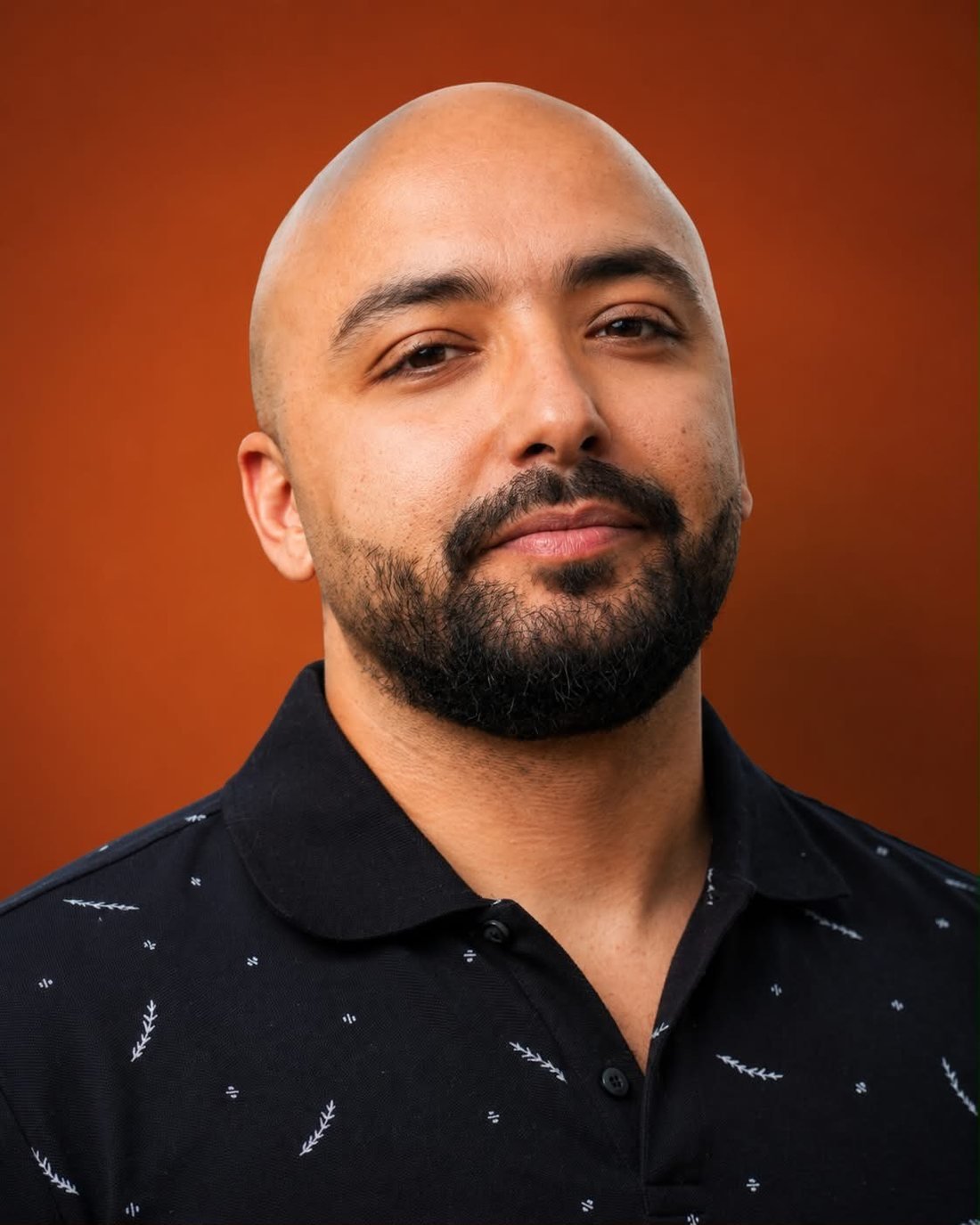
Ahmad Hijazi was born in Saida, Lebanon, and between the ages of 9 and 23 moved between Saudi Arabia, Bahrain and Lebanon, where his father worked. A first job in a luxury watch boutique taught Hijazi that anything can be sold once you understand human emotion, and a 2014 attempt at the MENA region's first curated eCommerce platform, which failed, was the start of a founder's career. Hijazi later spent years in finance, collecting data, while co-founder Ahmad Freijeh spent years doing the same in tech.
Lensiq grew out of that shared frustration: both always saw the picture after it happened. It is a predictive intelligence platform for land-based logistics that runs as a data science and ML engineering team, trained on a company's own spreadsheets and data feeds, and bootstrapped so far. We spoke about why prediction is not business intelligence, what logistics operators ask for first, and why the first commercial focus is Saudi Arabia.
Key takeaways
- Lensiq trains a customer-specific predictor on a company's own spreadsheets or data feeds, then returns predictions with an accuracy and risk score, an explanation and recommended actions, all through its Iris interface.
- The first predictions logistics customers ask for are second delivery attempts, empty truck miles and ETAs more customized than GPS, because they use a company's internal data and operations.
- Hijazi says each customer's data is isolated and each model is trained specifically for that customer, so predictions are not shaped by another user's operations.
- Lensiq is bootstrapped, with two companies using the platform today, and is concentrating on mid-sized and large logistics companies in Saudi Arabia.
Before any of this
Startup.talk:Where did you grow up, and what was childhood like?
Hijazi:I was born in Saida, Lebanon, where I grew up and got an education. Between the ages of 9 and 23, I spent my life between KSA, Bahrain, and Lebanon where my dad used to work. I'm Lebanese but have been engaged in the mixed Arab culture.
I had a great childhood growing up. Good education, middle class family, traveled, but the one thing I always knew is that I never wanted to be employed for someone else, especially that I've been a natural salesman since I was a kid. I would sell anything to anyone, to an extent that I was positive that life was mostly sales in practice.
Startup.talk:What first got you into building things?
Hijazi:Back in 2014, a friend and I were involved in the startup ecosystem in MENA, and the success stories that we saw always made us want to have a hand in playing the region, so we built the MENA region's first curated eCommerce platform. Of course, the first startup was a terrible failure, but it was a starting point.
Startup.talk:What was your first job, and what did it teach you?
Hijazi:My first job was in retail. It was a luxury watch boutique. I was never allowed to sell the high-end watches because I was new and young, but I did nonetheless, and I learned that you could sell anything when you understand human emotions and behavior.
The road to Lensiq
Startup.talk:What made you start Lensiq?
Hijazi:I spent years in finance, collecting data, and my co-founder spent years in tech collecting data as well. We always saw the picture after it happened, and wondered whether we could predict an outcome before it happens. So we built the initial predictor to try and predict specific outcomes. As we were fine-tuning, we included real-time context, and found out that we were able to predict with accuracy any outcome before it happens, so we launched Lensiq, a predictive intelligence solution that runs as your own data scientists and ML engineering team.
Startup.talk:Why focus on people who have data in spreadsheets but no data science team?
Hijazi:Predictive technology has always been reserved for multi-billion dollar corporations who had 9-figure budgets to deploy teams, and infrastructure. We cut that by creating an engine that serves as a full-on team. The analysis, scoring, mathematical algorithms, translation, all happen in milliseconds through Lensiq's predictive engines. Now companies can simply plug in their data feeds or spreadsheets and let the engines run. No need for a technical person to use it, rather any business owner or operator with no tech background can use the systems.
Startup.talk:Why do you believe predictive intelligence will become as important as business intelligence?
Hijazi:Business intelligence changed how companies operate. It gave organizations the ability to collect, organize, visualize, and understand their historical data. Today, businesses can monitor performance, track KPIs, identify trends, and understand what has already happened across their operations.
But I think there is a fundamental limitation: knowing what happened does not necessarily help you anticipate what is coming.
Most organizations have accumulated years of valuable data, yet many still make critical decisions based on historical reports, manual analysis, experience, and intuition. They know where they have been, but often lack the ability to anticipate where they are heading.
I believe predictive intelligence is the next evolution of that process. Instead of only understanding historical performance, companies can use their own data to anticipate outcomes, identify emerging risks, evaluate different scenarios, and make decisions before problems materialize.
Consider a logistics company. A traditional BI dashboard might show how many deliveries failed last month, which routes were inefficient, and how much those failures cost. Predictive intelligence can help identify which deliveries are likely to fail, what factors are contributing to that risk, and where preventive action could make a difference.
The distinction is important. One helps you understand performance; the other helps you influence future performance.
I also think predictive intelligence will become more accessible. Historically, developing predictive models required specialized data science teams, significant infrastructure, and technical expertise. Platforms like Lensiq aim to lower those barriers and make customer-specific predictive capabilities available to more organizations.
I don't see predictive intelligence replacing business intelligence. I see them becoming complementary capabilities. Businesses will continue to need to understand what happened, but increasingly, they will need to know what is likely to happen next and what they should do about it.
Ultimately, the competitive advantage will belong to organizations that can turn their data into better decisions faster than their competitors.
“Predictive technology has always been reserved for multi-billion dollar corporations”Ahmad Hijazi
Startup.talk:How did Lensiq evolve from predictions into IRIS alerts, an API and webhooks?
Hijazi:Lensiq's engine was a complex infrastructure for non-technical users, so we created Iris, a UI that manages all calls from Lensiq and external tools into one interface where a user can get the predictions, the scoring, the recommendations, the ability to integrate other tools, and basically every interaction with the underlying technology. All democratized in one Interface, Iris.
Startup.talk:What is it like to build Lensiq as a co-founder?
Hijazi:It is an exciting journey. As our product evolves we see the potential, we see the competitors also rising so demand is there, and the category itself is still new to our region, so it's very thrilling to be able to own this category in the region and introduce it in a horizontal market.
Startup.talk:Why did you choose to build Lensiq in the Middle East, and why Saudi Arabia?
Hijazi:We see a significant opportunity in the Middle East, particularly as the region undergoes a major transformation in how businesses operate, invest, and adopt technology.
Saudi Arabia is especially interesting because of the scale of its economic transformation under Vision 2030. The investment in infrastructure, transportation, logistics, industrial development, and digital transformation is creating increasingly complex business environments that generate enormous amounts of operational data.
Yet having more data does not automatically translate into better decisions. Many companies still rely on historical reporting, fragmented systems, and manual processes to anticipate operational challenges. We see an opportunity to bridge that gap through predictive intelligence.
We chose to focus our initial commercial efforts on Saudi Arabia because its logistics sector presents a compelling environment for what we are building. As transportation networks, delivery volumes, and supply-chain operations expand, the cost of operational inefficiencies and poor decisions becomes increasingly significant. Predicting those challenges before they materialize can create measurable value.
There is also a broader ambition behind this decision. We don't believe globally relevant technology needs to originate from Silicon Valley or established technology hubs. The Middle East has the talent, market opportunities, and increasingly sophisticated business environment to produce technology companies that compete internationally.
Our ambition is to build Lensiq into a globally relevant predictive intelligence platform, starting with a market where we see a clear operational need and room to create meaningful impact.

The product
Startup.talk:Why the name Lensiq?
Hijazi:Lensiq comes from lens + IQ. Because your data already has the answers hidden, but needed mathematicians to dig deep, the lens and the IQ uncover all that is buried within millions of records.
Startup.talk:How does Lensiq go from a spreadsheet to a prediction with no setup?
Hijazi:The spreadsheet has the data, it is uploaded to train the predictor. Once that happens, no action is needed as the predictor will build itself. All a user might need to do is plug in external real-time data sources for the predictor to keep on updating and generating predictions as parameters change. The system will automatically generate the predictions, give an accuracy and risk score, explain the outcome, and provide recommended actions that can also be automated when plugged in to execution systems.
Startup.talk:Why show confidence scores so prominently?
Hijazi:So the user can get enough confidence in their decision. For example, if a confidence score is below 60%, a user might opt out of a recommendation, but if it is over 90%, they will definitely need to consider the score as a flag.
Startup.talk:What does auto-improving mean in practice for a customer?
Hijazi:Since the system is built around a user's data, every outcome will be scored in true or false, to retrain the model and improve its thinking. As long as the system runs and gets external data and new outcomes, the system keeps on relearning and fine-tuning based on the user's behavior.
And since the predictions are mathematical in core not reasoning, there is no room for hallucinations or error, or outcomes based on similar operations of a different user. Their data is isolated, and trained for every model specifically.
Startup.talk:Which prediction do customers ask for most often?
Hijazi:What we're seeing right now in the logistics sector is a demand for predicting 2nd delivery attempts for orders, empty miles run by a truck, and specific ETAs (more customized than GPS, as they take into consideration the internal data and operations of a company).
Positioning
Startup.talk:Who is Lensiq for, and what job does it do for them? Describe the person who gets the most value.
Hijazi:Lensiq is for land-based logistics companies that make high volumes of operational decisions under uncertainty, but lack the ability to consistently anticipate what will go wrong before it affects performance.
Its primary customer is a logistics operator managing complex, interconnected operations across deliveries, fleets, routes, suppliers, customers, and distribution networks.
These companies already have operational data. They may use a TMS, BI dashboards, spreadsheets, or internal reporting systems. They can see what happened, monitor what is happening, and track KPIs.
What they struggle with is knowing what is likely to happen next, which decisions are becoming risky, and what action should be taken before the problem materializes.
Lensiq turns their historical operational data into customer-specific predictive intelligence that helps them make better operational decisions and prevent avoidable losses.
The ideal customer is a Head of Operations, COO, or Operations Director at a mid-sized or large land-logistics company.
Lensiq helps this person answer four operational questions:
1. What is likely to happen? Identify patterns and predict potential operational outcomes.
2. Where is the risk? Identify routes, deliveries, suppliers, or operational activities likely to underperform.
3. Why is it happening? Understand the factors contributing to the predicted outcome.
4. What can we change? Identify preventive actions that can improve the expected outcome before the problem occurs.
Startup.talk:How do you view your positioning relative to Akkio, Obviously AI, DataRobot, Microsoft Power BI and Google Sheets with Gemini? Is there another competitor you think of first?
Hijazi:Lensiq operates in the broader predictive analytics and business intelligence landscape, but our positioning is more specialized. Platforms such as Akkio, Obviously AI, and DataRobot provide tools for building and deploying predictive models, while Microsoft Power BI and Google Sheets with Gemini focus primarily on data analysis, reporting, and productivity.
Our approach is different. Lensiq is built specifically for land-based logistics operations, helping companies use their own historical operational data to anticipate risks, understand potential disruptions, and make preventive decisions before those issues translate into operational or financial losses.
We also see companies such as FourKites and project44 as relevant players in the logistics intelligence market. While their platforms focus heavily on supply-chain visibility, shipment tracking, and transportation intelligence, Lensiq focuses on customer-specific predictive intelligence built around each operator's historical data and operational context.
Beyond direct competitors, we recognize that existing TMS platforms, spreadsheets, dashboards, and manual decision-making are significant alternatives. Our objective is not to replace the systems logistics companies already use, but to add a predictive intelligence layer that helps them get more value from their existing data and improve operational decision-making.
Ultimately, we see Lensiq competing on a specific job: helping logistics operators move from understanding what has happened to anticipating what is likely to happen and deciding what to do about it.
Startup.talk:What is your core moat in no-code predictive analytics?
Hijazi:Our core moat is not the ability to build predictive models without code. That capability is becoming increasingly accessible.
Our differentiation lies in combining logistics-specific predictive models, customer-specific historical data, and operational context into a platform designed around real logistics decisions.
Every logistics operator has different routes, delivery patterns, fleet constraints, suppliers, operating conditions, and performance histories. Lensiq uses each customer's own data and parameters to develop predictive intelligence that reflects how their operations actually work.
Over time, this creates an opportunity for deeper differentiation through four areas:
1. Domain specialization: Models and prediction workflows designed around land-based logistics problems rather than generic business use cases.
2. Customer-specific intelligence: Predictions built around each company's historical data, operational patterns, and parameters.
3. Operational context: Connecting predictions to the conditions influencing outcomes, making them more relevant to actual decisions.
4. Continuous improvement: Using subsequent operational outcomes to evaluate predictions and improve model performance over time.
We see the long-term moat in the accumulated combination of logistics domain knowledge, customer-specific data structures, predictive performance, and integration into operational decision-making.
The no-code interface makes predictive intelligence accessible. The deeper value is the specialized intelligence and operational learning built behind it.
“The no-code interface makes predictive intelligence accessible. The deeper value is the specialized intelligence and operational learning built behind it.”Ahmad Hijazi
Startup.talk:What are some of the use cases for Lensiq that are not obvious and can add a lot of value to users? List as many as possible.
Hijazi:Finance and investment: predicting investment returns and downside risk; financial distress and cash-flow shortages; credit defaults and repayment behavior; portfolio liquidity and exposure risks.
Healthcare and healthtech: predicting patient deterioration and health risks; hospital readmissions and complications; treatment response and non-adherence; hospital demand and resource shortages.
Insurance: predicting claim probability and severity; fraudulent claims; policyholder churn; accident and property damage risks.
Human resources: predicting employee turnover and absenteeism; candidate hiring success; employee retention and workforce shortages; training effectiveness.
Manufacturing and industry: predicting equipment failures; production interruptions and delays; manufacturing defects; raw material shortages and maintenance requirements.
Retail and e-commerce: predicting customer churn and lifetime value; inventory shortages and excess stock; product returns; promotion and pricing outcomes.
Real estate: predicting property values and investment returns; rental defaults and tenant turnover; property maintenance costs; occupancy and vacancy rates.
Agriculture and food: predicting crop yields and disease risks; livestock health risks; food spoilage; harvest timing and supply shortages.
Energy and utilities: predicting electricity demand and energy consumption; infrastructure failures; renewable energy production; water consumption and leakage.
Banking and fintech: predicting loan defaults; customer churn; suspicious transaction patterns; debt collection recovery.
Education: predicting student dropout and retention; academic performance; course completion; future enrollment demand.
Telecommunications: predicting customer churn; network congestion; equipment failures; service interruptions.
Supply chain and procurement: predicting supplier failures and disruptions; shipment and purchase order delays; inventory replenishment requirements; procurement costs and supply shortages.
Sales and business development: predicting sales conversion and deal closure; revenue shortfalls; customer lifetime value; major account churn.
Legal and enterprise risk: predicting contractual disputes; compliance failures; operational incidents; regulatory and contractual risks.
Core opportunity: Turn historical data and operational context into customer-specific predictions that help organizations anticipate outcomes, manage risks, and make better decisions.
Startup.talk:What is the one detail in Lensiq you are proudest of?
Hijazi:What I am proudest of is that we are making something that was traditionally accessible only to organizations with significant data science resources available to businesses without requiring them to build that infrastructure themselves.
We built Lensiq around a simple but ambitious idea: every organization has valuable intelligence hidden in its own historical data, but very few have the tools or expertise to turn it into predictive capability.
I am proud that we are turning that idea into a practical platform, where companies can use their own data to build predictive models, anticipate risks, and make better decisions.
We are not just making predictions easier to generate. We are making predictive intelligence more accessible, practical, and relevant to the decisions businesses make every day.
Launch
Startup.talk:What did you learn from your launch?
Hijazi:Launching on Product Hunt taught us that having an interesting technology is not enough. People need to understand immediately what problem it solves, who it is for, and why they should care.
We learned that positioning matters as much as the product itself. When a platform has broad technical capabilities, it is easy to communicate what it can do without making its actual value clear.
The launch also reinforced the importance of speaking to a specific audience rather than trying to appeal to everyone.
Most importantly, it reminded us that launching is not validation. Real validation comes from getting the product into the hands of customers, understanding how they use it, and seeing whether it makes a measurable difference to their decisions.
The hard part
Startup.talk:How many people use Lensiq today?
Hijazi:Lensiq currently has two companies using the platform. We have shifted our focus toward mid-sized and large organizations rather than individual users, as our product is designed to address complex business and operational decisions.
We have also started concentrating our commercial efforts on the logistics industry in Saudi Arabia, where we see a strong opportunity to apply predictive intelligence to land-based logistics operations.
Startup.talk:What is a challenging time you had building Lensiq?
Hijazi:One of the most challenging parts of building Lensiq has been navigating geopolitical instability and ongoing wars while trying to build a company in an already difficult startup environment.
We have been bootstrapping, operating with limited resources, and growing without having secured external funding yet. This has meant making difficult decisions about priorities, product development, and how far we can stretch our resources.
Sales has also been a major challenge. Building a product is one thing; getting larger organizations to understand, trust, and adopt a new predictive intelligence platform requires time, education, and persistence.
Despite these challenges, we have continued building, refining our positioning, and narrowing our commercial focus toward mid-sized and large logistics companies in Saudi Arabia.
The hardest part has been maintaining execution and momentum despite circumstances that are largely outside our control.
Startup.talk:Who believed in you before there was anything to show? What did they say or do?
Hijazi:A few friends who were also building startups believed in the idea early on. Interestingly, they were already trying to figure out ways to predict different aspects of their businesses but lacked the tools and resources to do so effectively.
When we introduced Lensiq, they immediately understood the potential because they had experienced the problem themselves. For them, we were addressing a real need rather than introducing technology in search of a problem.
Their early interest and willingness to explore the platform gave us confidence that there was a genuine demand for what we were building, even before we had much to show.
Startup.talk:How do you convince small businesses that prediction is for them, not just big companies?
Hijazi:We start by showing them that prediction is not reserved for companies with large data science teams or massive budgets. Every business, regardless of size, makes decisions under uncertainty. A small business deciding how much inventory to purchase, which customers might stop buying, or whether cash flow will cover upcoming expenses faces the same fundamental challenge as a large enterprise.
The difference is often the scale of the decision, not the need for better information.
Lensiq makes predictive intelligence accessible by allowing businesses to use their existing historical data without needing to build an in-house data science team. We focus on practical use cases where anticipating an outcome can save money, reduce risk, or improve a business decision.
We don't ask small businesses to adopt prediction because it is new technology. We show them where it can make a measurable difference to their bottom line.
What it is all for
Startup.talk:What would make you say Lensiq has succeeded?
Hijazi:I would consider Lensiq successful when it becomes an essential part of how organizations make decisions, rather than simply another software subscription.
If companies across logistics and other industries rely on Lensiq to anticipate risks, allocate resources more effectively, prevent avoidable losses, and improve measurable business outcomes, we will have achieved what we set out to do.
Commercially, success means building a sustainable company with strong customer retention, measurable customer value, and the ability to scale across markets.
But ultimately, I want Lensiq to help make predictive intelligence a standard business capability, accessible to organizations that previously couldn't afford the expertise or infrastructure to build it themselves.
Startup.talk:How will AI change the way businesses make decisions from their own data?
Hijazi:I think businesses will become more cautious, not less, about how they use AI to make decisions based on their internal data.
Companies hold sensitive information about their customers, operations, finances, suppliers, and competitive advantages. Many will be reluctant to expose that information to external AI systems, regardless of how powerful those systems become. Data privacy, ownership, and control will become increasingly important barriers to adoption.
This is where I see an opportunity for Lensiq. Rather than asking companies to hand over their data to a general-purpose AI system, we provide a controlled and isolated environment where they can connect their own data, define the parameters they want to use, and develop customer-specific predictive models.
The objective is to give businesses the benefits of predictive intelligence while maintaining control over their data and how it is used.
I believe the future will not belong exclusively to companies that adopt the most AI. It will also belong to those that find ways to use intelligence without compromising their data, privacy, or competitive advantage.
Startup.talk:What is one thing about the AI industry that you think most people are getting wrong?
Hijazi:I think the industry is too focused on making AI more powerful and accessible, while underestimating one of the biggest barriers to enterprise adoption: trust.
There is an assumption that businesses will eventually connect all their internal data to increasingly powerful AI systems because of the value those systems can generate. I don't think it is that simple.
Companies spend years building their customer relationships, operational processes, financial intelligence, and competitive advantages. Their data is one of their most valuable assets. Expecting them to expose all of it to external AI systems without meaningful control over how it is accessed, processed, and used is a major assumption.
I believe privacy, data ownership, and control will become defining factors in enterprise technology adoption. The question will not just be what AI can do with a company's data, but whether that company is comfortable allowing it.
This is also part of the thinking behind Lensiq. We want companies to benefit from predictive intelligence without having to compromise control over their information. Our approach is built around isolated customer environments, controlled data access, and customer-defined parameters.
I also think the industry sometimes confuses generating an intelligent answer with improving a business decision. Producing an answer is relatively easy. Producing a reliable prediction, understanding its operational context, and helping someone make a better decision is a much more demanding challenge.
I believe the next phase of enterprise intelligence will be shaped not only by the capabilities of AI, but by how securely, reliably, and responsibly those capabilities can be deployed inside organizations.
“It will also belong to those that find ways to use intelligence without compromising their data, privacy, or competitive advantage.”Ahmad Hijazi
The road ahead
Startup.talk:What are your milestones for the next 12 months, in users and revenue?
Hijazi:Over the next 12 months, our priorities are to secure a pre-seed funding round, strengthen our position in the Saudi logistics market, and turn Lensiq into a commercially validated platform.
Our main milestones are:
1. Funding: Close a pre-seed round to accelerate product development, commercial expansion, and team growth.
2. Client acquisition: Reach at least 10 mid-sized and large enterprise clients, initially focusing on land-based logistics companies.
3. Revenue: Surpass $500,000 in annual recurring revenue (ARR).
4. Product development: Strengthen our predictive models, improve prediction accuracy, and expand the range of logistics use cases supported.
5. Customer retention: Establish measurable customer outcomes, strong adoption, and recurring usage across our client base.
6. Market expansion: Build a stronger commercial presence in Saudi Arabia and establish a foundation for expansion into additional GCC markets.
7. Strategic partnerships: Develop partnerships with logistics technology providers, system integrators, and industry players to accelerate distribution and adoption.
Our focus is to move from early adoption to repeatable enterprise sales, demonstrate measurable value for customers, and build a scalable commercial model.
Startup.talk:Where do you want Lensiq to be in five years?
Hijazi:In five years, I want Lensiq to become a global leader in predictive intelligence, fundamentally changing how organizations use their own data to make decisions.
Our ambition is to make predictive intelligence as essential to businesses as business intelligence is today. We want organizations to move beyond understanding what happened and start anticipating what will happen, where risks are emerging, and what decisions can improve their outcomes.
We aim to establish Lensiq as the leading predictive intelligence platform for logistics and supply-chain operations, first across the GCC and then internationally, serving major enterprises and complex operational networks.
Beyond logistics, we see significant opportunities to bring our technology into other industries, including finance, healthcare, insurance, and manufacturing.
I want Lensiq to build a substantial global customer base, establish strategic partnerships with major enterprise technology players, and become a category-defining company.
Ultimately, the ambition is much bigger than building a successful software company. We want to make predictive intelligence an accessible, trusted, and indispensable part of how businesses operate, regardless of their size or industry.
Startup.talk:What are your hopes and fears for a post AGI world?
Hijazi:My biggest hope for a post-AGI world is that intelligence becomes more accessible and helps humanity solve problems that previously required enormous resources, expertise, and time. Businesses could make better decisions, healthcare could become more predictive, and entire industries could operate more efficiently.
My biggest fear is the concentration of power. If a small number of companies or institutions control the most powerful intelligence systems, they could gain unprecedented influence over economies, businesses, information, and individuals.
I am also concerned about privacy and data ownership. As intelligence becomes more powerful, access to sensitive information becomes even more valuable. I don't think businesses should have to sacrifice control over their data to benefit from technological progress.
I believe the challenge will not simply be how intelligent machines become, but how responsibly we build, govern, and distribute that intelligence.
My hope is that AGI expands human capabilities rather than makes human judgment, independence, and accountability irrelevant. Technology should give people more control over their decisions, not less.
This interview was conducted in writing and has been edited lightly for length and clarity.
About Lensiq
Lensiq is a predictive intelligence platform for land-based logistics, founded by Ahmad Hijazi and Ahmad Freijeh. It turns a company's own spreadsheets and data feeds into customer-specific predictions, risk scores and recommended actions, without a data science team. lensiq.app
| Attribute | Verified Detail |
|---|---|
| Company | Lensiq |
| Founder(s) | Ahmad Hijazi and Ahmad Freijeh |
| Country | Lebanon |
| Grew up | Saida, Lebanon; also KSA and Bahrain |
| Before | Finance; MENA's first curated eCommerce platform (2014) |
| Funding | Bootstrapped |
| Before | Years in tech and data |
| Official Website | lensiq.app |
More founder interviews
 VoCalm
 PackProof
 ATS Engine
 Skillbox
For founders
Building something? Want to share your journey?
Tell us how it started, what nearly broke it and where it is headed. We will turn it into a story like this one.
Share your journeyFor readers
Want to read more human stories behind the startups?
New founder interviews and stories, as they are published.
Follow us on LinkedIn