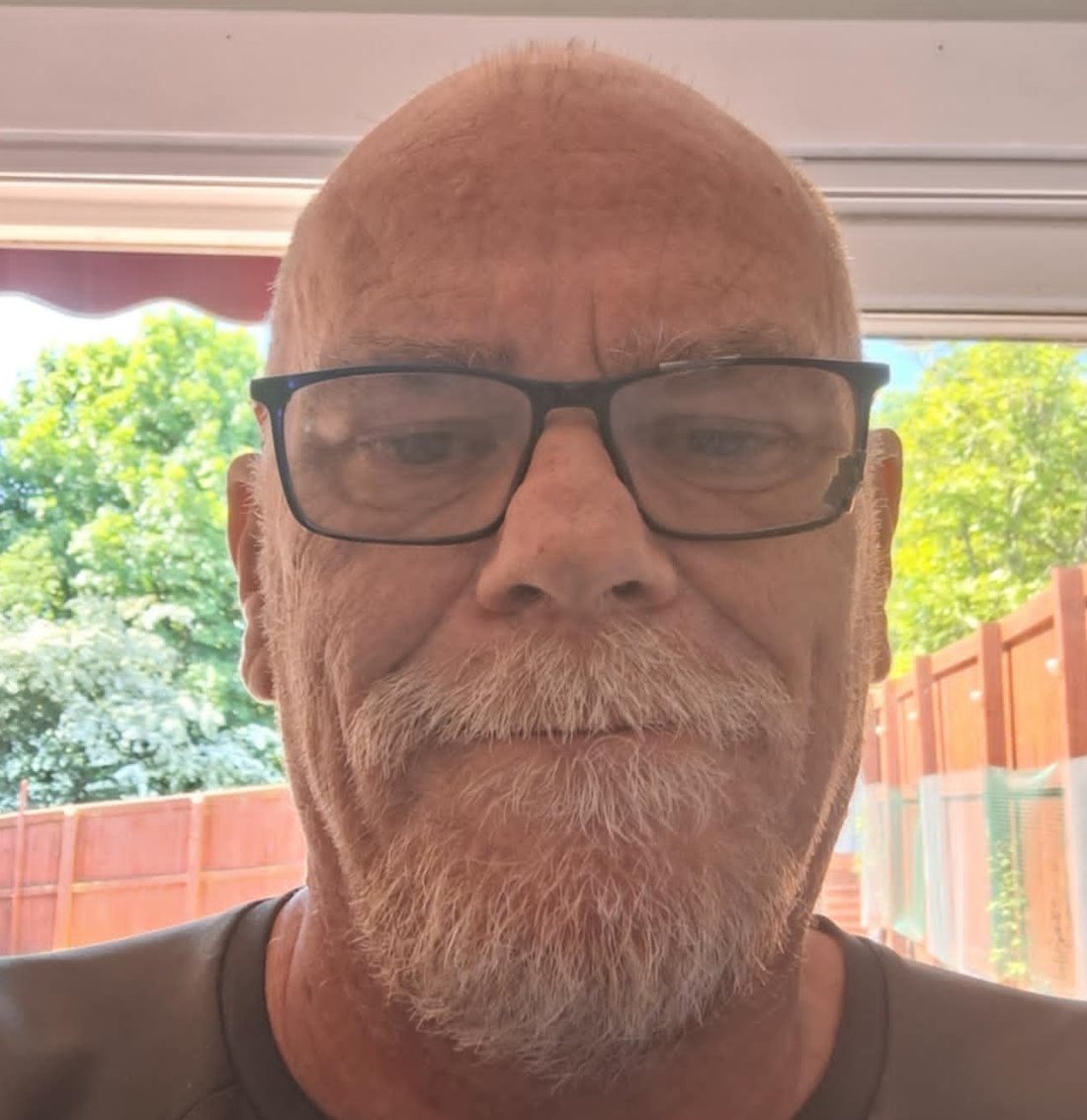
Dennis Nowland grew up in Conowingo, Maryland, where hunting, fishing and camping filled the days outside school, and moved to Scotland at 17. The first jobs were physical: loading heavy goods vehicles in a warehouse, then building heavy-duty industrial machinery as a mechanical fitter. A motorcycle accident ended that work, so Nowland moved into computing and software engineering, won Student of the Year at Fife College, and went on to spend more than 20 years as a software engineer and delivery lead.
ATS Engine began after a redundancy. A head injury makes things hard to remember, the job-search spreadsheets were getting confusing, and Nowland discovered how applicant tracking systems quietly filter out CVs before a person ever sees them. The tool built to cope with that turned into a platform for both sides of hiring: job seekers see how well they match a role before applying, and recruiters get one desk for candidates, vacancies, compliance and what needs attention today. We spoke about a test batch of 20 CVs, why the final decision must stay human, and the competitor Nowland worries about most: the spreadsheet.
Key takeaways
- ATS Engine serves both sides of hiring: job seekers see how well their CV matches a role before applying and can tailor a CV and cover letter in about a minute, while recruiters get candidates, vacancies, compliance and today's priorities in one place.
- It started as a tool for Nowland's own job search. A test batch of 20 CVs brought 8 interviews and 1 offer.
- The platform deliberately leaves the hiring decision with people and does not reduce a candidate to a single score.
- ATS Engine is early stage and Nowland will not quote user numbers yet. The next 12 months are about proving three things: people want it, people pay for it, and people stay.
Before any of this
Startup.talk:Where did you grow up, and what was childhood like?
Nowland:I grew up in a town called Conowingo, Maryland, until I was 17, when I moved to Scotland for family reasons. To me, I was born and raised in the country, so hunting, fishing and camping were my life outside of school and TBH, sometimes, when I should have been in school lol.
I had a great family life around Chesapeake City and Conowingo.
Startup.talk:What first got you into building things?
Nowland:I have always had an engineering mindset. I started out as a mechanical fitter building heavy-duty industrial machinery. After my motorcycle accident, I was no longer able to do the physical side, so I moved into computing and then software engineering, where I won the Student of the Year (valedictorian) award at Fife College. Since my accident, it just seems to come naturally to me.

Startup.talk:What was your first job, and what did it teach you?
Nowland:My very first job after leaving school was in a warehouse loading heavy goods vehicles, first by hand, then I got my forklift licence. Then later I became the shunter with my own unit to traffic the trailers in and out of loading.
It taught me to be proud of what I had, to still live life, to enjoy the special times and not to take things for granted.
The road to ATS Engine
Startup.talk:What made you start ATS Engine?
Nowland:I started developing ATS Engine when I was made redundant from my previous employment. With my head injury, I find it hard to remember things, and spreadsheets can get too confusing.
For the job seeker side of ATS Engine:
It all started when I was using ChatGPT to keep a running list of my submissions. Once I started, I found out that if you submit to the same role more than a couple of times, you can be excluded from the job with a standard email so you don't know why. After finding this out, I went investigating and found out about ATS and how it filters out CVs, so a lot don't even get seen by a human. This sent me investigating again into what was required to pass ATS checks, and I found there were a lot of gaps in the job search process: tasks that either never got done or, if they did, took hours, for example tailoring CVs and cover letters to the given role. Using ATS Engine, that job takes about one minute.
As for the recruiter side:
While searching I would get calls from recruiters but then I started wondering how, who and when and kept finding gaps between a job seeker and the recruiter. So this sent me on another investigation, and I found that there were so many different areas that could make my life easier, so I could be prepared for when recruiters did ask for anything like paperwork.
So basically, it started out as a tool to assist me with my disabilities, but then I realised the potential to help others to land a new role using what I had learned and in the end the formula I used in the app works, as I sent 20 CVs away as a test set and received 8 interviews and 1 offer, which I accepted, since it cost money to continue to try and get ATS Engine known, so people can see for themselves the benefits it brings.
“it started out as a tool to assist me with my disabilities”Dennis Nowland
Startup.talk:What did 20 years as a software engineer and delivery lead teach you about how hiring goes wrong?
Nowland:After more than 20 years as a software engineer and delivery lead, I learned that hiring often goes wrong before a human ever gets the chance to make a decision.
From the employer side, I saw how difficult it can be to identify the right people when there are large numbers of applications, inconsistent information and processes that rely heavily on systems and keywords.
From the candidate side, I experienced the other half of the problem: people can be highly capable and have the right experience, but still struggle to get noticed because their CV doesn't communicate that experience in the way the recruitment process expects.
I also learned that the hiring process is often fragmented. Job seekers are trying to understand adverts, tailor CVs, track applications and prepare for interviews, while recruiters are trying to manage candidates, compliance, documentation and communication.
The technology exists to make much of this easier, but too often the technology creates another layer of complexity rather than removing it.
That was one of the biggest lessons behind ATS Engine:
Hiring shouldn't be about who is best at navigating the process. It should be about making it easier for the right person and the right opportunity to find each other.
My experience in software engineering and delivery taught me to look at the entire process, identify where things break down, remove unnecessary work and use technology to support people rather than make their lives more complicated.
That is the approach I have taken with ATS Engine.
Startup.talk:Why build one system for both recruiters and job seekers?
Nowland:To bridge the gaps that I found in my search and how I could make my day as stress-free as possible and as easy as possible. With all that I learned from my sleepless nights and worrying, I wanted to try to remove as much of that as possible, so I investigated the natural gaps that were there between the two and thought about how easy it could be if I could bring it all into one place, and that is how ATS Engine started and now covers every major gap recruiters have, with the help of clients of ATS Engine and their feedback.
Startup.talk:How do you build and run ATS Engine alongside your role as a Scrum Master?
Nowland:With a lot of hard work and dedication. I truly believe that ATS Engine can help many people out of any rut they are in, either by switching roles or by finding a new role if they are out of work. I also believe that if recruiters have the right tools, then they can help many more people out of their horrible position. This is one of the reasons the Jobster, the AI assistant, who also answers to Jobbie, as she removes a lot of the daily crap from your day.
The product
Startup.talk:Why the name ATS Engine?
Nowland:I picked the name ATS Engine mainly because it is a more modern version of the original ATS: ATS Engine allows multiple CVs per user and uses all of them to generate the CVs and cover letters, so the word Engine was added because it ploughs through like a steam engine.
Startup.talk:How does the intelligent candidate matching work?
Nowland:Our intelligent candidate matching is designed to look beyond simple keyword matching.
It considers the relationship between the candidate's experience, skills, evidence and the requirements of the role, helping identify how well the overall profile aligns with the opportunity.
Rather than simply asking, “Does this CV contain the right words?”, ATS Engine looks at the wider picture and highlights where there is a strong match, where evidence is weaker, and where attention may be needed.
The exact matching methodology is part of the ATS Engine technology, so we don't publish the underlying formula or weighting.
The important thing for users is the outcome: a clearer, more meaningful view of candidate-to-role fit without requiring recruiters or job seekers to manually work through everything themselves.
Startup.talk:How does ATS Engine tell a recruiter what needs them today?
Nowland:ATS Engine is designed to help recruiters see what needs their attention today, rather than making them work through the entire recruitment process to find it.
It brings together the things that require action and highlights the areas that may need attention — whether that's a candidate, an application, compliance information, an advert or something else within the recruitment workflow.
Instead of simply showing recruiters more information, ATS Engine helps turn that information into clear priorities and actionable next steps.
The aim is simple:
Open ATS Engine and know what needs your attention, why it matters, and what you can do about it.
Exactly how ATS Engine determines and prioritises those actions is part of the intelligence behind the platform, so we don't give away the underlying methodology.
Startup.talk:What do job seekers learn from seeing their match before they apply?
Nowland:Seeing their match before applying gives job seekers something they often don't have: a clearer picture of how well their CV aligns with the role before they invest their time in the application.
It can help them understand where their experience and skills line up with what the employer is looking for, and where there may be areas they need to consider before applying.
That means they can make a more informed decision about whether a role is worth pursuing, rather than simply applying and hoping for the best.
And where there is an opportunity to improve their application, ATS Engine can help them understand what needs attention before they press submit.
The aim isn't to tell someone “don't apply.”
It's to help them apply with a better understanding of their position and a stronger application.
Startup.talk:How do you handle compliance for recruitment agencies?
Nowland:ATS Engine helps recruitment agencies keep compliance information organised, visible and easier to manage.
Instead of relying on spreadsheets, folders and reminders to keep track of candidate documentation, ATS Engine brings the relevant information together so recruiters can see what is in place, what may be missing and what needs attention.
The platform also provides visibility into areas such as what lapses next and overall compliance coverage, helping recruiters identify potential issues before they become a problem.
The aim isn't to replace an agency's compliance process or make legal decisions for them. It is to give recruiters better visibility, organisation and control over the information they need to manage.
And, as with the rest of ATS Engine, the detailed intelligence and methodology behind how those priorities are identified remains part of the platform's technology.
Startup.talk:What do you deliberately leave out of ATS Engine?
Nowland:There are some things we deliberately don't want ATS Engine to do.
We don't want it to make the final hiring decision for a recruiter, or tell someone who they should hire. The platform is there to support better decisions, not replace human judgement.
We don't want to make candidates into a score and reduce a person to a number. Matching is there to provide insight and help people understand fit, not to decide someone's value.
We also don't deliberately hide information behind complicated systems or make users work through unnecessary steps simply because the technology allows us to.
And we don't pretend to know something when the information isn't available. Where information is missing, the platform should make that clear rather than inventing an answer.
Most importantly, we deliberately leave the human decision with the human.
ATS Engine is designed to reduce the administration, highlight what matters and provide better information — so recruiters and job seekers can spend more time making good decisions and less time fighting the process.
The technology should support people, not replace them.
“The technology should support people, not replace them.”Dennis Nowland
Positioning
Startup.talk:Who is ATS Engine for, and what job does it do for them? Describe the person who gets the most value.
Nowland:ATS Engine is built for both sides of the hiring process — job seekers and recruiters — but the people who get the most value are those who want to spend less time fighting the process and more time making better decisions.
For Job Seekers
The person who gets the most value is someone who is serious about finding their next role and wants more control over their job search.
They may be applying for multiple positions, struggling to understand why applications aren't progressing, or simply spending too much time tailoring CVs, writing cover letters and keeping track of everything.
ATS Engine helps them understand which opportunities are worth pursuing, how well their CV matches a role, what may need attention before applying, and what they should focus on next.
It turns a job search from a collection of applications into something they can actually manage.
For Recruiters
The greatest value comes to recruiters and recruitment agencies dealing with multiple candidates, vacancies, documents and compliance requirements.
They need to know what needs their attention, which candidates are relevant, what information is missing, what is approaching expiry and where potential issues need addressing — without having to search through multiple systems and spreadsheets.
ATS Engine brings that information together and helps turn it into clear actions.
The Person Who Gets the Most Value
Ultimately, ATS Engine is for someone who thinks:
"There has to be an easier way of doing this."
Whether they're a job seeker trying to get their CV seen or a recruiter trying to manage candidates and compliance, ATS Engine is designed to reduce the unnecessary work, highlight what matters and give them a clearer view of what to do next.
It isn't about replacing people.
It's about giving people better information, better organisation and better tools to make the decisions that still belong to them.
Startup.talk:How do you view your positioning relative to Bullhorn, Vincere, Recruit CRM, Greenhouse and Teamtailor? Is there another competitor you think of first?
Nowland:ATS Engine isn't trying to compete with Bullhorn, Vincere, Recruit CRM, Greenhouse or Teamtailor by simply becoming another large Applicant Tracking System.
Those platforms are established recruitment systems, and they do many things extremely well. Our positioning is different.
ATS Engine is focused on making the hiring process more intelligent and actionable for both sides of the process.
For the job seeker, ATS Engine helps answer questions that traditional recruitment systems generally aren't designed to answer:
- Is this role actually a good match for me?
- How does my CV compare with what the employer is looking for?
- What should I improve before I apply?
- Which applications need my attention?
- What should I do next?
- How can I manage my entire job search more effectively?
For the recruiter, ATS Engine focuses on questions such as:
- What needs my attention today?
- Which candidates are the strongest matches?
- What information is missing?
- What compliance is approaching expiry?
- Which adverts may need attention?
- Where are potential problems developing?
So rather than positioning ATS Engine as "another ATS", I see it as a layer of intelligence and action across the recruitment journey.
The established competitors are primarily systems for managing recruitment.
ATS Engine is designed to help people understand recruitment and act on it.
That distinction is important.
Where I See the Competitive Opportunity
Bullhorn, Vincere and Recruit CRM are particularly strong in recruitment agency and staffing workflows.
Greenhouse and Teamtailor are strong in employer hiring and applicant management.
ATS Engine can learn from all of those categories without trying to replicate everything they do.
Our opportunity is to focus on the gaps between information and action — helping people understand what the information means and what deserves attention next.
And importantly, ATS Engine is designed around both sides of the hiring relationship.
That gives us a different perspective from a system designed primarily around the employer.
The Competitor I Think About First
If I had to name one competitor category rather than one individual company, it would actually be:
the spreadsheet, inbox and disconnected collection of tools that people are currently using to manage recruitment and job searching.
That's the competition I care about most.
A recruiter might have an ATS, spreadsheets, email, document folders, calendars and reminders.
A job seeker might have spreadsheets, Word documents, email, job boards, ChatGPT and folders full of different CV versions.
ATS Engine is trying to reduce that fragmentation.
So I don't want ATS Engine to win because it has more buttons than another ATS.
I want it to win because someone opens it and thinks:
"Finally — I can see what matters, I understand what I need to do, and I don't have to work everything out myself."
That is the position I believe gives ATS Engine its own space in the market.
Startup.talk:What is your core moat in recruitment software?
Nowland:I think our core moat is not one individual feature. It is the combination of the intelligence, the workflow and the perspective we've built around the entire hiring journey.
Most recruitment software is built primarily around the recruiter or employer workflow.
ATS Engine was built from both directions.
On the job seeker side, it understands the journey from finding an opportunity, assessing the match, preparing the application, applying, tracking the application and knowing what to do next.
On the recruiter side, it looks at candidates, matching, compliance, adverts, priorities and what needs attention.
The moat comes from bringing those perspectives together and building intelligence around the gaps between them.
There is also a significant amount of underlying work that users don't necessarily see — how information is assessed, how priorities are identified, how matching is interpreted and how the platform turns large amounts of recruitment information into something actionable.
I deliberately don't want to describe the underlying formulas or methodology publicly. That's part of the intellectual property we are continuing to develop.
But I also think there is another important part of the moat:
the data and learning generated by the way people actually use the platform.
As ATS Engine grows, we can learn which problems job seekers encounter, which areas recruiters struggle with, what information matters, what causes applications to succeed or fail, and where people need the most help.
That creates an opportunity for the platform to become increasingly useful over time.
So I wouldn't describe our moat as:
"We have a feature nobody else has."
I'd describe it as:
"We are building an intelligence layer around the hiring journey that understands both sides of the process and turns recruitment information into actionable decisions."
The technology can be copied.
Individual features can be copied.
But building the product, intelligence, workflows, data, customer understanding and two-sided perspective together is considerably harder.
And that is where I believe ATS Engine can build a lasting advantage.
“The technology can be copied.”Dennis Nowland
Startup.talk:What are some of the use cases for ATS Engine that are not obvious and can add a lot of value to users? List as many as possible.
Nowland:One of the interesting things about ATS Engine is that its value isn't limited to the obvious "apply for jobs" or "manage candidates" use cases.
Because it brings together matching, applications, documents, intelligence, compliance and actions, there are a number of less obvious ways it can help.
Job Seeker Use Cases
1. Know whether a job is worth applying for
Instead of applying to everything, a job seeker can assess the opportunity before investing time in an application.
2. Identify why a strong candidate may be getting overlooked
A candidate may have the experience but fail to communicate it effectively in their CV. ATS Engine can highlight areas that need attention.
3. Decide between two similar vacancies
A job seeker can compare opportunities based on their fit rather than simply choosing whichever advert looks most attractive.
4. Stop wasting time on poor-fit applications
A poor match can be identified before the candidate spends hours tailoring documents.
5. Prioritise the job search
When someone has several applications underway, ATS Engine can help identify which opportunities deserve attention first.
6. Rescue an application that has gone quiet
Instead of immediately assuming rejection, the candidate can identify whether an application needs a follow-up or another action.
7. Know when to stop chasing an application
Not every application deserves endless attention. Helping someone recognise when to move on is valuable too.
8. Maintain an application memory
Candidates don't have to remember every application, CV version, conversation or next action themselves.
9. Remember what CV was used
This becomes particularly useful when someone has multiple versions of their CV.
10. Understand their own job-search performance
Over time, the candidate can see what types of roles are generating interest and which aren't.
11. Identify patterns in unsuccessful applications
Instead of treating every rejection as an isolated event, recurring issues can become visible.
12. Build evidence from previous work
Achievements and examples from previous roles can be organised so the candidate doesn't have to reinvent them for every application.
13. Prepare for interviews from their own evidence
Previous achievements can become useful preparation material rather than forgotten information buried in an old CV.
14. Quickly create role-specific application material
Tailoring can become a repeatable process rather than a major task for every application.
15. Keep application documents consistent
The CV, cover letter and supporting evidence can be aligned around the same role requirements.
Startup.talk:What is the one detail in ATS Engine you are proudest of?
Nowland:The detail I'm probably proudest of is the way ATS Engine turns a complicated recruitment process into something that tells you what matters and what to do next.
It sounds simple, but getting there isn't.
When I started building ATS Engine, I wasn't trying to create another system full of screens, forms and information. I wanted to solve a problem I was experiencing myself: there was too much to remember, too many things to track, and too many parts of the job search that were easy to miss.
That thinking carried through into the platform.
For a job seeker, it isn't just about saying "your CV matches this job." It's about helping them understand the opportunity, identify what may need attention, prepare a better application and keep track of what happens afterwards.
For a recruiter, it isn't just about storing candidate information. It's about helping them see what needs their attention today, what may be approaching a problem and where they should focus.
So the detail I'm proudest of isn't necessarily something you can point to on one screen.
It's the underlying philosophy:
Don't just give people more information. Help them understand what that information means and what they can do with it.
That came directly from building ATS Engine to solve problems I was experiencing myself — and I think that personal origin is still visible throughout the product.
Launch
Startup.talk:What did you learn from your launch?
Nowland:Launching ATS Engine on Product Hunt taught me that getting a product in front of people is very different from getting people to understand why they need it.
The launch gave me a much clearer view of the difference between building something useful and communicating its value quickly. You can have a lot of functionality, but people need to understand the problem you solve almost immediately.
It also reinforced that the launch itself is only the beginning. Visibility is useful, but what matters afterwards is what you learn from the people who look at the product, click through, ask questions, sign up, or decide not to continue.
One of the biggest lessons was that the messaging needs to be focused on the user's problem rather than the technology behind the product. People don't necessarily care how intelligent the system is — they care whether it can save them time, remove frustration, help them make better decisions, or improve their chances of getting the outcome they want.
It also showed me the importance of having the wider journey ready before launching: the landing page, product explanation, walkthroughs, trial, pricing, tracking and follow-up all need to work together.
Most importantly, Product Hunt reinforced something I have learned throughout building ATS Engine: listen to what people actually struggle with and keep improving the product around those problems.
The launch wasn't just about gaining exposure. It was another stage of validating the idea, learning how people respond to it, and understanding what needs to improve next.
The hard part
Startup.talk:How many people use ATS Engine today?
Nowland:ATS Engine is still in its early stages, so I don't want to give a number that makes the product look further along than it is.
We currently have an early user and subscriber base, with both job seekers and recruiters starting to use and explore the platform. We're deliberately focusing at this stage on learning from those users, improving the product and making sure the experience genuinely solves the problems we've built it to address.
For me, the important number isn't simply how many people have registered. It's how many people are finding ATS Engine useful enough to come back, use it as part of their recruitment or job search process, and ultimately recommend it to someone else.
We're building that user base steadily rather than chasing numbers for the sake of numbers.
Startup.talk:What is a challenging time you had building ATS Engine?
Nowland:One of the most challenging periods building ATS Engine was probably the point where it stopped being a personal tool and started becoming a real product.
The original idea came from solving problems I was experiencing myself. I needed a better way to keep track of applications, understand where I stood with each opportunity, tailor CVs and documents, and remember what needed to happen next. Once I realised that these were problems other people were experiencing too, the scale of what I was trying to build changed completely.
Suddenly it wasn't enough for something to work for me. It needed to work reliably for other job seekers and recruiters, cope with different situations, present information clearly and be simple enough that people didn't need to understand how everything worked underneath.
There have been plenty of technical challenges along the way — databases, integrations, queues, matching, document generation and getting different parts of the platform to work together. But the harder challenge has often been deciding what not to build and keeping the product focused on solving real problems rather than simply adding more features.
There were certainly moments when it would have been easier to stop or simplify the ambition. But each time I came back to the reason I started building it in the first place.
ATS Engine began because I needed something that made the process easier for me. The challenge has been turning that personal solution into something that can genuinely make the process easier for other people too.
That is still the challenge — and, ultimately, what keeps me building it.
Startup.talk:Who believed in you before there was anything to show? What did they say or do?
Nowland:Before there was really anything to show, the person who believed in me most was someone who could see that I was trying to solve a real problem rather than simply trying to build a business.
At that stage, ATS Engine was mostly an idea, a lot of notes, experiments and many hours of work. There wasn't a polished product that I could demonstrate or a customer base that proved the idea would work.
What mattered was having someone who didn't dismiss the idea as just another project. They encouraged me to keep working on it and, importantly, gave me the space to see where it could go.
I think that's what believing in someone really means at that stage. It's not necessarily having all the answers or knowing that they will succeed. It's saying, in effect, “Keep going. You might be onto something.”
That encouragement mattered because there were plenty of points where I could have decided that building ATS Engine was too much work or that the idea wasn't going anywhere.
Today there is something tangible to show for it. But I haven't forgotten that, at the beginning, there wasn't.
Startup.talk:How do you win recruitment agencies that are locked into older systems?
Nowland:I use marketing via email, LinkedIn, Facebook and other ad sites to get the word out, but that is expensive. I am handling it all myself via the CRM app I built that works with ATS Engine.
What it is all for
Startup.talk:What would make you say ATS Engine has succeeded?
Nowland:I would say ATS Engine has succeeded when it is genuinely making the hiring process better for the people using it.
For a job seeker, that might mean helping someone understand whether a role is worth applying for, giving them a stronger application, helping them stay organised and ultimately helping them get the right job.
For a recruiter, it might mean making it easier to identify the right candidates, know what needs attention, keep on top of compliance and spend less time dealing with information and administration.
Of course, I want ATS Engine to become a successful business. It needs customers, sustainable revenue and the ability to keep developing. But those are measures of the business rather than the reason I started it.
The real measure of success would be hearing someone say, “ATS Engine made this process easier for me, and I don't know how I would have managed it without it.”
If enough job seekers and recruiters genuinely feel that way, and ATS Engine becomes something people rely on rather than simply something they try, I would consider that success.
Ultimately, I want ATS Engine to help close the gap between the right person and the right opportunity — and make the journey between the two more intelligent, organised and human.
Startup.talk:What will hiring look like when AI agents apply for jobs and screen candidates?
Nowland:I think hiring is going to change dramatically when AI agents are routinely applying for jobs on behalf of candidates and screening candidates on behalf of employers.
We could reach a point where the first interaction isn't necessarily between a person and a company. A candidate's AI agent could understand their experience, identify suitable opportunities, tailor their application and potentially manage much of the application process. On the other side, an employer's AI could analyse applications, identify potential matches, check evidence and prioritise candidates for human review.
That creates an interesting problem.
If both sides are using AI, recruitment could become an arms race where candidates optimise applications for employer systems while employers optimise systems to detect and filter AI-generated applications. That wouldn't necessarily make hiring better.
I think the opportunity is to move away from simply asking “Who can produce the best application?” and towards “Who is genuinely the best fit, and what evidence supports that?”
AI agents should be able to help both sides understand that more effectively. A candidate should be able to understand why they match a role and where their evidence is weak. A recruiter should be able to understand why a candidate has been identified as a potential match and what still needs human assessment.
I also think the human element becomes more important, not less. AI can help discover, compare, organise and prioritise, but hiring decisions involve judgement, context, motivation, culture and conversations that shouldn't simply be reduced to a score.
That is one reason I believe ATS Engine has an interesting role to play in the future. The opportunity isn't just to automate today's recruitment process. It is to help both sides navigate a recruitment environment where AI is increasingly involved, while keeping the human decision at the centre.
The future of hiring shouldn't be humans versus AI.
It should be humans using AI to make better hiring decisions.
“The future of hiring shouldn't be humans versus AI.”Dennis Nowland
The road ahead
Startup.talk:What are your milestones for the next 12 months, in users and revenue?
Nowland:Over the next 12 months, I want to move ATS Engine from an early-stage product into a sustainable, growing business.
In terms of users, my first milestone is to build a meaningful base of paying job seekers and recruiters rather than simply chasing registrations. I want to see consistent growth month after month, strong repeat usage and evidence that people are making ATS Engine part of their normal job search or recruitment process.
On the revenue side, the goal is to establish predictable recurring revenue that demonstrates the business model works and gives us the ability to keep investing in the platform.
I don't want to measure success purely by a headline user number. A thousand people who sign up and never return is less valuable than a few hundred people who actively use ATS Engine and are willing to pay for it.
The next 12 months are therefore about proving three things:
People want it.
Job seekers and recruiters see enough value to use ATS Engine.
People pay for it.
The product solves problems important enough that users are willing to subscribe.
People stay.
The value is strong enough to create repeat usage, retention and recommendations.
If we can demonstrate those three things while continuing to improve the product, I will consider the next 12 months a success. The numbers will then give us the foundation for the next stage of growth.
Startup.talk:And for the next 24 months?
Nowland:Over the next 24 months, the ambition is to move ATS Engine beyond proving that the idea works and establish it as a genuinely sustainable recruitment technology business.
The first 12 months are about proving the fundamentals: growing users, converting them into paying customers, understanding retention and building predictable recurring revenue.
By 24 months, I want ATS Engine to have a substantial base of active paying users across both job seekers and recruiters, with the recruiter side becoming an increasingly important part of the business.
I also want to see the product become much more intelligent through everything we learn from real-world usage. The aim isn't simply to add more features. It is to understand the problems users repeatedly encounter and make ATS Engine better at identifying what matters, explaining why it matters and helping them decide what to do next.
Commercially, I want recurring revenue to have reached a level where ATS Engine can fund continued development and growth rather than relying on the founder continually putting resources into it.
I'd also like to have established stronger partnerships and routes to market, particularly within recruitment, staffing and organisations that could benefit from the platform.
Most importantly, by the end of those 24 months I want to be able to look at ATS Engine and say that it has moved from an idea I built to solve my own problem into a product that other people genuinely depend on.
The exact user and revenue targets will evolve as we learn from the first year. I would rather set ambitious targets based on real customer behaviour than pick impressive numbers today simply for the sake of having a big number.
Startup.talk:Where do you want ATS Engine to be in five years?
Nowland:In five years, I want ATS Engine to be recognised as a serious recruitment technology platform that genuinely improves the relationship between job seekers, recruiters and employers.
I don't want it to simply become another ATS with more features. I want ATS Engine to sit across the recruitment journey and help people understand what is happening, why it matters and what they should do next.
For job seekers, I want it to be something they can rely on throughout their career — from finding opportunities and understanding their fit, through to applications, interviews, offers and future career decisions.
For recruiters and organisations, I want ATS Engine to become a trusted intelligence layer that helps them identify the right candidates, understand what needs attention, manage compliance and make better decisions without adding unnecessary administration.
By then, I expect AI agents to be a normal part of recruitment. I want ATS Engine to be at the forefront of that change, using AI to make recruitment more intelligent while keeping human judgement at the centre of important decisions.
Commercially, I want a sustainable, profitable business with a strong customer base, recurring revenue, strategic partnerships and a team capable of taking the company well beyond what I could achieve on my own.
But the biggest measure of success would be the impact.
I started ATS Engine because I found the recruitment process unnecessarily complicated and difficult to manage. Five years from now, I want to have helped make that process fundamentally easier for thousands — and ultimately many more — people.
If someone can say, “ATS Engine helped me find the right opportunity, helped me present myself properly, and helped me understand what to do next,” then I will know we built something that really matters.
Startup.talk:What are your hopes and fears for a post AGI world?
Nowland:My biggest hope for a post-AGI world is that AI gives people more freedom rather than simply making organisations more efficient.
We have an opportunity to remove enormous amounts of repetitive work, help people learn faster, make information more accessible and give individuals capabilities that previously required large teams or years of experience.
For me, that is one of the reasons I find AI so exciting. ATS Engine itself started from using technology to make a difficult process easier. A much more capable AI could take that idea much further.
But my biggest fear is that we get the balance wrong.
If AI becomes capable of doing more and more of the work, there is a risk that people become valued primarily for what an algorithm thinks they can contribute. We could end up with systems making decisions about people's careers, opportunities and lives without people really understanding how those decisions were reached.
There is also a risk of creating a world where the people who control the most capable AI systems gain enormous economic and social power, while everyone else struggles to find their place in a rapidly changing economy.
I don't think the answer is to resist AI. I think we need to be much more deliberate about how we use it.
AI should augment human capability rather than remove human agency. It should help people understand, create, learn and make better decisions — while important decisions about people's lives should still have meaningful human oversight.
That's particularly important to me in recruitment. A person's career can affect their finances, family, confidence and future. I don't want a post-AGI world where someone loses an opportunity because an invisible system decided they weren't worth considering.
I'd like to see a future where AI handles much of the complexity behind the scenes, but people remain informed, empowered and ultimately in control.
If we get that right, I think a post-AGI world could give people an extraordinary amount of opportunity.
If we get it wrong, we could create incredibly powerful systems that make the world more efficient without necessarily making it better.
This interview was conducted in writing and has been edited lightly for length and clarity.
About ATS Engine
ATS Engine is an AI recruitment platform for both sides of hiring, built and run by Dennis Nowland in Fife, Scotland (DennisNowland Ltd). Job seekers can see how well their CV matches a role before applying, tailor CVs and cover letters, and keep track of every application. Recruiters get one place for candidates, vacancies, pipeline, compliance and clients, with intelligent candidate matching and a view of what needs attention today. www.ats-engine.com
| Attribute | Verified Detail |
|---|---|
| Company | ATS Engine |
| Founder(s) | Dennis Nowland |
| Country | UK |
| Based | Fife, Scotland |
| Grew up | Conowingo, Maryland, USA |
| Studied | Computing and software engineering, Fife College |
| Before | Mechanical fitter; 20+ years as a software engineer and delivery lead |
| Company | DennisNowland Ltd |
More founder interviews
 VoCalm
 Legal Arena
 Lensiq
 Skillbox
For founders
Building something? Want to share your journey?
Tell us how it started, what nearly broke it and where it is headed. We will turn it into a story like this one.
Share your journeyFor readers
Want to read more human stories behind the startups?
New founder interviews and stories, as they are published.
Follow us on LinkedIn