
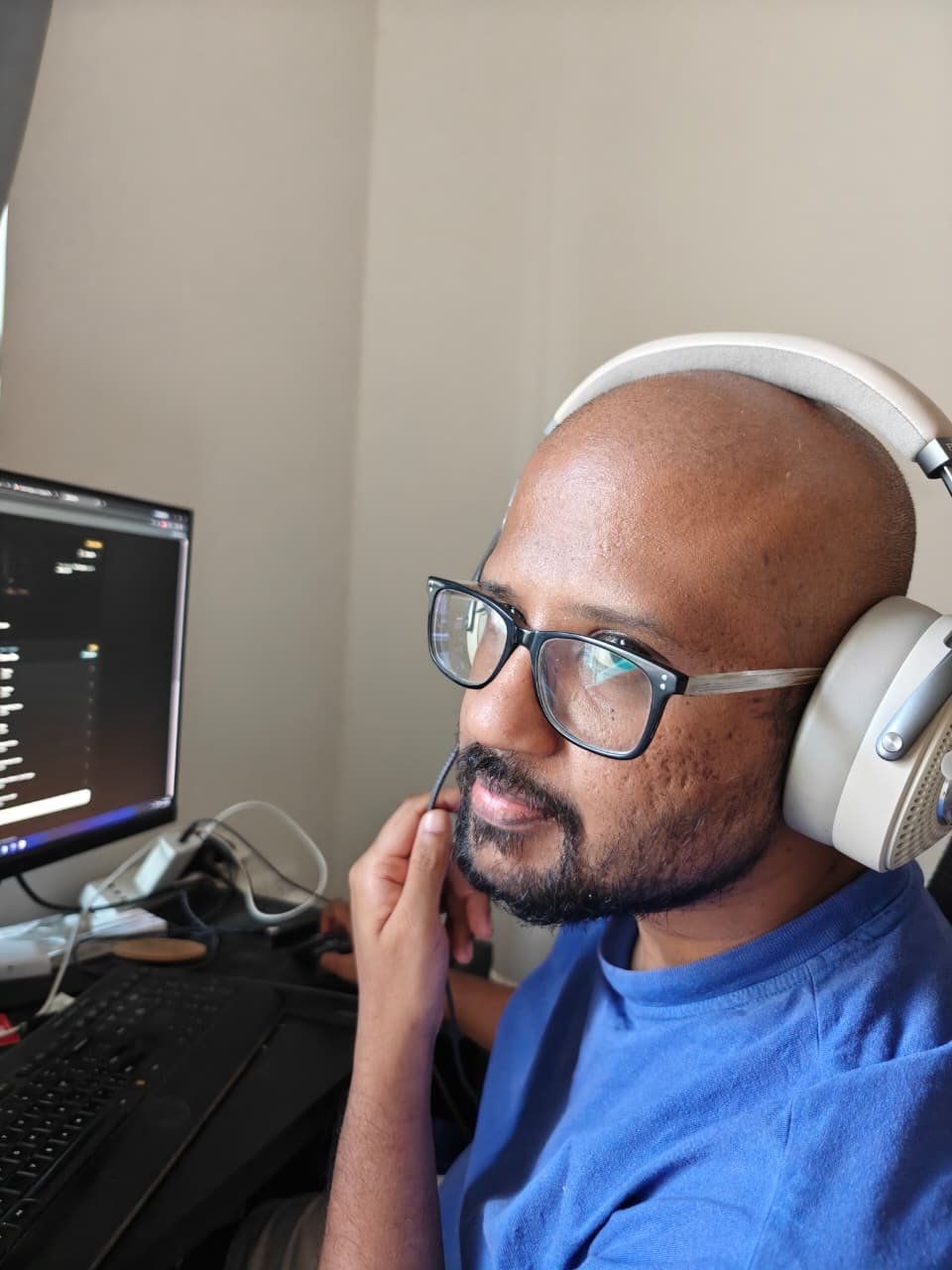
Divyanth Jayaraj grew up in Bangalore in a high-achieving family, built a first game in Visual Basic at 12, and spent more than ten years in software, much of it as a contractor on projects at Fortune 500 companies and startups, each lasting six to eleven months. About two years ago Jayaraj quit that job to find the next adventure, and the result is Legal Arena.
Legal Arena lets players step into the courtroom as a lawyer or a judge: interview AI clients, uncover evidence, negotiate settlements and argue before an AI judge against AI opponents or other players. A November 15 update added running a whole law firm. We spoke about why lawyering is combat with words, how much work it took to make an AI client sound sincere, and why the first paying customers arrived with no marketing at all.
Key takeaways
- Jayaraj says the hardest part was making the AI believable: the first responses mixed up genders and kept saying it did not know, until less pre-written backstory turned out to work better.
- The AI judge weighs only the arguments, evidence and admitted witness testimony presented in court and explains its reasoning, though Jayaraj says no one can guarantee every judgment is fair.
- Instagram and Google ads brought dead traffic; every paying user so far arrived without marketing. There are about 2,000 signups, of whom about 71 have paid.
- Legal Arena is self-funded, gets around 100 visitors a day, and 8 to 12 of them complete an entire case.
Before any of this
Startup.talk:Where did you grow up, and what was childhood like?
Jayaraj:I grew up in Bangalore, raised by a high achieving family. So there was a lot of family pressure to perform in school.
Startup.talk:What first got you into building things?
Jayaraj:As a child, I built my first game using Visual Basic. I briefly discovered the joy of building when I was 12 before student responsibilities took over. I got it back in my third year of engineering when I was asked to build portfolios for US universities. But things really took off only recently, some 2 years ago when I quit my job and wanted to find my next adventure.
Startup.talk:What was your first job, and what did it teach you?
Jayaraj:My first job was as a frontend developer. It taught me the joy of doing things for others and being paid for it.
The road to Legal Arena
Startup.talk:What made you start Legal Arena?
Jayaraj:I like thinking in systems. Anything I look at, I enjoy finding the systems underneath. For the longest time in life, I didn't understand the legal system or what it is that lawyers do until I started watching a few TV shows like Suits and Breaking Bad.
Then, I understood that lawyering was basically combat with words. But it was still too hard to systemize into a game; until AI came along.
So in short, it was 1) Ability to see systems and 2) AI that got me started Legal Arena.
Startup.talk:Why turn the courtroom into a game?
Jayaraj:I've always enjoyed being right on the internet. Back in the Orkut, Facebook and Quora days I enjoyed writing, making a valid point and seeing the likes and views soar. Now that AI is here, I thought it was a huge opportunity to let people enjoy this fix of being right. I've thought of a few debate related SaaS products to build but an AI courtroom game was the most obvious starting point.
“I've always enjoyed being right on the internet.”Divyanth Jayaraj
Startup.talk:How did 10+ years at Fortune 500 companies and startups prepare you to build a game as an indie developer?
Jayaraj:I was a contractor in those Fortune 500 companies with projects each lasting 6 to 11 months. A lot of them were products started from scratch. No matter how big or small the company is, people want the same thing; build something for them and have it work in such a way that it brings them happiness. Working there helped me hone my craft. It helped me see things like a developer rather than a consumer. This basically helped me build large systems and put them together by myself which would otherwise have become clunky despite AI use.
Startup.talk:Who did you imagine playing Legal Arena: law students, lawyers or people who love courtroom dramas?
Jayaraj:It's mainly for people who enjoy courtroom dramas - people who like being right. I haven't gone to law school but I've heard that they sorely lack debating skills or practice opportunities so maybe it helps them too?
The product
Startup.talk:Why the name Legal Arena?
Jayaraj:It's one of the names ChatGPT suggested. It was obvious so I went with it!
Startup.talk:How do you make AI clients, witnesses and opponents feel believable?
Jayaraj:I had to go through enormous number of iterations to get this one right. At first the responses were partly deterministic. As a result the responses would get genders mixed up or give default answers that made no sense. Then, the AI would constantly say it doesn't know but that was because I was trying to draw from a canonical story and kept truths as they are. Eventually I discovered that less is more and it's ok for the actual canonical story to emerge later. That's when the AI started sounding more believable. But still, it has a long way to go. The AI still sounds curt and robot-like.
Startup.talk:How does the AI judge reach a verdict, and how do you keep it fair?
Jayaraj:When you interview your client before going to court, a factsheet gets populated from their replies. It tracks the facts gathered, available evidence, gaps and risks. The opposing counsel also has a separately prepared case file.
The judge considers the arguments, evidence and admitted witness testimony actually presented in court, alongside the rules applicable to the case. It asks follow-up questions and explains the reasoning behind its final judgment.
Can I guarantee every judgment is fair? No. But I’ve built safeguards to keep decisions grounded in the courtroom record, give both sides an opportunity to respond, and prevent the judge from relying on hidden information. It’s something I’m continuing to improve.
Startup.talk:What happens in Judge Mode, and why did you add it?
Jayaraj:I've always been fascinated by what real life judges do in court. It's fun to observe the judges' thought process, what do they mean by fair, should they go by the letter of law or the spirit of law and what incentives exist for them through their judgments. I've also had a strong personal sense of justice myself. So, I wanted to put these together and see for myself how good a judge I could be.
I originally wanted to build an AI judge game but then I forgot about it. Later, after building Legal Arena, I remembered the judge thing and so here it is!
Startup.talk:What have players taught you about how they argue and negotiate?
Jayaraj:I haven't had the opportunity to systematically study how players argue and negotiate yet. I've been so occupied with building and improving Legal Arena that analyzing player behaviour is something I still need to spend more time on.
But that's actually one of the things I'm most excited about. I want to understand whether people approach arguments logically, emotionally, aggressively, or creatively. Do they try to establish the truth, or do they simply try to win? Do they respect the rules of the courtroom, or do they look for ways to bend them?
Unlike traditional games, Legal Arena gives players enormous freedom in how they express themselves. I'm particularly interested in discovering what people do with that freedom when they're confronted with an opponent who can actually respond to their arguments.
Startup.talk:What do you deliberately leave out of Legal Arena?
Jayaraj:The everyday gruntwork that lawyers do, like drafting, writing contracts, studying contracts, finding red flags etc. I haven't found a playful way to systemize that yet, but only because I'm not a big fan of reading.
Positioning
Startup.talk:Who is Legal Arena for, and what job does it do for them? Describe the person who gets the most value.
Jayaraj:We have games in which you get to be soldiers, sailors, commanders, politicians, entrepreneurs, even chefs. It's about time there was one where you get to be a lawyer. Traditional lawyer games like Ace Attorney force you to pick from fixed dialogue choices. Legal Arena is the first game I've seen where you can type in free text and an actual AI responds accordingly.
Who is it for? Right now, it's for people who love courtroom dramas but haven't studied law. It's for people who enjoy verbal one-upmanship.
“It's about time there was one where you get to be a lawyer.”Divyanth Jayaraj
Startup.talk:How do you view your positioning relative to Ace Attorney, AI Dungeon, debate apps and legal education tools like Quimbee? Is there another competitor you think of first?
Jayaraj:I personally haven't played those games but I've heard of Ace Attorney and as far as I know, it's a lawyer game with limited prewritten dialogues. Mine is the complete opposite. I've heard of AI Dungeon as well but that's quite limited in what you can do. But I'm sure AI-powered debate apps are a thing and have a huge growth opportunity.
Startup.talk:What is your core moat in AI-driven courtroom games?
Jayaraj:The core moat is how much work went into making the AI sound believable and at the same time offer some degree of challenge to the player. Besides, as of the November 15 update, it’s not just a courtroom game. You get to run an entire law firm, build a clientele, recruit staff, perform shady actions such as illegally obtaining evidence and so on.
Startup.talk:What are some of the use cases for Legal Arena that are not obvious and can add a lot of value to users? List as many as possible.
Jayaraj:Besides entertainment, I would say
1. Legal Arena gives you a place to practice defending others with words.
2. It's an excellent debate practice tool.
3. It teaches people to research, get info, organize the info and use the info to negotiate or debate.
Startup.talk:What is the one detail in Legal Arena you are proudest of?
Jayaraj:I'm proud of how the AI sounds sincere and believable, especially at the client interview stage. It's not perfect. I could still make it be greedy or scared and whatnot but getting a believable client was a lot of work.
Launch
Startup.talk:Which moment from the early days stands out most?
Jayaraj:Getting my first paying customer. The game wasn't even finished. The AI was so bad. I was still using 300 pre-generated cases. The UI was horrible. But the user still paid for it.
The hard part
Startup.talk:How many people use Legal Arena today?
Jayaraj:I get daily traffic of about 100 users. About 8 to 12 of them complete an entire case as seen in the /blog section's auto-generated case reports.
Startup.talk:What is a challenging time you had building Legal Arena?
Jayaraj:Getting the AI to sound believable. The key challenge was to gauge how much info you need to give the AI exactly to sound natural.

Startup.talk:Who believed in you before there was anything to show? What did they say or do?
Jayaraj:No one but me. Even now, friends and family haven't bothered trying legal arena. Being an indie dev can be quite lonely.
Startup.talk:How do you find players for a game that sits between education and entertainment?
Jayaraj:I honestly don't know. I tried marketing on instagram and google ads but none of them worked. They got me a lot of dead traffic. Every paying user I have now came from doing absolutely nothing.
What it is all for
Startup.talk:What would make you say Legal Arena has succeeded?
Jayaraj:I have about 2000 signups as of today and about 71 of them have paid. I'd call that a success.

Startup.talk:Will AI judges and lawyers ever play a real role in resolving disputes?
Jayaraj:I absolutely believe so. I don't know about lawyers but we will certainly have AI judges in the future.
“I don't know about lawyers but we will certainly have AI judges in the future.”Divyanth Jayaraj
The road ahead
Startup.talk:Where do you want Legal Arena to be in five years?
Jayaraj:It will be pretty cool if law students are told to play legal arena.
Startup.talk:What are your hopes and fears for a post AGI world?
Jayaraj:AGI is the way to go. It's certainly not there to cut your workload but instead to multiply your output. Soon enough we all will be running AI powered companies.
This interview was conducted in writing and has been edited lightly for length and clarity.
About Legal Arena
Legal Arena is an AI courtroom game built by Divyanth Jayaraj. Players act as a lawyer or a judge, interview AI clients, gather evidence, negotiate settlements and argue cases against AI opponents or real players before an AI judge, and can run a whole law firm. legalarena.app
| Attribute | Verified Detail |
|---|---|
| Company | Legal Arena |
| Founder(s) | Divyanth Jayaraj |
| Country | India |
| Grew up | Bangalore, India |
| Before | 10+ years in software at Fortune 500 companies and startups |
| Also built | Quiet Sky |
| Funding | Self-funded |
| Official Website | legalarena.app |
More founder interviews
 ATS Engine
 VoCalm
 TrackSub
 Dailies.games
For founders
Building something? Want to share your journey?
Tell us how it started, what nearly broke it and where it is headed. We will turn it into a story like this one.
Share your journeyFor readers
Want to read more human stories behind the startups?
New founder interviews and stories, as they are published.
Follow us on LinkedIn