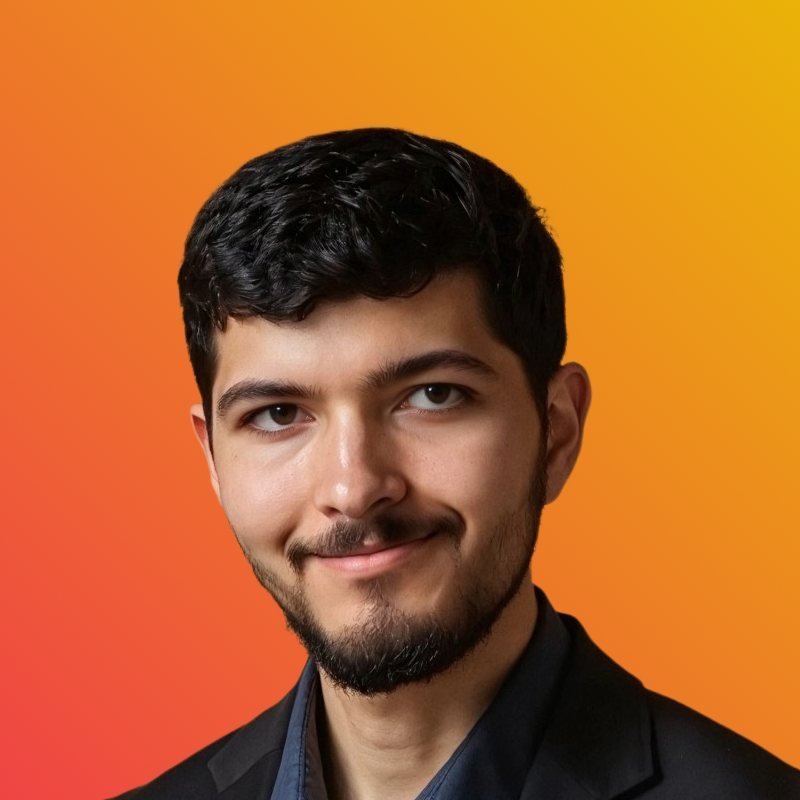
Vivek Nair was born in Phoenix and grew up in Austin, Madison and Singapore, with a computer as the one constant. An internship at a Singapore health-tech startup put him on the front line of SIM-swapping attacks, led to his first cybersecurity patent and pulled him into authentication for good. He earned a Ph.D. in computer science at UC Berkeley at 22, building the multi-factor key derivation function (MFKDF), and went on to technical lead roles in cyber units of the CIA and the Department of Defense.
Multifactor, backed by Y Combinator and a $15 million seed round led by Nexus Venture Partners, lets you share any online account with a person or an AI agent by sending a link. The other side never sees the password, works only within the permissions you set, every action is logged, and access ends the moment you delete the link. We spoke about why AI agents need their own keys, how the company earns trust without asking for it, and what security looks like when agents log in on our behalf.
Key takeaways
- Multifactor shares accounts by link, not by password: the recipient uses the site within set permissions and never holds the credential.
- Passwords are encrypted on the device, so the company's servers only ever see ciphertext.
- The product rests on a decade of peer-reviewed research and seven granted U.S. patents, including one on sharing online accounts.
- AI agents are the pull: most early interest came from people who wanted to give an agent scoped, logged, revocable access.
Before any of this
Startup.talk:Where did you grow up, and what was childhood like?
Nair:I was born in Phoenix, Arizona, and grew up all over the world, including Austin, Madison and Singapore. Moving that often meant starting over a lot, and a computer was the one thing that came with me everywhere.
Startup.talk:What first got you into building things?
Nair:Coding as a kid. I taught myself to program early, and once I saw that I could make something and put it in front of other people, I didn't want to stop.
Startup.talk:What was your first job, and what did it teach you?
Nair:My first real job was as an intern at Holmusk, a healthcare tech startup in Singapore. It was small enough that we all had our hands in everything. It taught me that at a startup the problem in front of you is your job, whatever your title says.
The road to Multifactor
Startup.talk:How did you first get into computer security?
Nair:At Holmusk I ended up helping fight SIM-swapping attacks. I patented my first cybersecurity technology out of that work, and I realized I was more interested in security than in healthcare tech. I have been working on authentication ever since.
Startup.talk:What did your PhD research at Berkeley focus on?
Nair:Two things. The first was applied cryptography for authentication: I built the Multi-Factor Key Derivation Function (MFKDF), which derives an encryption key from several authentication factors at once, so that a password alone is never enough. The second was privacy in virtual reality. We showed that head and hand motion alone can identify a person among more than 50,000 users, and then built tools to protect people from that.
Startup.talk:What can you share about how your work at the CIA and the Defense Department shaped how you think about security?
Nair:I can't discuss the work itself. What I can say is that it taught me to assume every system will be attacked by someone capable and patient, and to design so that a single stolen credential is never the end of the story.
Startup.talk:Why leave government research to start a company?
Nair:Two reasons. Government work protects a small number of systems, and I wanted the same ideas in everyone's hands. And the timing was right: AI agents had started needing access to our accounts, and nobody had a safe way to give it to them.
The product
Startup.talk:Why the name Multifactor?
Nair:It comes from the research the product is built on, multi-factor key derivation. It also states the principle: security should never rest on a single factor.
Startup.talk:Why does account access need to work for AI agents as well as people?
Nair:Agents are starting to do real work inside our accounts, and today the only way to let one in is to hand over the password. That gives the agent everything, forever, with no record of what it did. An agent should get a link with exactly the permissions it needs, a log of every action, and access you can end in one click.
“An agent should get a link with exactly the permissions it needs, a log of every action, and access you can end in one click.”Vivek Nair
Startup.talk:How does secure sharing work without exposing the password itself?
Nair:You save the password once, and it is encrypted on your device before it reaches us. When you share an account, the other person gets a link, not the password. They use the site through that link, within the permissions you set, and they never see or hold the credential. Delete the link and their access ends at once, with no password reset.
Startup.talk:How do you earn trust when you ask people to store their secrets with you?
Nair:By not asking them to trust us. Our servers only ever see ciphertext, so even we can't read your passwords. The cryptography behind it is peer-reviewed and patented, and we are incorporated as a public benefit corporation, so the mission to make the internet safer is written into our charter.
“Our servers only ever see ciphertext, so even we can't read your passwords.”Vivek Nair
Startup.talk:Who are your first users: teams, developers or families?
Nair:People who use AI agents, and the developers who build them. They feel the problem most sharply, because an agent can't do much until it can get into your accounts.
Startup.talk:What do you deliberately leave out of Multifactor?
Nair:Everything but sharing. We cut the product down to the one thing we care about most: sharing an online account by sending a link, with permissions you choose, a live log of every action, and instant revocation.
Positioning
Startup.talk:Who is Multifactor for, and what job does it do for them? Describe the person who gets the most value.
Nair:Anyone who needs to let someone else into an account without giving it away. The person who gets the most value is someone handing work to an AI agent, an assistant or a contractor: they need to give real access, limit what it can do, see what happened, and take it back.
Startup.talk:How do you view your positioning relative to 1Password, Bitwarden, LastPass and Dashlane? Is there another competitor you think of first?
Nair:Those products store passwords and, when you share, they hand the password to the other person. We start from the opposite end: the recipient never gets the password at all. You can share code with a link on GitHub, files with a link on Dropbox and videos with a link on YouTube. Why can't you share an online account with a link? That is the product.
Startup.talk:What is your core moat that prevents 1Password or Bitwarden from replicating your feature set?
Nair:A decade of research. The product is built on cryptography we published at top security conferences, and we hold seven granted U.S. patents, including one on sharing online accounts and one on multi-factor key derivation.
Startup.talk:What are some of the use cases for Multifactor that are not obvious and can add a lot of value to users? List as many as possible.
Nair:- Let an assistant read your email without being able to send one.
- Let an accountant view bank transactions without being able to make a transfer.
- Give an AI agent read-only access to an account so it can automate a task.
- Share a streaming account with a friend without ending up signed out of it yourself.
- End a contractor's access the moment the job is done, with no password change.
- See exactly what was done in a shared account, including what was blocked.
Startup.talk:What is the one detail in Multifactor you are proudest of?
Nair:How easy and fast it is. You can sign up and share any online account with a person or an AI agent just by sending a link, and it takes about a minute. Making it that seamless took a lot of work.
Launch
Startup.talk:What did you learn from the launch?
Nair:That AI agents are the pull. Most of the interest was in sharing accounts with agents, more than with other people.
Startup.talk:Which feedback from the launch surprised you?
Nair:People responded to the simplicity, not the cryptography. We spent years on the security underneath, and what people talked about was that it took a minute to share an account.
“People responded to the simplicity, not the cryptography.”Vivek Nair
The hard part
Startup.talk:How many people use Multifactor today?
Nair:Thousands of people have already shared their accounts with people and AI agents using Multifactor, and usage is growing exponentially.
Startup.talk:What is a challenging time you had building Multifactor?
Nair:Deciding to do one thing, and then making that one thing feel effortless. Cutting a broad security platform down to account sharing was a hard call. Getting sign-up and sharing down to a minute, across real websites, then took far more work than we expected.
Startup.talk:Who believed in you before there was anything to show? What did they say or do?
Nair:My Ph.D. advisor, Dawn Song, and the Hertz Foundation. They backed the research years before it was a product, and both are still behind us: Dawn is on our advisory board, and Hertz supported Multifactor through its entrepreneurial initiative.
Startup.talk:What did Y Combinator change about how you build?
Nair:Focus, speed, and a habit of talking to users. We ship faster, we do fewer things, and we build what people ask for.
What it is all for
Startup.talk:What would make you say Multifactor has succeeded?
Nair:When Multifactor is the gold standard for securely sharing online accounts, so that sending a link is simply how it is done.
Startup.talk:What does online security look like when AI agents log in on our behalf?
Nair:Passwords stop being something you hand out. Every agent gets its own scoped, revocable, logged access, and the question shifts from "who knows the password" to "what is this agent allowed to do, and what did it do".
“Passwords stop being something you hand out.”Vivek Nair
The road ahead
Startup.talk:What are your milestones for the next 12 months, in users and revenue?
Nair:We don't publish user or revenue figures. The goal for the next year is to keep usage growing exponentially and to make Multifactor the obvious way to give an AI agent access to an account.
Startup.talk:And for the next 24 months?
Nair:To be the default way people share accounts with each other as well as with agents.
Startup.talk:Where do you want Multifactor to be in five years?
Nair:The gold standard for securely sharing online accounts, used the way people use a share link for a file today.
Startup.talk:What are your hopes and fears for a post AGI world?
Nair:My hope is that agents take on the work people don't want to do. My fear is agents acting inside our accounts with no limits and no record. That fear is a lot smaller with security guardrails for agents in place, and those guardrails are what we are building.
This interview was conducted in writing and has been edited lightly for length and clarity.
About Multifactor
Multifactor lets you share any online account with people and AI agents by sending a link, without sharing the password. Passwords are encrypted on your device, recipients act only within the permissions you choose, every action is logged, and access can be revoked instantly. Multifactor is a public benefit corporation based in San Francisco. multifactor.com
| Attribute | Verified Detail |
|---|---|
| Company | Multifactor |
| Founder(s) | Vivek Nair |
| Country | USA |
| Based | San Francisco, California |
| Grew up | Phoenix, Austin, Madison and Singapore |
| Studied | Ph.D., Computer Science, UC Berkeley |
| Before | Technical lead in cyber units of the CIA and the Department of Defense |
| Funding | $15M seed led by Nexus Venture Partners; Y Combinator F25 |
More founder interviews
 Zyaku
 VedIX
 Decklit
 VoCalm
For founders
Building something? Want to share your journey?
Tell us how it started, what nearly broke it and where it is headed. We will turn it into a story like this one.
Share your journeyFor readers
Want to read more human stories behind the startups?
New founder interviews and stories, as they are published.
Follow us on LinkedIn