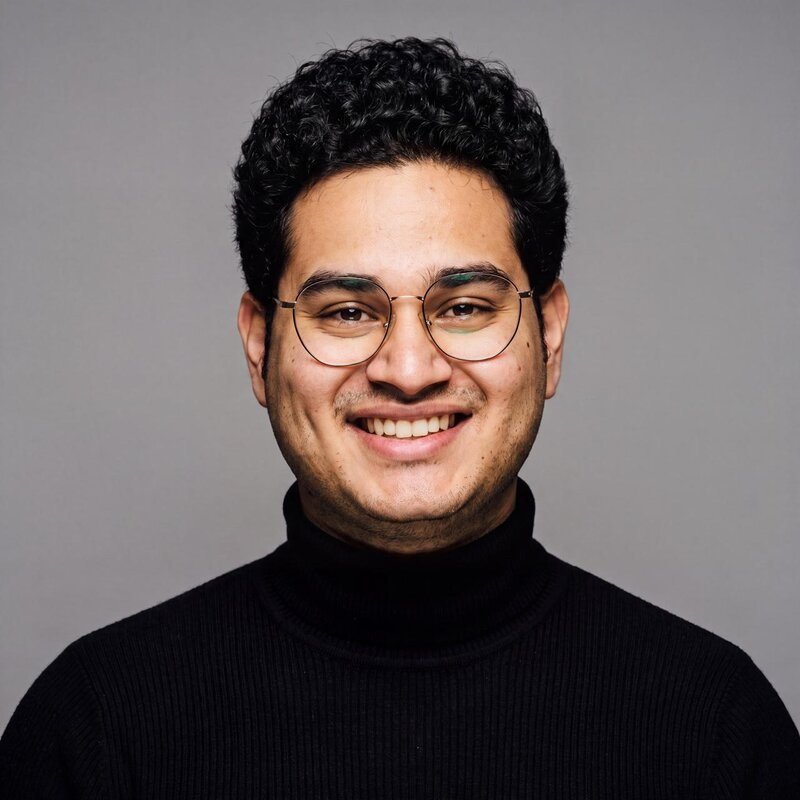
Rohit Kashyap was born in Mumbai, with family roots in a small city in Bihar where nobody took power or a phone signal for granted. Kashyap's career began in finance, first as a financial consultant at BNP Paribas, then in investment and wealth management and at Kashyap's own firm, until the frustration of needing tools that did not exist made learning to build feel better than waiting.
Zyaku is the result: an offline-first publishing platform for creators and independent journalists, for comics, journalism, podcasts and short video. Posts written without a connection stay safely on the phone and publish exactly once when the signal returns, creators can earn with no follower minimum, and the same app carries safety tools for the worst day. We spoke about a finance rule that became a product rule, the floods in Nepal, an Emergent Ventures grant for the open-source HoldSend library, and why the detail Kashyap is proudest of is one small line under the editor.
Key takeaways
- Zyaku keeps posts written offline safely on the device and publishes each one exactly once when the connection returns, and shows where every post is: saved, waiting for signal, being sent or published.
- Creators can earn with no follower minimum. Safety tools sit in the same app: Crisis alerts from official warning services, an offline emergency assistant, a Medical ID with a QR code, I'm Safe check-ins and an offline map of hospitals and shelters. Zyaku is not an emergency service.
- The hard part of offline publishing is open-sourced as HoldSend (version 0.2 on npm, not production-ready yet), supported by an Emergent Ventures grant.
- The targets: 25,000 users and $1 million in revenue within 12 months, and around 100,000 users and $5 million within 24.
Before any of this
Startup.talk:Where did you grow up, and what was childhood like?
Kashyap:I was born in Mumbai, but my family comes from a small city in Bihar.
So I grew up with a foot in two very different places. Mumbai, where everything moves fast and the whole city runs on being connected. And our small city in Bihar, where life was slower, everyone knew everyone, and you learned not to take things like power or a phone signal for granted.
I didn't know it then, but that gap stayed with me. A lot of what I build today is for the second place, not the first.
Startup.talk:What first got you into building things?
Kashyap:Honestly, frustration. I spent most of my working life in finance, first investment and wealth management, then my own firm. I wasn't an engineer. But I kept running into the same gap: the thing I wanted didn't exist. At some point, waiting for someone else to build it felt worse than learning. So I taught myself.
Startup.talk:What was your first job, and what did it teach you?
Kashyap:My first job was as a financial consultant at BNP Paribas.
Finance taught me one rule I still build by: a transaction either happened or it didn't. 'Probably sent' is not a state. You don't get to tell someone their money moved when you're only hoping it did. Years later, when I started on the offline side of Zyaku, that was the first rule I wrote down. Nothing gets called sent until it has actually arrived.
The road to Zyaku
Startup.talk:What made you start Zyaku?
Kashyap:One picture I couldn't shake. A phone on a kitchen table, one bar of signal that keeps disappearing, water already in the street, and someone trying to tell their mother they're fine. The message just sits there with a little clock icon, and nobody knows if it went.
Most of the internet was built for good Wi-Fi and a calm afternoon. When the network goes, apps don't slow down. They just stop. Your words are still on the phone, but the software decides that without a connection, nothing you do counts. That bothered me enough to start building.
“Most of the internet was built for good Wi-Fi and a calm afternoon.”Rohit Kashyap
Startup.talk:What did you see that convinced you creators and journalists need tools that keep working when networks fail?
Kashyap:The floods in Nepal. Networks failed exactly when people most needed to reach each other.
But it's not only disasters. Power cuts, a train through a dead zone, a village with one weak tower. Reporters file from those places. Creators live in those places. If your tool loses your work, or tells you something was sent when it wasn't, you stop trusting it, and usually on the day it matters most.
Startup.talk:How do Zyaku and TAMVEL connect, and why build both?
Kashyap:Same stubborn idea, two different problems.
Zyaku is about words. A post, a story or a help message should go out exactly once when the signal comes back, and the app should never pretend it arrived when it didn't.
TAMVEL is about money. Financial apps shouldn't stop working the moment the network does. That one comes straight from my finance years, where a transaction either happened or it didn't. 'Probably sent' is not a state.
TAMVEL is still early. It's at the research stage with a prototype, so I talk about it carefully.
Startup.talk:What did becoming an Emergent Ventures grantee change for you?
Kashyap:It changed how I think about the open-source side of the work. The grant supports HoldSend, the library behind Zyaku's offline publishing, so the hard part, writing offline and publishing exactly once, could be built in the open for everyone and not only for us.
It also meant something simpler. Emergent Ventures backs people with unusual ideas, often before there's much to show. Being backed that early told me this idea was worth the stubbornness. It made me more careful too. When someone trusts you that early, you owe them honesty about what's done and what isn't.
The product
Startup.talk:Why the name Zyaku?
Kashyap:I found the name on a trip to Tokyo, from Japanese people I met there. "Zyaku" is an old way of writing the Japanese sound jaku, and it can mean two things that fit us almost too well: 寂, quiet, and 弱, weak. The quiet hour when the internet goes silent, and the weak signal people are left with. Zyaku is built for both.
Startup.talk:How does a post queue offline and still publish exactly once when the connection returns?
Kashyap:When you write without a connection, Zyaku keeps the post safely on your phone and gives it its own key. When the signal comes back, it sends it.
Phones lose signal halfway through a send. People tap the button again. Apps get closed in the background. In every one of those cases the server sees the same key, knows it's the same post, and publishes it once. Not zero times, not twice.
You can also see where each post is: saved on this device, waiting for signal, being sent, or published. If a post is waiting, Zyaku now tells you why. The rule underneath all of it is simple: nothing gets called sent until it has actually arrived.
Startup.talk:Why build Disaster Alert broadcasts and Offline Emergency Access into a creator platform?
Kashyap:Because the people who create on Zyaku are the same people who end up in the flood. Once a platform works offline for creators, it can work offline for families too.
So Zyaku turns serious official warnings into Crisis alerts, and it has an offline emergency assistant, a Medical ID with a QR code a rescuer can read with any phone camera, I'm Safe check-ins and an offline map of hospitals and shelters. You can even send yourself a test alert on a calm day and Zyaku tells you whether it arrived.
I'm careful here, because safety is the one place where overpromising is unforgivable. Zyaku is not an emergency service. If you're in danger, call your local emergency number first.
“Safety is the one place where overpromising is unforgivable.”Rohit Kashyap
Startup.talk:Why pay creators with no follower minimum, and how does that work as a business?
Kashyap:I don't share the exact split in interviews. It's on our pricing page, and creators keep most of what they earn.
The part that matters more to me is no follower minimum. Readers pay for the chapter they unlock, not for how famous you are. A creator in a small town with a few loyal readers should be able to earn. And they should get paid where they live, including places where the usual payment rails don't reach easily.
Startup.talk:Why are you open-sourcing the core of Zyaku?
Kashyap:Because this part shouldn't belong only to us. Newsrooms need it. Aid groups need it. Small apps in places with bad signal need it. Every team that builds it alone makes the same mistakes I made: losing posts, duplicating posts, and telling people 'sent' when it wasn't true.
So we released it as HoldSend, an open-source library for writing offline and publishing exactly once. Version 0.2 is on npm. It's early and not ready for production yet, and the README says that plainly. Anyone can use it, read it and improve it.
Startup.talk:What do you deliberately leave out of Zyaku?
Kashyap:We don't optimise for time spent, and we don't count it as a win.
Mood check-ins and journal entries are not advertising inputs. We don't sell how you feel.
Where we don't know a number, the dashboard shows a dash instead of an estimate dressed up as a fact.
And we don't call things finished before they are. Our mesh, where phones pass messages to each other with no network, is still in testing. I won't say otherwise until it works in the field, with real people at real distances.
Positioning
Startup.talk:Who is Zyaku for, and what job does it do for them? Describe the person who gets the most value.
Kashyap:A journalist who has to file from a place where the network keeps dropping. A creator in a small town who wants to get paid without first building a huge audience. A family that wants to know everyone is safe before the towers come back.
The person who gets the most out of Zyaku is someone whose connection isn't reliable, and who has quietly learned that most apps let them down.
Startup.talk:How do you view Zyaku's positioning relative to other publishing and creator platforms, and to offline messaging apps?
Kashyap:I don't really see Zyaku as an alternative to any one of them, and I'd rather not compare by name.
Most publishing and creator platforms are built on one quiet assumption: you're online. When the signal goes, they stop, and your work waits or disappears. The apps that do work without a network are mostly about messaging, not about publishing a story, building an audience or getting paid.
Zyaku sits where those two meet. It's a place to publish comics, journalism, podcasts and video and to get paid with no follower minimum, and it's built from the ground up to keep working when the network doesn't, with safety tools in the same app.
The competitor I think of first isn't a company. It's the app on your phone that shows a little clock icon when the signal drops, and never tells you the truth about whether your words went.
Startup.talk:What is your core moat in offline-first creator publishing?
Kashyap:Being honest about state.
Plenty of apps can save something offline. Very few will tell you the truth about whether it actually went, and then publish it exactly once when it does. We built every part of Zyaku around that rule, from posts to emergency messages to test alerts. And we build in the open, with a public changelog and an open-source core, so people can check our work.
Startup.talk:What are some of the use cases for Zyaku that are not obvious and can add a lot of value to users? List as many as possible.
Kashyap:- A reporter in a shutdown or blackout writes the story, and it goes out once when the signal returns.
- Writing on a flight or a train and publishing when you land.
- Offline Packs: download comic chapters or videos once on Wi-Fi, then read or watch anywhere.
- A Medical ID QR code a rescuer can read with any phone camera, no app and no internet.
- Sending yourself a test disaster alert before the season starts, to check it reaches your phone.
- Saving the map of nearby hospitals and shelters before you travel.
- Publishing anonymously as a journalist: your identity is stored encrypted and is never shown to readers.
- Telling the people you trust that you're okay with one tap (I'm Safe).
- Reading posts in your own language, with a clear label when AI translated them and the original one tap away.
Startup.talk:What is the one detail in Zyaku you are proudest of?
Kashyap:A tiny line under the editor. It tells you where your draft is: saved on this device, saved to Zyaku, waiting for signal, being sent, or published.
It's small, but it's the whole idea of Zyaku in one line.
“It's small, but it's the whole idea of Zyaku in one line.”Rohit Kashyap
Launch
Startup.talk:What did you learn from your launch?
Kashyap:The biggest lesson was about how we describe ourselves.
For a long time we called Zyaku a social media app. Launching made it clear that was the wrong box. Put Zyaku next to social apps and people look for a feed and a follower count, and the things that make it different get lost.
Zyaku is a different category. It's publishing that keeps working when the internet doesn't: write offline, publish exactly once when the signal returns, get paid without needing a big audience, and have safety tools on the same phone on the worst day.
The hard part
Startup.talk:What is a challenging time you had building Zyaku?
Kashyap:The hardest moments were the quiet failures.
A while ago I noticed alerts weren't showing up on my own devices when Zyaku was closed. On our side everything looked fine. Every alert went out. But we weren't reading the answer that said whether a phone actually took it. Nothing broke, no error, and everyone believed it worked.
That was uncomfortable to find. We fixed it from both ends: we now read that answer, and we gave people a button to send themselves a test and see it for themselves.
Startup.talk:Who believed in you before there was anything to show? What did they say or do?
Kashyap:My family, long before there was a product: my wife, my mother, my father and my sister.
None of them needed a demo or a pitch. They believed in it because they knew me. When I left a steady career in finance to build something most people didn't understand yet, they stood behind me.
That support carried me through the months when there was nothing to show anyone.
Startup.talk:How does a small team build infrastructure this broad?
Kashyap:We're a small team, and we don't try to do everything at once. We ship small changes often, write every change on a public changelog, and say no to a lot. Building in public helps too. When I posted a demo of offline publishing, engineers I'd never met started asking hard questions, and those questions made the work better.
What it is all for
Startup.talk:What would make you say Zyaku has succeeded?
Kashyap:When a journalist in a shutdown files a story and it arrives once. When a creator in a small town gets paid without needing a big audience. When a family knows everyone is safe before the towers come back.
If those things happen on ordinary bad days, quietly, without anyone having to think about it, I'll say it worked.
Startup.talk:What will the internet look like for creators when AI agents and intermittent networks are both normal?
Kashyap:I think a weak or missing connection will simply be normal for a lot of people, and the software that earns trust will be the software that's honest about it.
AI will write a lot of what we read, so knowing where something came from will matter more. That's why Zyaku labels AI translations and keeps the original one tap away, and why a story only shows as independently checked when a reviewer, never the author, has checked it against a public source.
The road ahead
Startup.talk:What are your milestones for the next 12 months, in users and revenue?
Kashyap:In the next 12 months we want to reach 25,000 users and $1 million in revenue.
Startup.talk:And for the next 24 months?
Kashyap:In 24 months we want to reach around 100,000 users and around $5 million in revenue, with HoldSend used by teams outside Zyaku.
Startup.talk:Where do you want Zyaku to be in five years?
Kashyap:I want Zyaku to be the place people trust on the worst day, not only on the best one. And I'd love the open-source core to be used by teams we've never met, in newsrooms and aid groups, so this problem gets solved once for everyone.
Startup.talk:What are your hopes and fears for a post-AGI world?
Kashyap:My hope is that it frees people to do more of what only humans can do.
My fear is that we start valuing people less because of it. That's my personal view, and I'll keep saying it: AI should never become a reason to treat a human being as worth less. Humans built it. The people behind it deserve their full due: fair pay, real credit and respect.
“AI should never become a reason to treat a human being as worth less.”Rohit Kashyap
This interview was conducted in writing and has been edited lightly for length and clarity.
About Zyaku
Zyaku is an offline-first publishing platform for creators and independent journalists, from Zyaku Inc. in San Francisco, founded by Rohit Kashyap. Comics, motion comics, journalism, podcasts and short video written without a connection stay safely on the device and publish exactly once when the signal returns. Creators can earn with no follower minimum. Its safety tools include Crisis alerts from official warning services, an offline emergency assistant, a Medical ID with a QR code, I'm Safe check-ins and an offline map of hospitals and shelters; Zyaku is not an emergency service. Its offline publishing core is open source as HoldSend. zyaku.com
| Attribute | Verified Detail |
|---|---|
| Company | Zyaku |
| Founder(s) | Rohit Kashyap |
| Country | USA |
| Company | Zyaku Inc., San Francisco |
| Born | Mumbai, with family roots in Bihar |
| Before | Financial consultant at BNP Paribas; investment and wealth management; founded own finance firm |
| Also | Founder of TAMVEL (early-stage research, prototype) |
| Funding | Emergent Ventures grant (Mercatus Center at George Mason University) |
More founder interviews
 Dots
 VoCalm
 VedIX
 TrackSub
For founders
Building something? Want to share your journey?
Tell us how it started, what nearly broke it and where it is headed. We will turn it into a story like this one.
Share your journeyFor readers
Want to read more human stories behind the startups?
New founder interviews and stories, as they are published.
Follow us on LinkedIn