
Volodymyr Tsurkan, known as Vova, grew up in a village near Chernivtsi in Ukraine, drawing characters and comics in the margins of books when sketchbooks were too expensive, then spent six years at art school. A move from 3D design into web design happened almost by accident, when a client picked Vova’s concept over a coworker’s.
Coohoo started as a personal tool. Once Vova began vibe coding websites alone, collecting client feedback became the bottleneck. Coohoo lets clients open a staging link, click any element and pin a note, with no account or password, then hands that feedback to coding agents such as Claude Code, Cursor and Codex, by copied prompt or through MCP. It is very early: Vova is still working towards the first paying customer.
Key takeaways
- The core problem is the gap between what a client means and what the builder understands: which page, which section, which element.
- No accounts for reviewers: busy clients put off anything that asks them to register and learn a new tool.
- MCP lets a coding agent read comments, reply, and resolve or reopen them, so feedback no longer has to be copied into prompts by hand.
- Every reviewer gets a random pigeon avatar: a little identity without a profile, and a deliberate bit of fun in a dry task.
- The hardest part so far is not building but promoting: knowing when to stop polishing and get people to try it.
Before any of this
Startup.talk:Where did you grow up, and what was childhood like?
Vova:I grew up in a village near Chernivtsi, Ukraine. My family didn’t have much money, but I was always drawing—little characters, sketches, and short comic stories. We couldn’t always afford sketchbooks or drawing supplies, so I used whatever space I could find: the margins of books, around the text, anywhere a drawing would fit.
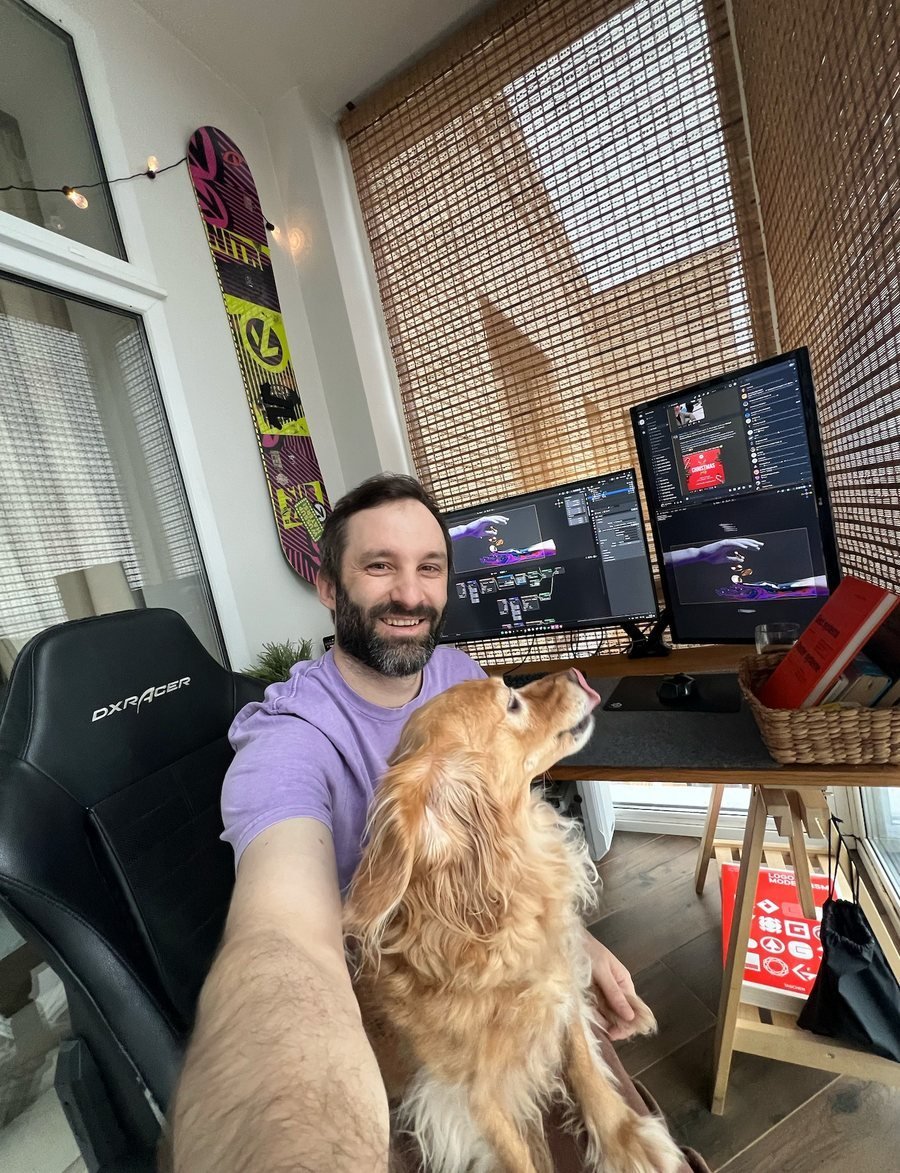
Later, I went to art school for six years. Most of my childhood was a mix of regular school, art school, and video games, with skating, street trials, and snowboarding somewhere in between. I bought my first snowboard with my first-ever salary. That was an easy decision.
Startup.talk:What first got you into building things?
Vova:Drawing was where it started, but web design happened almost by accident. I was working as a 3D designer when a coworker who did freelance website design asked me to help with a client project. He had a lot on his plate, so we each made a concept to give the client a choice. They picked mine.
I didn’t have much 3D work at the time, so I thought, “Maybe I should give this a proper try.” That’s how I started getting into web design.
We were designing websites in Photoshop back then. Man, I hated that part. I liked figuring out how a website should look and work, but doing it all in Photoshop was painful.
Startup.talk:What was your first job, and what did it teach you?
Vova:I worked in 3D design before moving into websites, but my first big web project was a gaming platform in the Netherlands, around 2016. I’ve always loved games, so getting to design something in that world was a lot of fun. It was also my first branding project, so I had quite a few things to figure out along the way.
I still help them with new features and browser games today. Looking back, that’s probably the biggest thing the project taught me: a website isn’t finished when it launches. You keep learning, adding things, and improving it as people use it. I didn’t expect that first project to become such a long relationship.
The road to Coohoo
Startup.talk:What made you start Coohoo?
Vova:When I started vibe coding projects on my own, gathering feedback became a pain. Whether it was a company team or a small client, I needed a simple way for people to show me what they wanted changed.
So I decided to build something for myself. Nothing complicated—just a tool that would make reviews easier and give me a chance to learn something new while building it. That became Coohoo.
Startup.talk:What went wrong with client feedback in your own design work?
Vova:The frustrating part is the gap between what someone means and what you understand. Someone says, “Can we change this?” and before you can do anything, you have to work out which page, which section, and which element they’re talking about.
Once I started building the websites myself, I was on both sides of that problem: collecting the feedback and making the changes. I wanted people to point directly at the thing they meant so we could spend less time explaining and more time fixing it.
“I wanted people to point directly at the thing they meant so we could spend less time explaining and more time fixing it.”Volodymyr Tsurkan
Startup.talk:Why let clients comment with no account and no password?
Vova:Honestly, some clients just won’t bother creating another account. And I get it. Project owners are busy. Reviewing a website is already something they have to fit into their day, so asking them to register and learn a new tool makes it easier to put off.
I wanted to send them a link and say, “Open this, click what you want changed, and leave a comment.” That’s it.
Later, I added MCP and the coding-agent handoff because I got lazy too, haha. If clients shouldn’t have to spend time explaining where something is, I shouldn’t have to copy all that context into my coding agent by hand either.
“Later, I added MCP and the coding-agent handoff because I got lazy too, haha.”Volodymyr Tsurkan
Startup.talk:Who has built Coohoo?
Vova:Vadym helped me with a few things, but I’ve built Coohoo mostly on my own, starting with the branding and continuing through the design and development.
It’s been a very hands-on project. If something needs designing, building, or fixing, that usually means it’s on my list.
The product
Startup.talk:Why the name Coohoo?
Vova:At the beginning, this was a personal project, almost a joke, so I let myself have some fun. The idea was that pigeons would drop little marks on the screen instead of the usual boring comment pins.
Then I made a whole collection of pigeon portraits for avatars. People can join without registering and get a random pigeon, so you can tell who left each comment without asking anyone to set up a profile.
The name followed naturally. Coohoo is my version of the sound a pigeon makes. There wasn’t a big naming strategy behind it. It just fit.
Startup.talk:How does a pinned comment become a task a coding agent can act on?
Vova:The comment stays connected to the page and the element someone clicked. So instead of getting “Please fix that button” and having to explain which button, you have the feedback and its context together.
You can copy that into a prompt for your coding agent, or connect the agent through MCP so it can read the feedback directly. Through MCP, it can also reply and resolve or reopen comments.
You still need to review what the agent does, but you spend less time translating someone’s feedback into instructions.
Startup.talk:Why keep the widget invisible on the live site?
Vova:Because feedback during a review is working material. Clients and teammates need somewhere to discuss unfinished things, but visitors to the live website don’t need to see that conversation.
You configure the production domain, and Coohoo keeps the widget hidden there. The idea is to make reviews easy on staging without adding something extra to the public website.
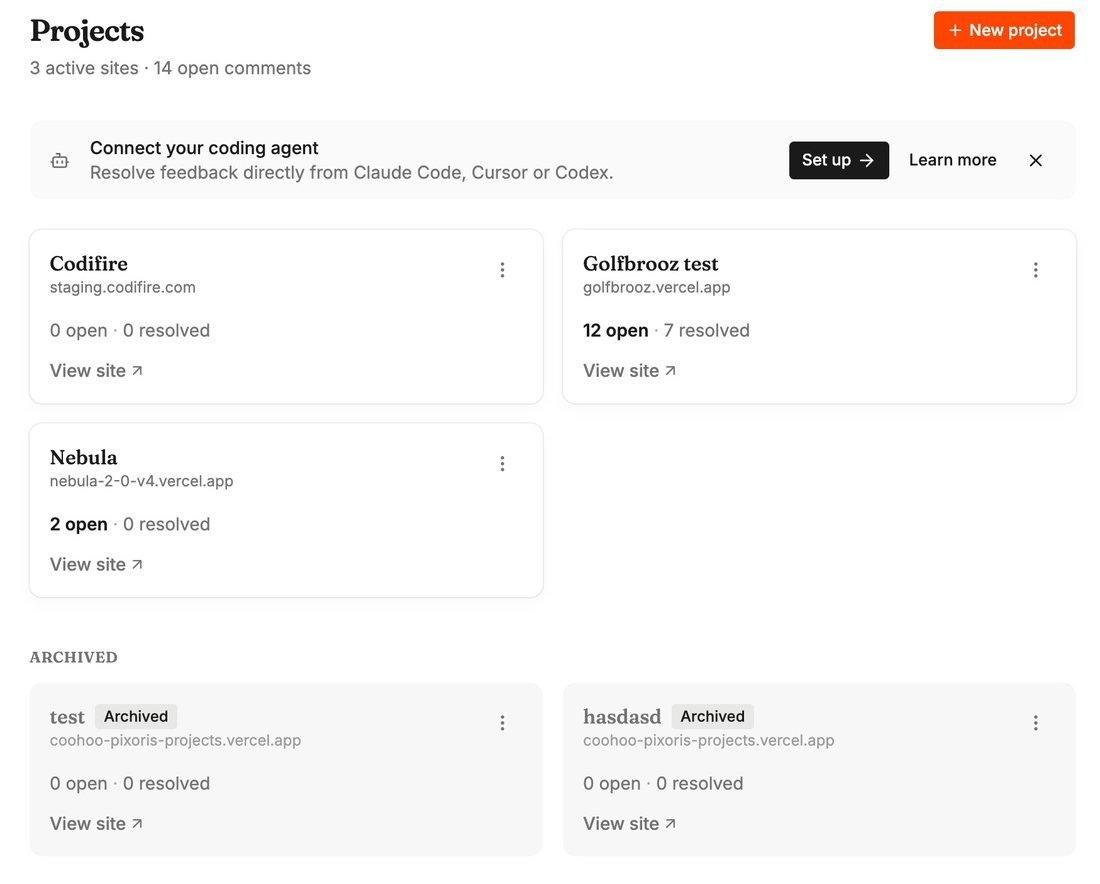
Startup.talk:What does the dashboard show a team that email threads never did?
Vova:It gives you a clear view of what still needs attention. You can see the comments for each project, read the replies, and tell what’s open and what’s already resolved. Each note also stays connected to the element it refers to.
Email can hold the conversation, but you still have to piece together the current state of the work. Did we fix this? Was that reply about the same issue? Coohoo puts that information together so you don’t have to reconstruct it every time.
Startup.talk:Which coding agents do you support, and how?
Vova:I mainly think about tools like Claude Code, Cursor, and Codex. There are two ways to use Coohoo with them.
The simplest is to copy feedback as a prompt and paste it into your coding tool. The other is MCP, which lets a compatible agent read comments from Coohoo, reply, and update their status.
I wanted it to fit into the tools people already use. I’m building with coding agents myself, so this came from wanting to make my own workflow less repetitive.
Startup.talk:Where did the bird theme come from?
Vova:It started with the joke about pigeons leaving marks on a page, and then I kept going. Once I started drawing different pigeon portraits, they became little characters rather than generic avatars.
I liked that someone could open a review link and immediately become a slightly ridiculous pigeon. Website reviews can be pretty dry. There’s room to have a bit of fun while still making a useful tool.
Startup.talk:What do you deliberately leave out of Coohoo?
Vova:I haven’t drawn a firm boundary yet. Coohoo started with something I needed myself, and I’d like to let it grow naturally as I learn what other people need from it.
For now, I try to keep the main experience simple: open a link, leave feedback, and make the change. If I add something, I want it to help that process. But I’m still early, so I don’t want to pretend I already know exactly what the product should look like a few years from now.
Positioning
Startup.talk:Who is Coohoo for, and what job does it do for them? Describe the person who gets the most value.
Vova:Designers, developers, and small agencies who need feedback without making clients learn another tool. Especially people building with coding agents, like me. Send a link, get comments, make changes.
Startup.talk:How do you view your positioning relative to BugHerd, Marker.io, Markup.io, Pastel and Vercel comments? Is there another competitor you think of first?
Vova:I started with my own problem, not a competitor spreadsheet. My focus is simple client reviews and getting feedback into coding agents with less manual work. And pigeons, of course.
Startup.talk:What is your core moat in website feedback tools?
Vova:Honestly, I don’t think I have a strong moat yet. I use Coohoo myself, notice what’s annoying, and improve it. I hope that care adds up to something people want to keep using.
Startup.talk:What are some of the use cases for Coohoo that are not obvious and can add a lot of value to users? List as many as possible.
Vova:Leaving notes for yourself while reviewing a build, checking copy or translations, and spotting differences between a design and the actual website. Those notes can then go straight to your coding agent.
Startup.talk:What is the one detail in Coohoo you are proudest of?
Vova:The random pigeon avatars. People don’t need to register, but they still get a little identity in the conversation. It’s useful and slightly ridiculous.
Launch
Startup.talk:What did you learn from launching Coohoo?
Vova:Building and launching are two different jobs. I’m comfortable designing and fixing things, but getting people to notice Coohoo is something I’m still learning. Publishing it doesn’t mean people will show up.
The hard part
Startup.talk:How many people use Coohoo today?
Vova:It’s still very early. I use it myself, but I don’t have a reliable active-user number to share yet. I’m still working toward the first paying customer.
Startup.talk:What is a challenging time you had building Coohoo?
Vova:Knowing when to stop polishing and start promoting it. There’s always another detail I want to fix. Getting people to try it is harder for me than opening the project and improving another screen.
Startup.talk:Who believed in you before there was anything to show? What did they say or do?
Vova:Actually, I didn’t tell anyone while I was building it. It was a personal project, and I was having fun figuring things out. I wanted to have something working before showing it to people.
What it is all for
Startup.talk:What would make you say Coohoo has succeeded?
Vova:When people use it on one project and choose it again for the next. That would mean it’s useful beyond my own workflow. Making enough from it to keep building would be a good sign too.
Startup.talk:When coding agents build most websites, what will a designer's job be?
Vova:Deciding what’s worth building and whether the result is actually good. Making a page is getting faster, but someone still needs to understand the people using it, notice what feels wrong, and make thoughtful decisions. I spend less time pushing pixels now, but I still have plenty to do.
“Deciding what’s worth building and whether the result is actually good.”Volodymyr Tsurkan
The road ahead
Startup.talk:What are your milestones for the next 12 months, in users and revenue?
Vova:First, get paying customers who use Coohoo regularly. I don’t have a specific revenue target yet. I want to understand why people come back and what makes them willing to pay.
Startup.talk:And for the next 24 months?
Vova:I’d like Coohoo to bring in steady revenue and have a clearer direction based on real use. Hopefully, I’ll also get better at marketing. I can’t keep solving everything by redesigning another screen, haha.
Startup.talk:Where do you want Coohoo to be in five years?
Vova:Still around, useful, and earning enough to keep building it. I’d love it to become a tool people naturally reach for when reviewing a website. With the pigeons still there, obviously.
Startup.talk:What are your hopes and fears for a post AGI world?
Vova:I like that I can now build ideas that would have stayed in my sketchbook before. I hope more people get that opportunity. What worries me is how quickly work could change and whether people will have enough time and support to adapt.
“I like that I can now build ideas that would have stayed in my sketchbook before.”Volodymyr Tsurkan
This interview was conducted in writing and has been edited lightly for length and clarity.
About Coohoo
Coohoo, built by Volodymyr Tsurkan in Ukraine, is a website feedback tool: clients pin comments on any element of a staging site without an account, and teams hand that feedback to coding agents through MCP.
| Attribute | Verified Detail |
|---|---|
| Company | Coohoo |
| Founder(s) | Volodymyr Tsurkan |
| Country | Ukraine |
| Grew up | Near Chernivtsi, Ukraine |
| Background | Art school, 3D and UI design |
| Works with | Claude Code, Cursor, Codex |
| Stage | Early, free to start |
| Official Website | coohoo.app |
More Startups in Spotlight
For founders
Building something? Want to share your journey?
Tell us how it started, what nearly broke it and where it is headed. We will turn it into a story like this one.
Share your journeyFor readers
Want to read more human stories behind the startups?
New founder interviews and stories, as they are published.
Follow us on LinkedIn