
Yury Timokhin grew up in Bryansk, near the borders of Russia, Ukraine and Belarus, in the last years of the Soviet Union. Programming started on a university computer in the 1990s, then on a home-built PC in BASIC, and the first job was as a programmer at a city hall.
WattSmart began with Yury’s own electricity bill. After switching to a dynamic tariff in Latvia, checking prices and weather every day to find the cheap hours became a chore, so Yury built an app that shows them at a glance. It now covers day-ahead prices across Europe from the ENTSO-E Transparency Platform, in 15-minute or hourly slots and 14 languages, and is close to 4,000 downloads, with almost half of those users still active.
Key takeaways
- Latvia has about 1.7 million people, so WattSmart was built for all of Europe and in local languages from the start.
- Users can compare prices against daily, weekly, monthly or yearly averages, or set their own threshold, where many apps offer only the daily average.
- EV owners and heat pump owners save the most, because they use a lot of electricity and can choose when to use it.
- The move to 15-minute prices means 96 slots a day; WattSmart also shows hourly averages so the detail does not get in the way.
- Left out for now: the final cost with network fees and taxes, because every country has its own rules.
Before any of this
Startup.talk:Where did you grow up, and what was childhood like?
Yury:I was born and grew up in Bryansk, a town near the borders of Russia, Ukraine and Belarus. It was still the Soviet Union back then. I had a really happy, carefree childhood. After school, I’d spend hours outside, just running around and playing with my friends.
Startup.talk:What first got you into building things?
Yury:At university in the 1990s, I got interested in programming. I had access to a university computer, which was absolutely huge back then. After graduating, I managed to buy all the parts and assemble my first computer at home. That's how I started programming in BASIC, and I just kept learning as technology evolved.
Startup.talk:What was your first job, and what did it teach you?
Yury:My first job was as a programmer at the city hall. I was lucky to have access to some of the latest computers at the time, so I spent a lot of time figuring out how they worked and developing my own small programs. It was a great opportunity to learn by doing.
The road to WattSmart
Startup.talk:What made you start WattSmart?
Yury:Actually, my own needs. I switched to a dynamic tariff, but electricity prices were quite volatile. In Latvia, they can vary a lot throughout the day, and if you don't keep an eye on them, your monthly bill can be surprisingly high. So I thought, why not build a simple app that shows you the cheapest hours in a clear, user-friendly way?
“why not build a simple app that shows you the cheapest hours in a clear, user-friendly way?”Yury Timokhin
Startup.talk:When did you switch to a dynamic tariff yourself, and what made tracking cheap hours so frustrating?
Yury:I switched to a dynamic tariff when I realised I could save money by using electricity at the right times. It makes a big difference, especially in winter with heating costs, or when you're charging an electric car. The frustrating part was having to check the weather forecast and electricity prices every day to figure out the best slots. I wanted something simpler, where I could see everything at a glance.
Startup.talk:Why build for all of Europe and 14 languages instead of one country first?
Yury:Well, Latvia is a small country, with about 1.7 million people. I wanted to build something on a larger scale, reaching countries where people would benefit most from the app. And if you're going across Europe, supporting different languages just makes sense.
Startup.talk:What is it like to build WattSmart on your own?
Yury:I've always enjoyed working on things that inspire me or that I'm genuinely interested in. For me, the biggest motivation is the chance to create something useful and learn something new along the way. That's what keeps me going.
The product
Startup.talk:Why the name WattSmart?
Yury:Our company is called ITSmart, so I thought it would be fun to play around with the words “Watt” and “Smart.” After all, we need to be smart about how we use energy, don't we?
Startup.talk:Where does WattSmart get its day-ahead prices, and how do you keep them accurate to 15 minutes?
Yury:WattSmart gets its day-ahead electricity prices from the ENTSO-E Transparency Platform, which provides free access to electricity market data across Europe. The app automatically fetches the latest prices as they become available and displays them in either 15-minute or 1-hour intervals, depending on the user's settings. This way, users always have up-to-date information to plan their electricity use.
Startup.talk:Which comparison, daily, weekly, monthly or yearly, do people use most?
Yury:I don't have exact data on which comparison people use most. One thing I like about WattSmart is that users can choose what to compare prices against. They can use different averages or even set their own price threshold based on what they consider affordable. Many other apps only compare prices to the daily average, so I think this flexibility is a real advantage.
Startup.talk:What do people actually change in their day after they start using WattSmart?
Yury:It starts with small things. Choosing the best time to do the laundry, run the dishwasher or bake a cake. These chores aren't urgent, so you can easily plan them around cheaper hours. And in the end, all these small changes add up, and your monthly electricity bill becomes a much nicer surprise.
“all these small changes add up, and your monthly electricity bill becomes a much nicer surprise.”Yury Timokhin
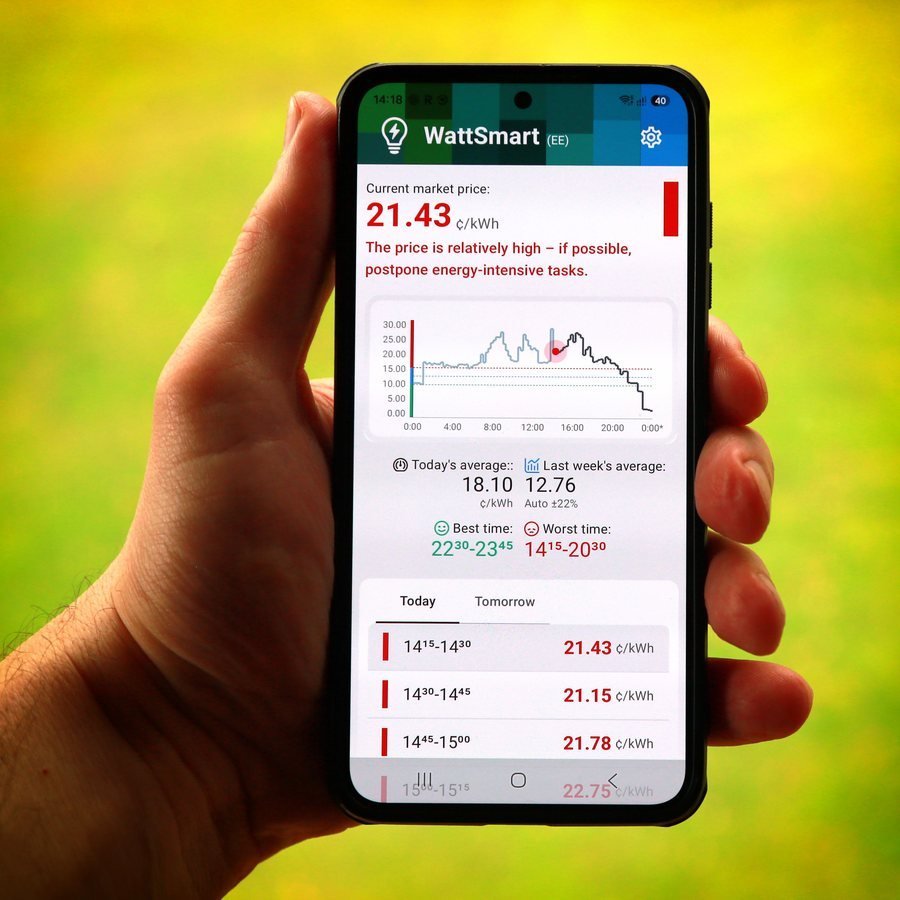
Startup.talk:Who gets the most value from WattSmart: EV owners, heat pump owners, solar households or anyone on a spot tariff?
Yury:I'd say EV owners and people with heat pumps can save the most, simply because they use a lot of electricity, and they can choose when to use it. EV charging can be scheduled for cheaper hours, and heat pumps can be programmed to run when prices are lower. But with electricity prices going up, everyone can benefit from using energy more wisely. After all, every little saving counts.
Startup.talk:What do you deliberately leave out of WattSmart?
Yury:One thing I've left out for now is the final electricity cost, including network fees and taxes. Users want to see what they'll actually pay, not just the market price. But it's quite a challenge, as every country has its own rules and tariffs.
Positioning
Startup.talk:Who is WattSmart for, and what job does it do for them? Describe the person who gets the most value.
Yury:WattSmart is for anyone who wants to keep their electricity bills under control without spending too much time figuring out prices. The ideal user is someone on a dynamic tariff who has a house, a big family or an electric car. They have some flexibility when they heat their home, charge a car or run household appliances. WattSmart helps them with that.
Startup.talk:How do you view your positioning relative to Tibber, Octopus Agile apps, Nord Pool's own data, and local spot-price apps? Is there another competitor you think of first?
Yury:I see WattSmart as a simpler, more independent alternative. Tibber and Octopus are closely connected to their energy services, while Nord Pool provides market data that can be hard for ordinary users to understand and doesn't give much context about how prices compare across different time periods. I wanted something that works across Europe, in people's own languages, without tying them to a particular electricity provider. My focus is on keeping things simple and practical.
Startup.talk:What is your core moat in electricity price tracking?
Yury:I'd say it's simplicity and accessibility. Electricity price data is available to everyone, but making it easy to understand and actually useful is another story. WattSmart brings it all together in one app, across European countries and in local languages. You don't need to be an energy expert to use it.
“Electricity price data is available to everyone, but making it easy to understand and actually useful is another story.”Yury Timokhin
Startup.talk:What are some of the use cases for WattSmart that are not obvious and can add a lot of value to users? List as many as possible.
Yury:There are quite a lot of possibilities. For example, heating water with an electric boiler, running underfloor heating, heating a swimming pool or sauna, using a humidifier, or charging home batteries. People with home workshops can plan energy-intensive jobs, while small family businesses like bakeries, laundries or car washes can schedule some of their operations around cheaper hours. Even things like running garden irrigation pumps or heating a greenhouse can make a difference. Basically, anything that uses a lot of electricity and doesn't have to run at a fixed time is worth looking at.
Startup.talk:What is the one detail in WattSmart you are proudest of?
Yury:Definitely the design. I spent a lot of time trying different layouts to find the simplest and easiest way to present the information. And I'm especially proud of the widgets. I think they look really cool on the phone screen!
Launch
Startup.talk:What did you learn from launching WattSmart?
Yury:I learned that building an app is only half the job. Getting people to discover it and actually use it is a completely different challenge. Product Hunt is a great place to see how people react to your idea and understand what catches their attention.
Startup.talk:Which feedback from the launch surprised you?
Yury:I was surprised to see how much interest WattSmart attracted, even with other electricity price trackers out there. What made me especially happy was that users really appreciated the interface and how friendly it was to use.
The hard part
Startup.talk:How many people use WattSmart today?
Yury:We're getting close to 4,000 downloads, and almost half of those users are still active.
Startup.talk:What is a challenging time you had building WattSmart?
Yury:One of the trickiest parts was handling the date changes and making sure tomorrow's electricity prices were displayed correctly. Getting everything to update at the right time was more complicated than I expected.
Startup.talk:Who believed in you before there was anything to show? What did they say or do?
Yury:My wife, definitely. She's an active user of WattSmart and has always pushed me to keep things simple instead of overcomplicating them.
“has always pushed me to keep things simple instead of overcomplicating them.”Yury Timokhin

Startup.talk:How did the move to 15-minute pricing in European markets change your product?
Yury:It made things a bit more complicated, to be honest. Instead of 24 hourly prices, we now have 96 price slots per day. That's a lot more data to handle and display without confusing users. And as it turned out, 15-minute prices aren't always convenient or even necessary. So we also calculate and display hourly averages, letting users choose whichever view works best for them. The idea is to give people more detail when they need it, without making things complicated.
What it is all for
Startup.talk:What would make you say WattSmart has succeeded?
Yury:I'd say 50,000 downloads would be a great milestone for me. It would mean that something I built to solve my own problem is actually useful to thousands of other people.
Startup.talk:What will home energy look like when AI agents run our appliances around the cheapest hours?
Yury:Probably, we'll eventually stop thinking about routine issues. Smart homes will do it for us, checking prices and weather forecasts and combining them with our daily routines. Your car will charge, your home will heat up.
The road ahead
Startup.talk:What are your milestones for the next 12 months, in users and revenue?
Yury:My main goal is to keep growing the number of downloads and active users. Right now I'm focused on building a product people enjoy using. I believe the revenue will follow if I get that part right.
Startup.talk:Where do you want WattSmart to be in five years?
Yury:I'd love WattSmart to become one of the go-to apps for electricity price tracking in Europe. Hopefully, with hundreds of thousands of users and more smart features that make managing energy even easier.
Startup.talk:What are your hopes and fears for a post AGI world?
Yury:I hope AI will take care of repetitive tasks and give us more freedom. It could make our lives so much easier. My biggest fear is that it could end up in the wrong hands or be trained to serve the wrong people. We've seen this happen with many great inventions throughout history.
This interview was conducted in writing and has been edited lightly for length and clarity.
About WattSmart
WattSmart, built by Yury Timokhin in Latvia, is an electricity price tracker for European households on dynamic tariffs, showing day-ahead prices across countries in 15-minute or hourly slots and 14 languages.
| Attribute | Verified Detail |
|---|---|
| Company | WattSmart |
| Founder(s) | Yury Timokhin |
| Country | Latvia |
| Grew up | Bryansk |
| Based | Latvia |
| Company | ITSmart |
| Downloads | Close to 4,000 |
| Official Website | wattsmart.app |
More Startups in Spotlight
For founders
Building something? Want to share your journey?
Tell us how it started, what nearly broke it and where it is headed. We will turn it into a story like this one.
Share your journeyFor readers
Want to read more human stories behind the startups?
New founder interviews and stories, as they are published.
Follow us on LinkedIn