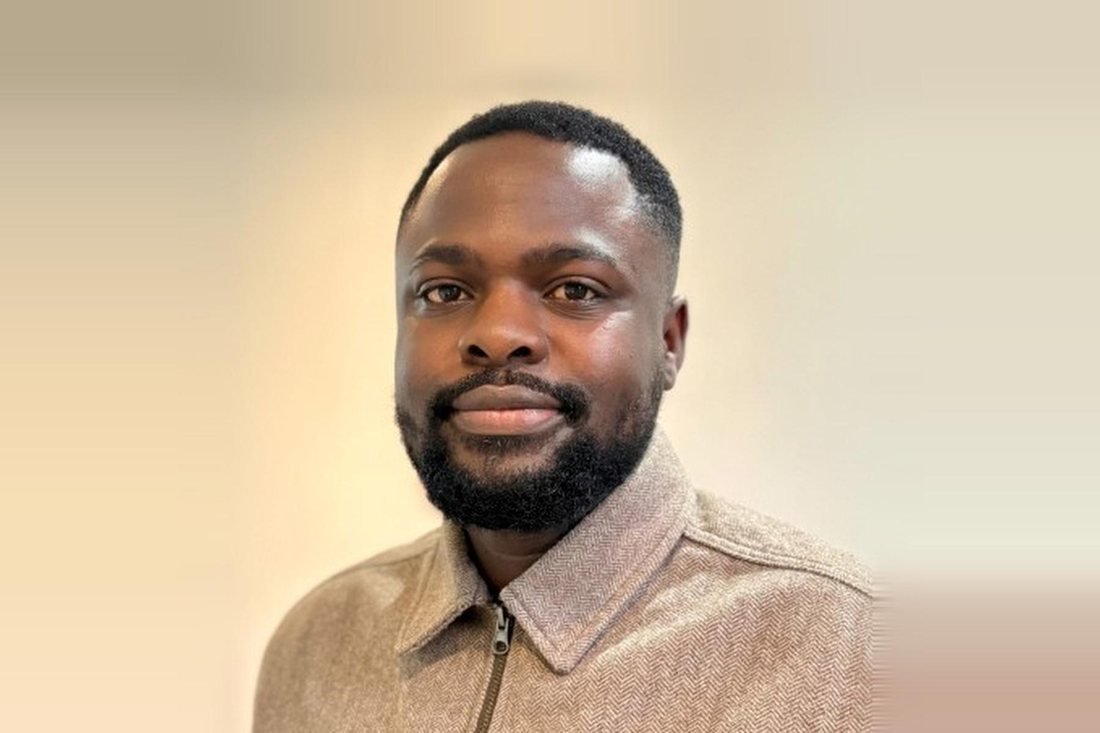
Olalekan Obisesan grew up in Ekiti, a small state in south-west Nigeria that people call the home of knowledge, where children learned in groups, out loud, through quizzes, debates and Bible quizzes at church. After years in international development and programme management, and work training AI models, Obisesan is now based in West Yorkshire and runs Otiya through Helixus Ltd.
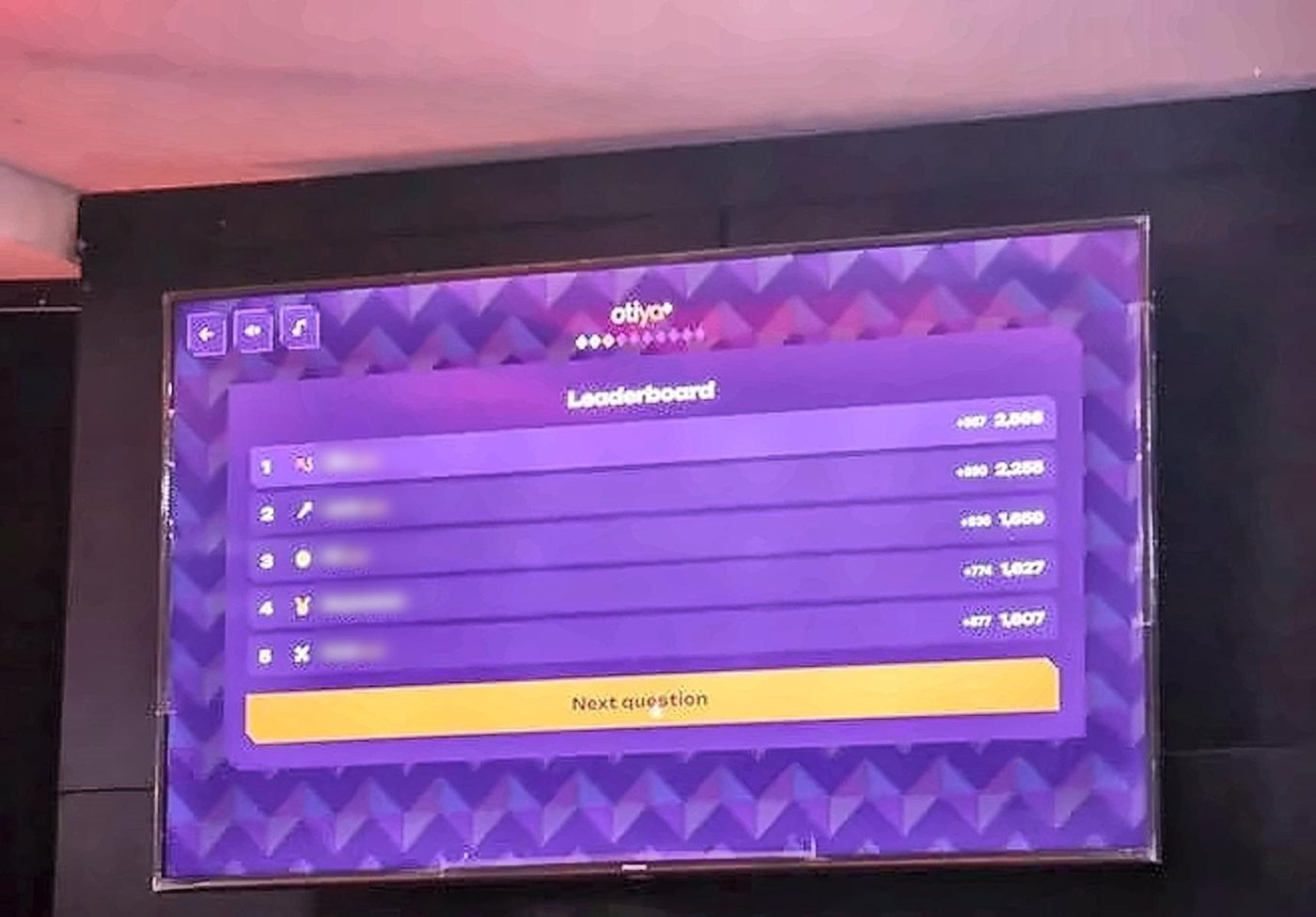
Otiya is a live quiz and game platform built so that everyone gets a turn. Players join on phones with no app, or answer with printed, coded Answer cards that a teacher's device scans across the room. Otiya AI turns a topic, a PDF or even a photo of handwritten notes into a quiz in 20 languages. Obisesan says it has around 15,000 users on average across more than 100 countries since opening in beta in late August 2026.
Key takeaways
- Obisesan built the first version for a daughter who was about 20 months old. When nieces, nephews and then their parents asked to play, it was doing what Obisesan had spent years doing in international development, only in five minutes.
- Players without a phone can answer with a printed card that a teacher's device reads across the whole room. Pupils are recognised by a number, never a name, and nothing about them is saved.
- Each player can privately switch on read aloud, larger text, more time or two choices instead of four. Nobody else sees it, so the child who needs help is never singled out.
- Otiya AI writes in 20 languages, including Yoruba, Hausa, Igbo and Swahili, and works from a PDF, a worksheet or a photo of handwritten notes. The host checks every question before anyone plays.
- Up to 30 players can play free with no app and no player accounts. Schools in Nigeria and the UK can apply for a free pilot until 16 December, starting in January, and anyone can sponsor a school that cannot afford it.
Before any of this
Startup.talk:Where did you grow up, and what was childhood like?
Obisesan:I grew up in Ekiti, a small state in south west Nigeria where knowledge is priceless. It's what people admire most, and it's what the state is known for. People like to say Ekiti's biggest export is knowledge. The community I grew up in was the kind of place where children played together, learned together and sat together to listen to stories. We had quizzes and debates, anything that got us thinking. Church was a big part of it too, with Bible quizzes and youth activities. And I spent a lot of time learning from older people: my grandparents, my parents, the wider family and friends. Looking back, most of what I learned as a child, I learned in a group, out loud, with everyone taking part. That idea has stayed with me ever since.
The road to Otiya
Startup.talk:What made you start Otiya?
Obisesan:My daughter. When she was about 20 months old, I built her a little game to help her learn shapes, colours and animals. She loved it, so I kept adding to it. Then my nieces and nephews wanted a turn, and they started playing together and cheering each other on. Before long their parents were asking if they could use it with their friends. That's when it clicked. I'd spent years in international development, using digital tools to get people involved in causes that matter. This little game was doing the same thing in five minutes, with a room full of children who couldn't wait for the next question.
“That's when it clicked.”Olalekan Obisesan
Startup.talk:Why was it important to you that players without a phone or tablet can still take part?
Obisesan:In many classrooms around the world, one teacher has a lot of pupils and maybe one device for the whole room. If a quiz needs a phone in every hand, most of the children just watch. And we shouldn't be pushing every child to bring a phone to school anyway. I'd rather meet them where they are. For me it's about balance: some technology, a lot of social interaction and play, and everyone learning together. A class should be able to run a live classroom quiz with just one device at the front, with no pupil phones needed.
The product
Startup.talk:Why the name Otiya?
Obisesan:It comes from the Yoruba language phrase, "Ó ti yá", which means "it's time". You say it when something is ready to start: the meal, the match, the party. With Otiya it can be the moment to learn or the moment to have fun. Whatever you're using it for, and whatever that means to you, it's time.
Startup.talk:How do printed Answer cards work alongside players on phones?
Obisesan:For classrooms without tablets, each pupil gets a specially coded printed Answer card. The question goes up on the board, and pupils hold up their card to answer. The teacher's device scans the room and reads every card at once. Pupils are recognised by a number on their card, never by their name, and nothing about them is saved on the device. Pupils who have a device can tap their answer instead, so one class can mix cards and screens in the same game. Pilot schools get their printed cards free, along with other learning materials. Learning carries on after the lesson too. Parents and guardians get the questions on WhatsApp, so children can play at home.
Startup.talk:Why let each player privately turn on read aloud, larger text or fewer choices?
Obisesan:Because the child who needs help is often the one most worried about being seen to need it. On their own screen a player can turn on read aloud, larger text, more time or two choices instead of four. Nobody else sees it. That makes inclusive learning part of every game, whether a pupil has special educational needs (SEND), is still learning English, or just needs a bit more time. They play the same game, in the same room, at the same moment as everyone else. This was never an afterthought for us. It's a core part of how Otiya is built, because I want every child in the game from the first question.
Startup.talk:How does Otiya AI turn a PDF into a good quiz in seconds?
Obisesan:It's not just PDFs. You can snap a photo of your notes, even handwritten ones, and Otiya AI, our AI quiz generator, turns them into a quiz. Turn a PDF into a quiz, or upload a worksheet, a scheme of work or a training deck. Running late for a team meeting? Type the topic and you'll have questions in seconds. It writes in 20 languages, so people can learn in the language they know best. Whoever is hosting, a teacher, a trainer or a team lead, checks the questions before anyone plays, so they stay in control.
Positioning
Startup.talk:Who is Otiya for, and what job does it do for them? Describe the person who gets the most value.
Obisesan:Picture a primary teacher in Ibadan or Leeds with 35 pupils, a projector if she's lucky, and ten minutes at the end of a lesson. She wants to know who understood today's topic before she moves on. With Otiya she drops in her lesson notes, checks the questions, and every child answers, whether on a tablet, a shared phone or a paper card. By the end she knows exactly who needs another go, and the class has had fun doing it. That's the job: a quick, interactive check for understanding that leaves nobody out.
Startup.talk:How do you view your positioning relative to Kahoot!, Quizizz (Wayground), Blooket, Mentimeter and Plickers? Is there another competitor you think of first?
Obisesan:A lot of people find us while looking for a free Kahoot alternative, and I admire all of these tools. Kahoot made live quizzes normal, and Plickers proved paper cards work in class. Otiya brings those ideas together for rooms they weren't built for. One game can mix coded paper cards and devices. Each player can quietly choose their own support. Otiya AI turns a photo of handwritten notes into a quiz, and writes in Yoruba, Hausa, Igbo, Swahili, French, Spanish and Portuguese as well as English. Up to 30 players can play free, with no app and no player accounts. The competitor I think of first is the whiteboard and a show of hands. That's still what many classrooms around the world use, and it's what we have to beat.
“The competitor I think of first is the whiteboard and a show of hands.”Olalekan Obisesan
Startup.talk:What are some of the use cases for Otiya that are not obvious and can add a lot of value to users? List as many as possible.
Obisesan:In schools and classrooms:
- Starting a lesson with a quick recap of last week
- Checking everyone has understood before moving on
- Revision and exam practice, with the questions pupils mixed up shown again
- Homework sent to parents on WhatsApp, played at home and tracked by the teacher
- Spelling, times tables and vocabulary practice
- Language lessons, with quizzes in several languages
- Reading support, with questions read aloud for pupils who need it
- Assemblies, house competitions and end-of-term quizzes
- Staff training and INSET days
- Parents' evenings and open days, with a quiz for families
At work, for team building and training:
- Team building games and quizzes, in the office or on a video call
- Onboarding new starters, so they learn the company in a fun way
- Training and compliance checks that people finish
- Product and sales training before a launch
- Icebreaker games at conferences and workshops, so strangers start talking
- Quick polls and feedback in meetings and town halls
- Christmas quizzes for office parties and end-of-year celebrations
- Sponsoring a local school as part of community work
In churches, communities and at home:
- Family quiz and game nights on one shared screen
- Educational games for kids aged 3 to 12 with Otiya Kids
- Bible quizzes and faith quizzes for churches, mosques and youth groups
- Charity quiz nights with prize draws to raise funds
- Clubs, societies and student unions running socials
- Weddings, birthdays and baby showers, with a quiz about the guest of honour
- Community meetings and workshops, to check what people took away
- Health and awareness campaigns, testing what people know in a friendly way
Startup.talk:What is the one detail in Otiya you are proudest of?
Obisesan:The children, and the joy of seeing everyone in the room take part, including the ones who would usually stay quiet. I also love the conversations with school leaders. Their eyes light up when they see how it could help their pupils learn. And I'm proud that anyone can sponsor a school. Someone in the US can sponsor a school in Nairobi that couldn't otherwise afford it, and those children get to play and learn too. That part is still growing, and it's the part I'm most excited about.
Startup.talk:How can a business or individual sponsor a school?
Obisesan:Anyone can sponsor a school's place on Otiya, whether that's a business, an individual, a family or a community group. A sponsorship funds Otiya for a school that couldn't otherwise afford it, so every pupil gets to learn and play together. For businesses, it's a simple and visible way to support education as part of their corporate social responsibility (CSR) or community work, and something the whole team can be proud of. You don't have to live nearby to help. To find out more, visit joinotiya.com/sponsor.
The hard part
Startup.talk:How many people use Otiya today?
Obisesan:Around 15,000 users on average right now, across more than 100 countries. Tens of thousands of people have used Otiya in total since we opened in beta in late August 2026. Recently, a church in Abuja ran a Bible quiz for its whole congregation at its anniversary celebration. Schools in Nigeria and the UK can apply for our free pilot at joinotiya.com/schools until 16 December, and it starts in January. Anyone can try Otiya free at joinotiya.com.
Startup.talk:Who believed in you before there was anything to show? What did they say or do?
Obisesan:My daughter was the first user, and the most honest one. My wife was incredible. She was my strategic adviser and the person who pulled all the ideas together. Friends and family backed me too. They tested it, shared it with their friends and colleagues, and became our first real users.
What it is all for
Startup.talk:What would make you say Otiya has succeeded?
Obisesan:Children learning better and doing better in their exams. And children being happy while they do it, enjoying being a child again and learning in their own way. If teachers and parents see both of those things, I'll know we've done our job.
Startup.talk:What will learning in a classroom look like when AI tutors and AI-made quizzes are everywhere?
Obisesan:It will still be about people. I've done a lot of work helping to train AI models, so I've seen up close what these tools do well and where people still matter most. AI tutors and AI-made quizzes are tools, and people stay the decision makers. What matters is the knowledge that's passed on and the people passing it on. AI can take the drafting off a teacher's desk so they have more time for the human part. And the more our lives move onto screens, the more people will want moments together: learning out loud with friends, sharing, laughing. Tools that blend technology with real social interaction will always have a place, and I think the thirst for them will only grow. That's where Otiya sits, and I'm excited to see how much people will want it.
“Tools that blend technology with real social interaction will always have a place”Olalekan Obisesan
The road ahead
Startup.talk:Where do you want Otiya to be in five years?
Obisesan:Leading in classrooms across Africa, the UK and many other places around the world, with every pupil in the game whatever their school can afford. I want Otiya to be the name families, faith groups and offices reach for when they want everyone to have a turn. Most of all, I want Otiya to be the learning and play platform that sits where technology, social interaction and learning meet.
This interview was conducted in writing and has been edited lightly for length and clarity.
About Otiya
Otiya is a live quiz and game platform built by Olalekan Obisesan where every player gets a turn, with printed answer cards, private accessibility settings and AI that turns notes into quizzes.
| Attribute | Verified Detail |
|---|---|
| Company | Otiya |
| Founder(s) | Olalekan Obisesan |
| Country | UK |
| Grew up in | Ekiti, Nigeria |
| Based in | West Yorkshire, UK |
| Background | International development, programme management, AI model training |
| Company | Helixus Ltd |
| Funding | Self-funded; pre-seed round opening soon |
More Startups in Spotlight
For founders
Building something? Want to share your journey?
Tell us how it started, what nearly broke it and where it is headed. We will turn it into a story like this one.
Share your journeyFor readers
Want to read more human stories behind the startups?
New founder interviews and stories, as they are published.
Follow us on LinkedIn