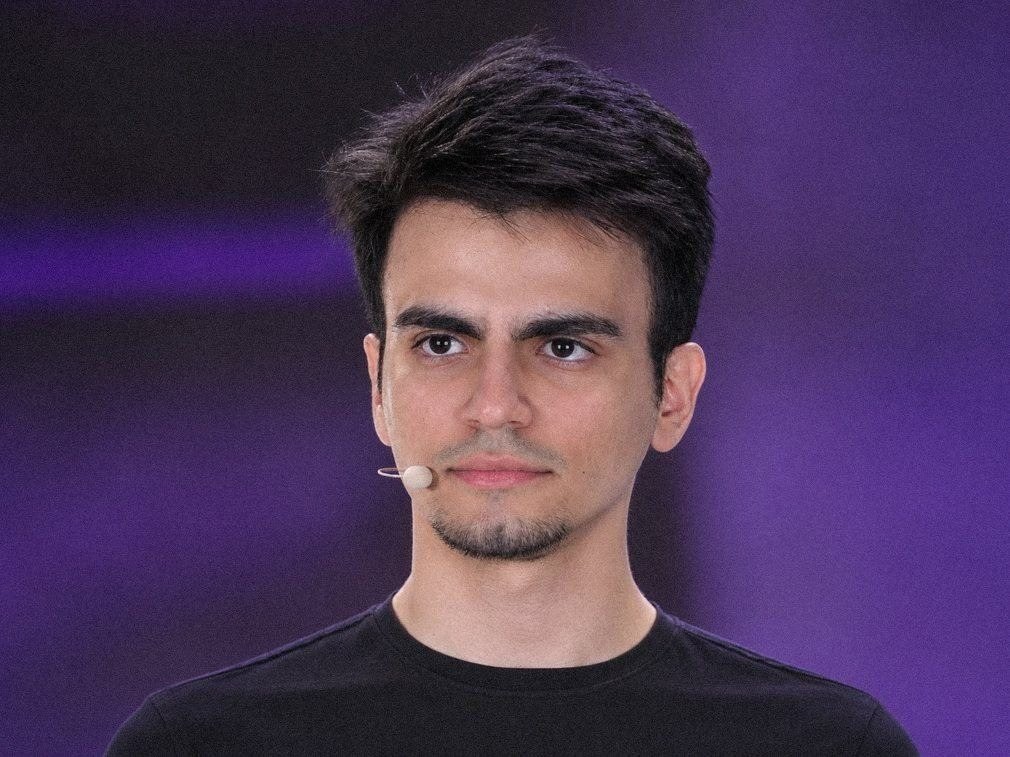
Doğukan Çalışkan grew up in Türkiye and started building robots with Arduino at 13, which led to a first programming language and then to cybersecurity. In the second year of university, Çalışkan founded a technology startup while working at a cybersecurity and cyber threat intelligence company, and later set up OSINTCTI Ltd in the UK to build a global company.
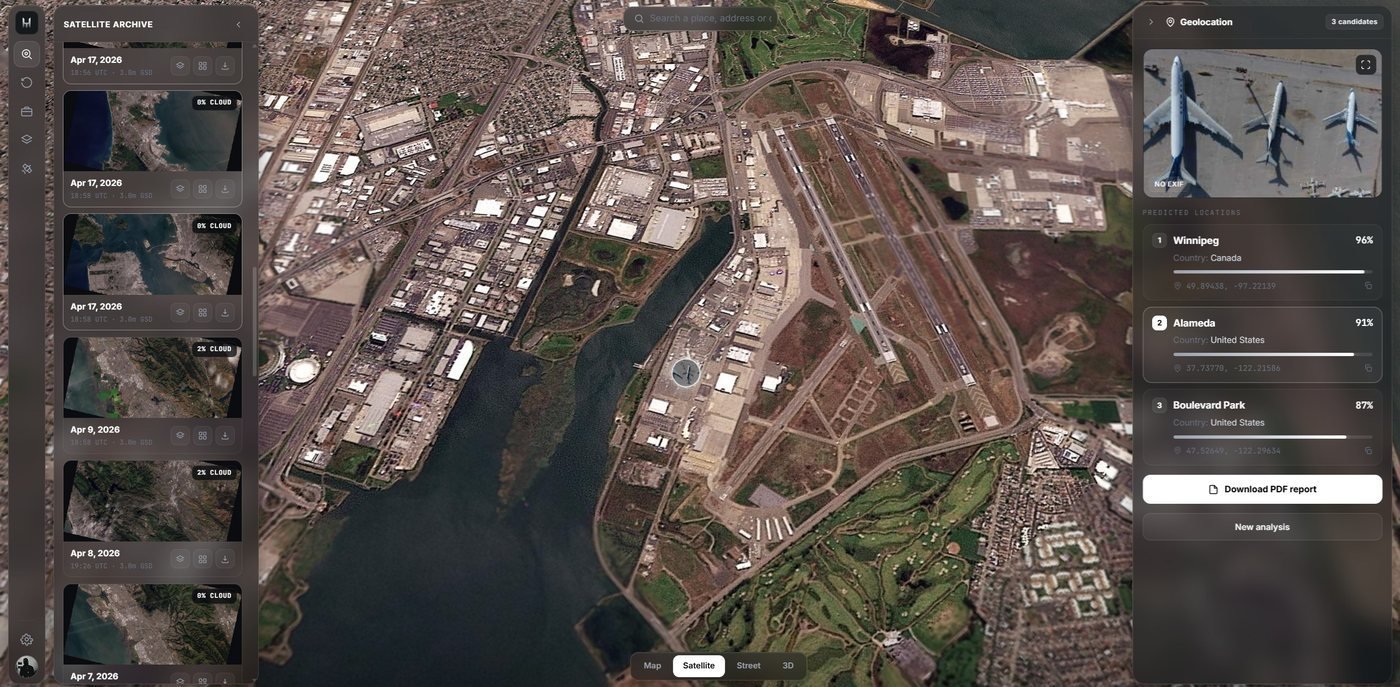
Hisar AI is a geospatial intelligence platform that works out where a photo was taken from its content alone, with no GPS or location metadata, then verifies the spot on current satellite imagery and tracks how the surroundings change over time. The company has its first customer and is now working on one of the hardest problems in the field: locating photos taken indoors.
Key takeaways
- Analysts often spend hours matching visual clues against satellite imagery to find where a photo was taken. Hisar AI sets out to automate most of that work.
- The name stands for Hybrid Intelligence, Surveillance, Analysis & Recon, and in Turkish “Hisar” means fortress.
- Çalışkan is proudest of indoor image geolocation, still in development: locating a photo taken inside a building with no GPS and no visible outdoor landmarks.
- Beyond defence and law enforcement, Çalışkan sees uses in missing person cases, disaster response, insurance claims, journalism and spotting false location claims.
- The goal for the next 12 to 18 months is 10 to 20 paying organisations and about $50,000 in annual recurring revenue.
Before any of this
Startup.talk:Where did you grow up, and what was childhood like?
Çalışkan:I was born and raised in Türkiye, where my passion for technology began at the age of 13. I started experimenting with electronics and building small robots using Arduino, which also introduced me to my first programming language.
My curiosity eventually led me to cybersecurity, initially through an interest in how social media accounts were compromised. As I explored further, I became fascinated by web security and hacktivist groups. By studying their activities and understanding the techniques behind cyberattacks, I gradually developed my skills in web security.
What started as a childhood hobby eventually became my passion and laid the foundation for the career I’m building today.
Startup.talk:What first got you into building technology?
Çalışkan:What initially drew me to building technology was my curiosity about how things work and the desire to create something of my own. When I started experimenting with Arduino and programming at 13, I realized that I could turn my ideas into real, working projects. Over time, this curiosity evolved into a passion for solving complex problems through software and cybersecurity. What motivates me most is the ability to build technologies that address real-world challenges and make a meaningful impact.
Startup.talk:What was your first job, and what did it teach you?
Çalışkan:During my second year of university, I founded my own technology startup while also working at a cybersecurity and cyber threat intelligence company. This was my first experience in a professional corporate environment, where I took on various responsibilities and gained practical industry experience.
Balancing entrepreneurship with a professional role taught me the importance of discipline, teamwork, and problem-solving. It also helped me understand how cybersecurity operates in real-world business environments and gave me valuable insights that I could apply to building my own company.
The road to Hisar Ai
Startup.talk:What made you start Hisar AI?
Çalışkan:Hisar AI was born from my passion for OSINT and geospatial intelligence. As I explored these fields, I became particularly interested in how much valuable information could be extracted from a single image, even when it contained no location metadata.
I wanted to push the boundaries of what artificial intelligence could achieve in this area. The idea was to develop a platform capable of identifying where an image was taken, verifying that location through satellite imagery, and analyzing how the surrounding environment changes over time.
My vision with Hisar AI is to make advanced geospatial intelligence more accessible, automated, and efficient, helping analysts and organizations turn visual information into meaningful, actionable intelligence.
Startup.talk:What problem were you seeing that convinced you to build Hisar AI?
Çalışkan:One of the biggest challenges I noticed in geospatial intelligence was how difficult and time-consuming it could be to determine where an image was taken, especially when no GPS or location metadata was available.
Analysts often have to manually examine visual clues, compare satellite imagery, and search across multiple sources to identify a location. This process requires significant time, experience, and resources.
I saw an opportunity to change that by using artificial intelligence to automate much of this work. That challenge became one of the main reasons behind building Hisar AI: making complex geospatial analysis faster, more scalable, and accessible to a wider range of users.
Startup.talk:What is it like to build Hisar AI from the UK?
Çalışkan:Establishing the company in the UK was a strategic decision driven by my ambition to build a globally recognized technology company. The UK offers a strong startup ecosystem, access to international markets, and opportunities to connect with investors and technology communities. My goal has always been to build Hisar AI as a global company, rather than limiting it to a single country or market.
Startup.talk:How has Hisar AI grown so far?
Çalışkan:Hisar AI has grown from an initial idea into a developing geospatial intelligence platform powered by artificial intelligence. What started with experiments in image geolocation has gradually evolved into a broader vision for making advanced geospatial analysis more accessible and efficient.
We've also taken our first steps commercially, securing our first customer and beginning to explore opportunities in international markets.
We're still in the early stages, but every technical improvement and customer interaction brings us closer to our goal of building a globally recognized geospatial intelligence platform.
The product
Startup.talk:Why the name Hisar AI?
Çalışkan:HISAR stands for Hybrid Intelligence, Surveillance, Analysis & Recon, reflecting the core technologies and capabilities behind our platform.
The name also has a personal and cultural meaning. In Turkish, “Hisar” means fortress, symbolizing strength, reliability, and a strategic perspective.
I wanted a name that represented both our technological vision and my Turkish roots. For me, HISAR AI brings these two ideas together: advanced intelligence technology built on a strong foundation, with the ambition to serve a global audience.
“means fortress, symbolizing strength, reliability, and a strategic perspective”Doğukan Çalışkan
Startup.talk:What do you deliberately leave out of Hisar AI?
Çalışkan:I deliberately avoid adding features simply for the sake of making the platform look more advanced. My goal isn't to build a tool that does everything, but one that solves specific problems exceptionally well.
With Hisar AI, I focus on geospatial intelligence, image geolocation, and satellite analysis rather than trying to cover every aspect of intelligence gathering.
I also believe artificial intelligence should support human judgment, not replace it entirely. Accuracy, reliability, and practical value will always matter more to me than unnecessary complexity.
Startup.talk:What is the one detail in Hisar AI you are proudest of?
Çalışkan:What I'm most proud of is the indoor image geolocation technology we're currently developing. Our goal is to identify the geographical location of a photograph taken inside a building, even without GPS data or any visible outdoor landmarks.
It's an incredibly complex challenge, and only a small number of companies worldwide are exploring similar capabilities. We're still in the early stages of development, but the potential of this technology is what excites me the most.
For me, it's about pushing the boundaries of artificial intelligence and solving problems that were once considered nearly impossible.
“only a small number of companies worldwide are exploring similar capabilities”Doğukan Çalışkan
Positioning
Startup.talk:Who is Hisar AI for, and what job does it do for them? Describe the person who gets the most value.
Çalışkan:Hisar AI is designed for intelligence analysts, government agencies, law enforcement, defense organizations, and professionals who rely on geospatial information to make critical decisions.
Our platform helps them identify where an image was taken, verify locations using satellite imagery, and monitor changes in the surrounding environment over time. Tasks that traditionally require extensive manual research can become significantly faster through AI-powered analysis.
The person who benefits most from Hisar AI is an analyst working with limited information who needs to turn a single photograph or satellite image into reliable, actionable intelligence. Our goal is to give these professionals powerful tools that make complex geospatial investigations more efficient and accessible.
Startup.talk:How do you view your positioning relative to the other companies in your space? Which competitor do you think of first?
Çalışkan:I see Hisar AI as part of a new generation of AI-powered geospatial intelligence platforms. While many existing solutions focus on specific capabilities, our vision is to bring image geolocation, satellite intelligence, and change detection together into a unified platform.
We're also exploring challenging areas such as indoor image geolocation. Rather than competing by replicating existing technologies, our focus is on innovation, developing our own solutions, and pushing the boundaries of geospatial intelligence.
Startup.talk:What is your core moat that prevents competitors from replicating what you offer?
Çalışkan:Our core competitive advantage lies in our technical expertise and commitment to developing proprietary AI-powered geospatial intelligence technologies.
Rather than relying entirely on existing solutions, we focus on building our own approaches to complex challenges, particularly image geolocation and indoor location estimation.
I believe our long-term advantage will come from continuous research, specialized knowledge, and the ability to turn complex geospatial problems into practical, reliable technologies that are difficult to replicate.
Startup.talk:What are some of the use cases for Hisar AI that are not obvious and can add a lot of value to users? List as many as possible.
Çalışkan:Beyond traditional intelligence and defense applications, I believe Hisar AI has the potential to create value in many other fields.
Some of the most interesting use cases include:
Missing person investigations: Helping investigators identify potential locations from photographs with little or no metadata.
Disaster response: Assessing earthquake, flood, and wildfire damage through satellite imagery.
Investigative journalism: Verifying where photographs were taken and identifying misleading visual evidence.
Environmental monitoring: Detecting deforestation, illegal mining, and changes in land use.
Insurance investigations: Comparing satellite imagery to verify property damage and investigate suspicious claims.
Critical infrastructure monitoring: Identifying changes or potential damage around airports, ports, power plants, and pipelines.
Construction monitoring: Tracking development progress and identifying unauthorized construction.
Humanitarian investigations: Verifying visual evidence of damaged infrastructure in conflict-affected regions.
Maritime intelligence: Monitoring vessel activity and changes in port infrastructure.
Historical and archaeological research: Identifying changes around archaeological sites and monitoring potential damage to cultural heritage.
Disinformation detection: Cross-checking photographs against geographical evidence to identify false location claims.
Indoor geolocation: Exploring the possibility of identifying where indoor photographs were taken without GPS data, an area we're currently researching.
What excites me most is that the same underlying technology can solve problems across completely different industries. Our goal is to make geospatial intelligence useful far beyond its traditional applications.
“the same underlying technology can solve problems across completely different industries”Doğukan Çalışkan
The hard part
Startup.talk:How many people or companies use Hisar AI today?
Çalışkan:Hisar AI is still in its early stages of commercial growth, and we've already secured our first customer. Right now, our priority is to further develop the technology, improve its capabilities, and validate its value through real-world applications.
Startup.talk:What is a challenging time you had building Hisar AI?
Çalışkan:One of the biggest challenges has been developing complex geospatial AI technologies with limited resources. Building accurate image geolocation systems requires extensive research, experimentation, and patience. Balancing technical development with running a startup has been difficult, but every challenge has pushed me to become a better engineer and entrepreneur.
Startup.talk:Who believed in you before there was anything to show? What did they say or do?
Çalışkan:My family and close friends believed in me from the beginning, even when Hisar AI was just an idea. Their encouragement and trust in my vision gave me the confidence to keep going, especially during challenging times. Having people who believed in my potential meant a lot to me.
What it is all for
Startup.talk:What would make you say Hisar AI has succeeded?
Çalışkan:I would consider Hisar AI successful when our technology becomes a trusted tool for intelligence analysts and organizations worldwide. For me, success isn't just about revenue or growth, but about developing innovative technologies that solve real-world problems and make a meaningful contribution to the future of geospatial intelligence.
The road ahead
Startup.talk:What are your milestones for the next 12 to 18 months, in users and revenue?
Çalışkan:Over the next 12 to 18 months, our goal is to expand Hisar AI internationally, reach 10–20 paying organizations, and achieve approximately $50,000 in annual recurring revenue. At the same time, we aim to advance our geospatial AI technologies, particularly indoor image geolocation, and establish long-term relationships with enterprise and government customers.
Startup.talk:Where do you want Hisar AI to be in five years?
Çalışkan:In five years, I envision Hisar AI becoming a globally recognized leader in AI-powered geospatial intelligence, trusted by governments, enterprises, and intelligence professionals worldwide. I want us to pioneer new technologies, particularly in image geolocation, and make advanced GEOINT capabilities more accessible while continuously pushing the boundaries of what's possible with artificial intelligence.
Startup.talk:What are your hopes and fears for a post AGI world?
Çalışkan:My biggest hope is that AGI will accelerate scientific discoveries, solve complex global challenges, and make advanced technology accessible to everyone. My biggest concern is its potential misuse, particularly in surveillance, privacy violations, and autonomous decision-making without human oversight. I believe the future of AGI should be built around responsible innovation, transparency, and human control.
This interview was conducted in writing and has been edited lightly for length and clarity.
About Hisar AI
Hisar AI is a geospatial intelligence platform built by Doğukan Çalışkan that finds where a photo was taken from its content alone, verifies it on satellite imagery and tracks changes over time.
| Attribute | Verified Detail |
|---|---|
| Company | Hisar AI |
| Founder(s) | Doğukan Çalışkan |
| Country | UK |
| Grew up in | Türkiye |
| Company | OSINTCTI Ltd (UK) |
| Background | Cybersecurity and cyber threat intelligence |
| Customers | First customer signed (company figure) |
| Next 12-18 months | 10-20 paying organisations, ~$50K ARR (target) |
More Startups in Spotlight
For founders
Building something? Want to share your journey?
Tell us how it started, what nearly broke it and where it is headed. We will turn it into a story like this one.
Share your journeyFor readers
Want to read more human stories behind the startups?
New founder interviews and stories, as they are published.
Follow us on LinkedIn