
Luke Emery grew up in Sidmouth, a quiet town on England’s southwest coast where most young people leave for the big cities. He washed dishes at 13, trained as a carpenter, studied architecture, ran a renovation company in London and then taught himself online marketing. His pet-portrait business, Van Woof, scaled to about 65 remote staff and 200 custom portraits a day in the run-up to Christmas.
Then a podcast about handwritten letters clicked with his interest in robots. Scribble Cards has robots write each card with a real pen, then stamps and mails it across the US. It is self-funded, sends more than 30,000 cards a month, and lets customers send a card straight from ChatGPT or Claude. We spoke about making machine handwriting look human, why credits never expire, and why a handwritten note matters more in an age of AI.
Key takeaways
- Robots hold a real pen. Scribble Cards built its own software that varies each letter and plans the whole card, and customers approve a preview before anything is sent.
- It sends more than 30,000 cards a month to a few hundred business customers and thousands of consumers, and it is entirely self-funded.
- There are no subscriptions or setup fees: one price per card, bulk discounts, and credits that never expire.
- Cards can be sent from ChatGPT or Claude, through an MCP server, or automatically from a CRM via Zapier when a deal closes.
Before any of this
Startup.talk:Where did you grow up, and what got you into art and business?
Emery:I was born in London, but I grew up in Sidmouth, a small town on the southwest coast of England. It's a very quiet, rural area with small towns and a lot of nature. Most of the people who live there are older retirees, so there weren't many jobs, and most young people leave for London or one of the other big cities when they finish high school. I never heard of startups growing up, and I never met anyone who worked in an online business. The only business owners I knew owned shops, restaurants or construction companies.
I was always interested in starting my own business. My first one was actually a construction company in London; we did small renovation projects. I decided to start an online business because I'd had enough of construction. I didn't like commuting, and I didn't like working on a building site, even in a managerial role. I found it boring and uninteresting, so about 10 years ago I started teaching myself online marketing and website design.
As for art, I was always quite good at it growing up. Then when I studied architecture at university, there was a big emphasis on art and design. I improved my art skills there and definitely picked up good design skills at architecture school.
Startup.talk:What did you study, and what was your first job?
Emery:I studied architecture at university. From about 16 or 17, I'd been working in construction, first in laboring roles and then training as a carpenter, so becoming an architect seemed like a natural fit. After three years of university, I decided it probably wasn't the career for me and went into construction management instead.
I've worked since I was 13, in so many different jobs. My first was washing dishes at an Italian restaurant. I'd get there at about 6 pm on a weeknight and finish around 11 or 11:30, and I always felt pretty rich for my age with all that extra pocket money.
All through my late teens and 20s, I worked every random job you can imagine: every job on a building site, detailing cars, working on an oyster farm. If you can think of it, I probably did it.
Startup.talk:You started vanwoof.com and other art businesses before this. What did those teach you?
Emery:Vanwoof.com taught me a lot about managing large remote teams on time-sensitive work, because every portrait was an individual piece. 90% of the revenue comes in the run-up to Christmas, so we would scale up to about 65 remote employees over that period, pushing out 200 custom pet portraits a day.
From art to robots
Startup.talk:Where did the idea for Scribble Cards come from?
Emery:I was looking for a new business to start, and I'd been getting interested in robots and robotics, even though I'm not a technical person, especially with hardware. Then I was listening to a podcast and heard someone talking about handwritten letters, and it clicked. In the age of AI, getting a handwritten note into someone's hands is a much better way to reach them than trying to get through by email. And it paired up really nicely with robots, because you could get robots to do the handwriting.
“In the age of AI, getting a handwritten note into someone's hands is a much better way to reach them than trying to get through by email.”Luke Emery
Startup.talk:How did you go from an art business to running writing robots?
Emery:I actually sold Vanwoof.com at one point and recently bought it back. Going from Van Woof to Scribble Cards felt like a very natural change, because they're both essentially personalized gifts. They're just packaged slightly differently.
Startup.talk:Scribble became Scribble Cards. Why the new name?
Emery:Another company in a similar industry was also using the name Scribble, and there are just too many companies calling themselves Scribble, so I wanted to stand apart. We mainly sell cards, so I went with Scribble Cards.
Startup.talk:Who works on Scribble Cards with you, and how do you split the work?
Emery:I have a number of people working with me, and they all work remotely. Some have been with me for years across other businesses I've run. We have virtual assistants who handle some of the customer service and order management. Then we have an operations person in the U.S. who does the printing, manages the writing machines and handles the packing. And we have some software developers and hardware developers.
The product
Startup.talk:Who is Scribble Cards for, and what job does it do for them? Describe the customer who gets the most value.
Emery:Scribble Cards is mainly for businesses, although we also have a lot of consumers buying one-off cards for birthdays and thank-you notes. A lot of our business customers send cards to their clients or employees on their birthdays.
Startup.talk:How do you view your positioning relative to Handwrytten, Simply Noted, LettrLabs, SendOutCards and Postable? Is there another competitor you think of first?
Emery:Our product is really good. Our cards have the look and feel of a card you'd buy in a gift shop. We have some of the best handwriting technology available, so it looks like a real person wrote it, and we have a huge library of handwriting styles, most of which haven't even been released yet. Our software makes setting up cards really simple: sending one card or a thousand is just as easy, and it's been really well designed. We also have ChatGPT and Claude integrations, or you can connect through our MCP server, so your AI can send cards for you.
Startup.talk:What is your core moat that prevents Handwrytten, Simply Noted or anyone else from replicating your feature set?
Emery:Right now, I believe our software is a lot better than theirs, and we're constantly improving it and making sure our integrations all work really well. I'm just so focused on every customer having a great experience.
At Van Woof, we were dealing with people's pets, and quite often the pet had died. That made me obsessed with going above and beyond for customers. If they're struggling with something, we help them, and we don't charge extra for it.
We don't have subscriptions or setup fees. There's one price per card, with a bulk discount, and our credits never run out. It's all about customers having a great experience with us and keeping things as simple as possible.
“That made me obsessed with going above and beyond for customers.”Luke Emery
Startup.talk:What are some of the use cases for Scribble Cards that are not obvious and can add a lot of value to users? List as many as possible.
Emery:The number one use case, and a massive value unlock, is for companies with leads they either never ended up working with or only worked with once. Sending them a holiday card or a birthday card puts you back on their radar.
Some others:
- Real estate agents sending past buyers a card on the anniversary of moving into their home.
- Online stores putting a handwritten thank-you in the mail after someone's first order, or to their best customers.
- Following up with people you met at a conference or event, instead of another email.
- Sending a note before or after a big sales meeting so you stand out.
- Winning back customers who cancelled or haven't ordered in a while.
- Asking happy customers for a review or a referral.
- Welcoming new hires before their first day, and marking work anniversaries.
- Nonprofits thanking donors, so they give again.
- Recruiters thanking candidates and the clients who hired them.
- Vets, dentists and other local businesses sending sympathy, birthday or check-in cards to patients.
- Property managers welcoming new tenants.
- Thanking podcast guests, partners or anyone who has helped you out.
- Hooking it up to a CRM through Zapier or AI, so a card goes out automatically when a deal closes.
Startup.talk:A robot holds a real pen. How do you make the writing look human and not printed?
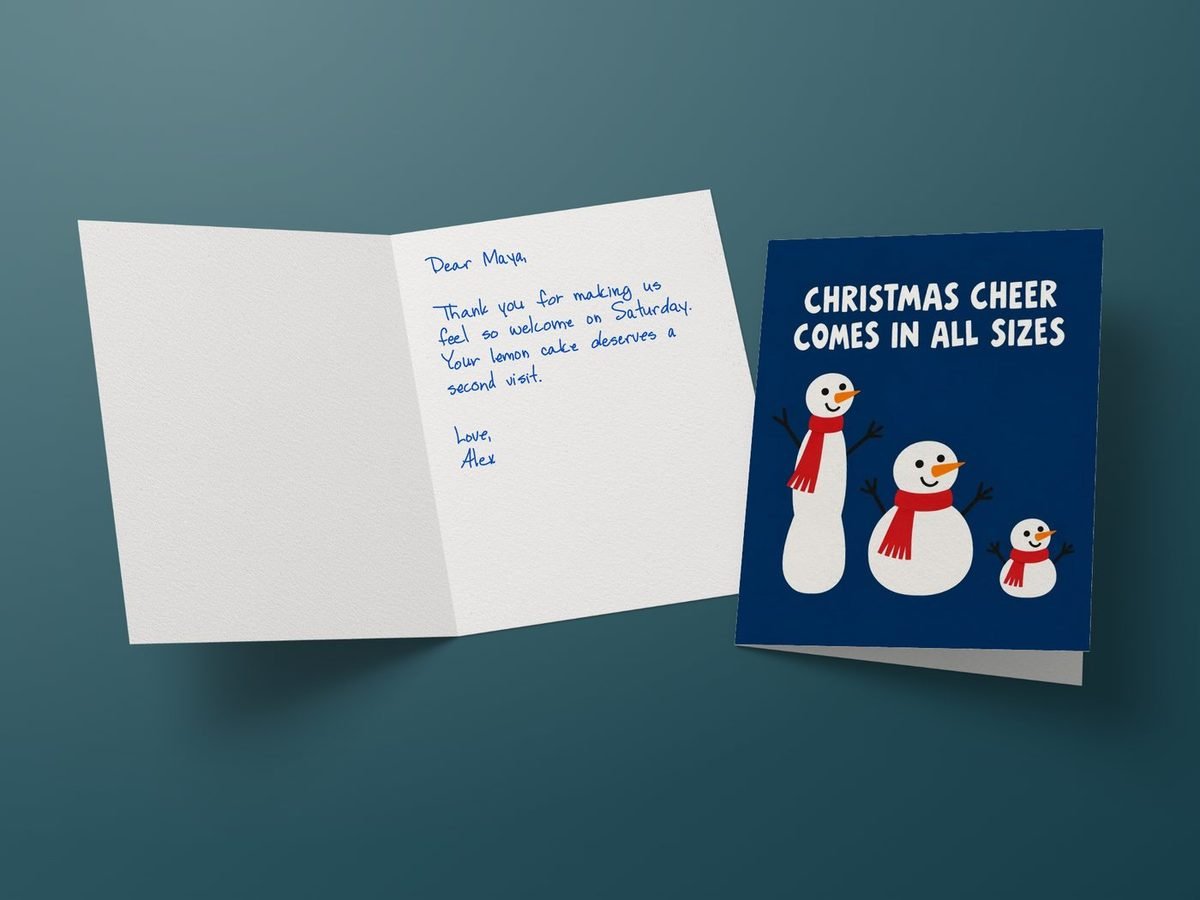
Emery:We built our own software to make the handwriting look like a real person wrote it. A lot of companies use the same handwriting software, and I personally don't think it looks that real; it basically just tilts the words at a slight angle. Ours has loads of variations of each letter, and it plots out how the handwriting would look across the whole card. We show it to the customer first, so they can see it and decide whether they approve. Nothing is hidden from the customer before it goes out to whoever they're sending it to, and they can see it happening in real time. Then, to make it look unprinted, we use a standard pen, the kind people use to write by hand, so it really does look like handwritten text. You wouldn't be able to tell it was written by a robot.
Startup.talk:You can send cards from ChatGPT and Claude. Why build for AI assistants so early, and how are people using it?
Emery:I built it for ChatGPT and Claude because I'm a heavy AI assistant user, and I build things I would definitely use myself.
We're seeing a lot of customers use it because they already have ChatGPT and Claude connected to all their other important apps, like their CRM and their email.
Going into ChatGPT and saying, "Hey, can you send a handwritten card to Andy saying thank you?" takes a couple of seconds, and they don't even have to log into our app. It finds the right card for them and deducts it from their credits. It's really simple and a real unlock for our customers.
Startup.talk:Why credits that never expire, and no monthly subscription?
Emery:I like to keep things as simple and straightforward as possible for my customers. Once someone buys from us, they shouldn't feel pressured to upgrade or use up credits within a certain time. They can use our service however they want. If they want to lock in a bulk discount early and are willing to pay us a large amount up front, they should be able to keep that value for as long as they want.
Launch
Startup.talk:When did Scribble Cards go live, and what happened in the first weeks?
Emery:We first launched in August 2025. It was really an MVP back then. I was working with a couple of small customers while we built out the software and hardware, and it was very manual and hands-on. People would send me spreadsheets, and I'd work from those. Since then, we've just kept iterating and improving the hardware and software, and for the last three months we've been in a really good place with the quality of both.
Startup.talk:How did you find your first customers?
Emery:Our first customers came from my contact list. I know a lot of people in business, so I reached out to the ones I thought might be interested in the service.
Startup.talk:What did early customers ask for that surprised you?
Emery:Honestly, nothing surprised me. There's not much that's surprising about handwritten cards.
The hard part
Startup.talk:How is Scribble Cards funded today, and are you raising?
Emery:It's completely self-funded. I've made enough money from my other businesses to fund it all myself. I don't like taking on investors or business partners, because I like the freedom to do whatever I want.
Startup.talk:How many cards have you sent so far, and how many customers do you have?
Emery:Right now, we send over 30,000 cards a month. We have a few hundred business customers and thousands of consumer customers.
Startup.talk:Holiday season must be your busiest time. How do you keep up with demand?
Emery:We built demand management into our operations software. It spots any high-risk days coming up that would need a lot of writing in one day and brings those jobs forward.
Startup.talk:What is a challenging time you had building this company?
Emery:Honestly, I like challenges, so nothing about building this company has really stressed me out.
What it is all for
Startup.talk:What is the best reaction you have heard from someone who got one of your cards?
Emery:I haven't heard from anyone who got one of our cards, because our customers are sending them to their own customers, so we're a couple of steps removed. The recipient shouldn't know we exist. That's the whole point of us: it should look like that person sent a handwritten card themselves. We're just a silent actor in the background.
“We're just a silent actor in the background.”Luke Emery
Startup.talk:Who believed in Scribble Cards before there was anything to show? What did they say or do?
Emery:When I tell my entrepreneurial friends about the idea, they think it's very random, but they know I can take something a bit weird and random and make it work. People I know are always quite interested and think it's a good idea; they just think I come up with weird and wonderful ideas.
Startup.talk:In a world of email and AI, why does a handwritten card still matter?
Emery:I think handwritten cards matter now more than ever. People's inboxes are getting fuller, there's so much AI-written content, and fewer and fewer words are written by humans. That makes handwriting, handwritten letters and physical things more important than ever before.
Startup.talk:What would make you say Scribble Cards has succeeded?
Emery:I'd like to be sending a few million cards a year. I also have some dream customers I'd like to work with, and landing them would be a success too.
The road ahead
Startup.talk:What comes next for Scribble Cards? Do you plan to mail outside the US?
Emery:Yes, eventually we'll mail outside the U.S. I also plan to open an operations hub in the UK. I was born there and understand the business environment, so it just makes sense.
Startup.talk:What are your milestones for the next 12 months, in customers and revenue?
Emery:We're still a young company and growing fast, so I'd like to see the number of cards we send grow by 10% to 20% a month.
Startup.talk:And for the next 24 months?
Emery:Again, consistent growth, with a focus on winning new customers and keeping them happy so we have high retention.
Startup.talk:Where do you want Scribble Cards to be in five years?
Emery:I'd like everything to be about 50 times the size it is now: our operations, the number of customers we have and the number of cards we send.
Startup.talk:What are your hopes and fears for a post AGI world?
Emery:I'm an AGI optimist. I think it will only make all of our lives better. I see what we're going through now as a transitional period. I read a lot of economic history books, and similar things have happened before. Even in my lifetime, I can remember big changes, and people's jobs just changed to fit them.
For instance, when I was 18 or 19, marketing was all about TV ads, newspaper ads and the written word. Within 10 years, it had moved completely online, and then onto social media.
The difference this time is that the change is affecting everyone at once, rather than one particular industry. We're all going through it together, so I don't think it's a problem. I think it will just end up with everyone doing more interesting things.
“I think it will just end up with everyone doing more interesting things.”Luke Emery
This interview was conducted in writing and has been edited lightly for length and clarity.
About Scribble Cards
Scribble Cards writes cards by robot with a real pen, then stamps and mails them across the US. Choose from 30 handwriting styles and 1,180 business card designs or your own artwork, set up recurring birthday and anniversary cards, or send from ChatGPT, Claude, Zapier or the API. One card is $6.99, credits never expire, and there is no subscription. scribblecards.com
For founders
Building something? Want to share your journey?
Tell us how it started, what nearly broke it and where it is headed. We will turn it into a story like this one.
Share your journeyFor readers
Want to read more human stories behind the startups?
New founder interviews and stories, as they are published.
Follow us on LinkedIn