
Ilyas Lemzouri grew up in Meknes, Morocco, a city few people link with startups, and was building websites on Blogger by 15. Freelance jobs that paid as little as $5 became a business school, and more than five businesses followed, many of which failed. Paying for cloud hosting and AI credits out of pocket, without investors, showed Lemzouri how expensive software is for early-stage founders, and how hard the startup programs that could help are to find.
SaaSOffers is a directory of verified startup SaaS perks and credits, with offers from tools such as AWS, Notion and Deel. Every deal page shows the month it was last verified, a Deal Matcher sorts offers by stack, stage and funding, and the catalogue is open to AI assistants through an MCP server. More than 10,000 founders have used it, and the next step is a white-label perks platform for banks, payment companies and accelerators, in English and Arabic.
Key takeaways
- The whole site rests on one line: the “Verified” month on every deal page. Expired offers are marked “No deal right now” rather than deleted, so founders are never sent to a dead deal.
- The deals that matter most are on tools founders would buy anyway, led by cloud credits, where some programs go up to $350,000.
- Trust comes before commission: affiliate links are disclosed, and Lemzouri turned down a seller of cheap server licences whose shared licences break vendor terms.
- A quiet launch taught the lesson that most visitors arrive one search at a time, through Reddit and Google, where SaaSOffers posts reached about 859,000 views in six months.
- The 12-month goal is the white-label platform: each bank, fintech or accelerator client brings SaaSOffers to thousands of businesses at once, without depending on investors.
Before any of this
Startup.talk:Where did you grow up, and what was childhood like?
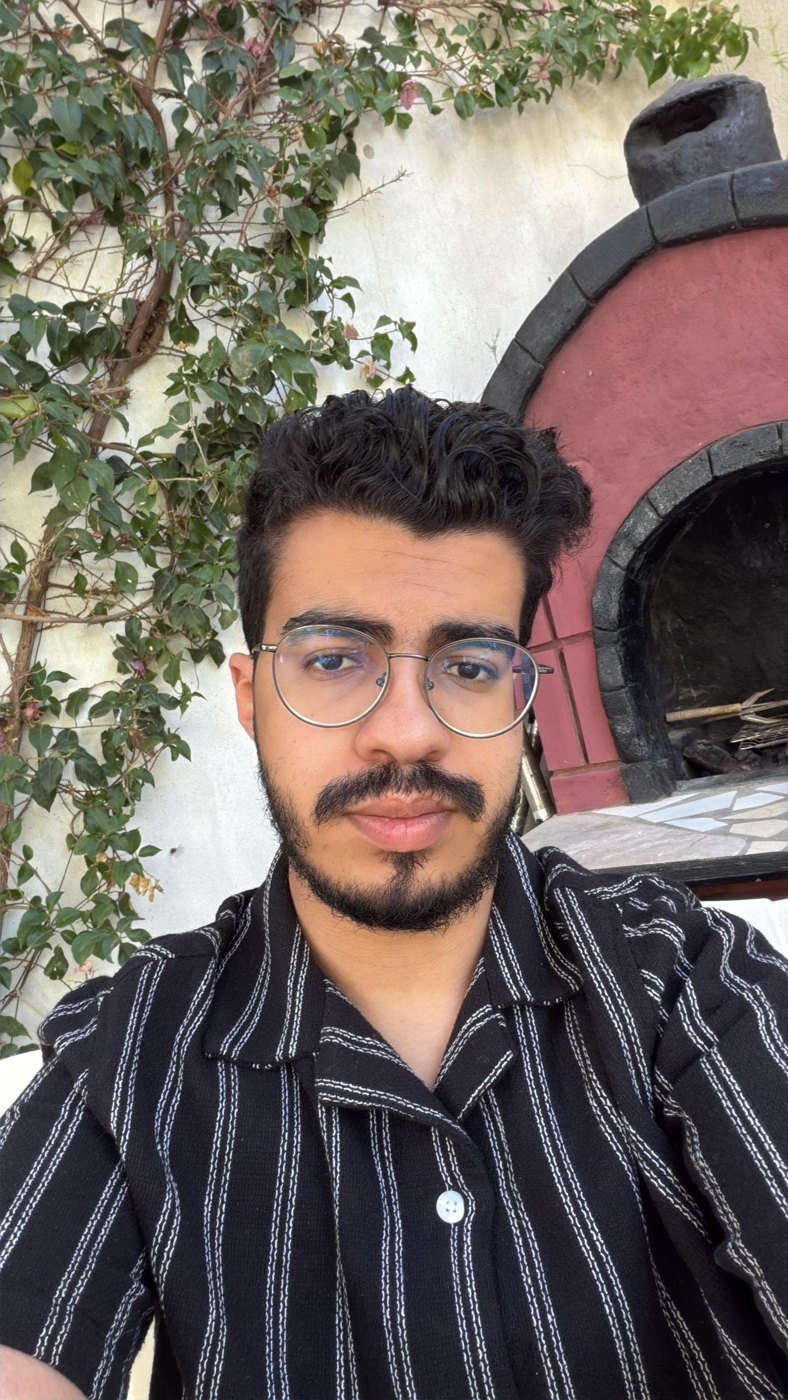
Lemzouri:I grew up in Meknes, Morocco. It's not a city people link with startups or tech, and nobody around me was building online businesses. The internet was where I discovered that you could create something from your room and people anywhere in the world could use it. That idea stayed with me. By the time I was 15, I was already spending my time building websites instead of just using them.
Startup.talk:What first got you into building things?
Lemzouri:I started building websites when I was around 15. My first projects were simple blogs on Blogger. I didn't take a course or have a mentor. I learned by trying things, breaking them and fixing them. Seeing a page I made go live on the internet was enough to keep me going. That habit of learning by doing never left me. Almost everything I know today, from development to marketing and sales, I learned the same way.
Startup.talk:What was your first job, and what did it teach you?
Lemzouri:Freelancing was my first work. I started from zero, making Blogger websites for clients, sometimes for as little as $5 a job. It taught me that people pay for results, not for effort. It also taught me how to find customers, talk to them and deliver on time, because nobody hires you twice if you don't. Those small jobs were my real business school. Ten years later, I still use what I learned there every day.
The road to SaaSOffers
Startup.talk:What made you start SaaSOffers?
Lemzouri:Startup deals are everywhere and nowhere at the same time. AWS, Google Cloud, HubSpot and Notion all run startup programs, but each one hides its offer on a different page, with different rules and a different application. Many lists online are out of date, so founders apply for offers that no longer exist, or use fake and expired codes. I wanted one place where every deal is real, explained in plain words, with the exact steps to claim it.
Startup.talk:Did you overpay for software as a founder before you built it?
Lemzouri:Yes. While building my own projects, I was paying for cloud hosting and AI credits every month. When you build without investors, every subscription comes out of your own pocket, and the costs add up faster than you expect. Later I found out that many of these companies run startup programs with credits and discounts, but they are hard to find and the rules are hidden. That's when I understood how expensive software can be for early-stage founders.
Startup.talk:How did SaaSOffers grow to hundreds of verified deals and thousands of founders?
Lemzouri:One deal at a time. Over time I have verified more than 500 deals, and each live offer gets its own page explaining who qualifies, what you get and how to claim it, so founders find us when they search for a specific tool. Most of our visitors come from founder communities on Reddit, where people ask "is there a startup deal for X?" We also work directly with vendors: many offers come from partner programs and from companies who contacted us to list a deal for our members.
Startup.talk:What has it been like to build SaaSOffers so far?
Lemzouri:Mostly unglamorous work. The hard part isn't building the site, it's keeping hundreds of offers accurate. Vendors change their programs without warning, links break and offers expire. Every month I go through the catalogue again. In November alone we reviewed 159 offers and tested every claim link. I've built more than five businesses before this one, and many failed, so I know a product only lasts if people can trust it.
The product
Startup.talk:Why the name SaaSOffers?
Lemzouri:I wanted a name that explains itself. After years of affiliate marketing, I learned that if people have to think about what your name means, you already lost them. SaaS is the software founders pay for every month, and offers is what they are looking for. Put together, anyone reading it knows what they will find before they even open the site. It's not a clever name, and that was the point.
Startup.talk:How do you verify that a startup deal is real and still active?
Lemzouri:We check each offer against the vendor's own page or program terms, and we test the claim link ourselves. Every deal page shows the month it was last verified. If an offer ends, we don't delete the page. We mark it "No deal right now" and keep the guide, so founders aren't sent to a dead offer and still get useful information about the tool.
Startup.talk:How do your AI recommendations decide which perks fit a startup's stack and stage?
Lemzouri:Our Deal Matcher asks about your stack, your stage and your funding, then matches those answers against each offer's eligibility rules. A pre-seed solo founder and a funded Series A team see different results, because many cloud programs require an investor or accelerator, while most software discounts only need a new account.
Startup.talk:Which perks save founders the most money in practice?
Lemzouri:Cloud credits, by far. Google Cloud and Cloudflare programs go up to $350,000 in credits, and AWS Activate gives up to $10,000 without a VC. Then come the tools a team pays for every month: Notion Business free for up to three months, $1,500 off Deel, ad credits like $6,000 on TikTok. The deals that matter most are on tools you would buy anyway.
Startup.talk:How do you work with SaaS companies to secure exclusive deals?
Lemzouri:We join their partner or affiliate programs and ask for an offer made for our members, usually a dedicated code or a better discount than the public one. Many vendors now come to us directly through our partner form. We only list an offer once the vendor confirms the terms, and we ask them to link to their deal page so founders can find it.
Startup.talk:What do you deliberately leave out of SaaSOffers?
Lemzouri:Offers we can't verify, expired deals presented as live, and grey-market products. We recently turned down a seller of cheap server licences because they used shared licences that break the vendor's terms. A discount that gets a founder's software blocked later isn't a deal.
“A discount that gets a founder's software blocked later isn't a deal.”Ilyas Lemzouri
Positioning
Startup.talk:Who is SaaSOffers for, and what job does it do for them? Describe the person who gets the most value.
Lemzouri:Early-stage founders and small teams who pay for software every month and want to stop overpaying. The person who gets the most value is a founder setting up their stack for the first time: cloud hosting, a CRM, payroll, design tools. They can save thousands in their first year without spending days searching for each program.
Startup.talk:How do you view your positioning relative to Secret, JoinSecret, AppSumo, accelerator perk portals and the startup programs SaaS companies run themselves? Is there another competitor you think of first?
Lemzouri:JoinSecret has a larger catalogue. We cost less ($79 a year for Premium against $149), and we explain on every page who qualifies and how to claim. AppSumo sells lifetime deals on smaller tools, which is a different thing. Accelerator perk portals only serve their own founders, and vendor programs only cover one tool each. We bring all of that together, and we also power perk portals for other companies under their brand.
Startup.talk:What is your core moat in startup SaaS perks?
Lemzouri:Accuracy and depth. Anyone can copy a list of deals. Keeping hundreds of offers checked every month, with a full guide for each one, is slow work that most lists don't do. We also make our catalogue available to AI assistants through an MCP server listed on the official registry, so tools like Claude can answer "which startup credits can I get?" with live data.
Startup.talk:What are some of the use cases for SaaSOffers that are not obvious and can add a lot of value to users? List as many as possible.
Lemzouri:Planning your runway: adding up cloud credits before choosing a provider can cover months of hosting.
Choosing between tools: our comparison pages show both tools' startup offers side by side.
Applying to accelerators: our directory lists 100+ programs with deadlines, funding and terms, and our Application Kit prepares your answers for each one.
Checking your pitch deck: AI Pitch Review gives slide-by-slide feedback before you send it.
Perks for your own community: accelerators, fintechs and banks can offer our whole catalogue to their members under their own brand, in English and Arabic.
Asking your AI assistant: through our MCP server, Claude and other assistants can search live startup deals.
Startup.talk:What is the one detail in SaaSOffers you are proudest of?
Lemzouri:The "Verified" month on every deal page. It's a small line, but it means someone actually checked that offer this month. It's the promise the whole site rests on.
“It's a small line, but it means someone actually checked that offer this month.”Ilyas Lemzouri
Launch
Startup.talk:What did you learn from your launch?
Lemzouri:That a launch needs preparation, and I didn't prepare. I put SaaSOffers on Product Hunt with the comparison tool, the accelerator directory, the application tracker and reviews, and offered Premium at $39.50 instead of $79. We got 11 votes and 86 followers. It was a small result, but an honest lesson: building the product is only half the work. Next time I will prepare my community and partners before launch day, not after.
Startup.talk:Which feedback from the launch surprised you?
Lemzouri:The biggest surprise was that the quiet launch didn't matter as much as I feared. Product Hunt brought very few votes, but founders kept finding SaaSOffers anyway, through Reddit and Google, one search at a time. It showed me that people come for a useful page that answers their exact question, not for a launch day. That changed where I spend my time: on keeping deals accurate, not on chasing attention.
The hard part
Startup.talk:How many people use SaaSOffers today?
Lemzouri:More than 10,000 founders have used SaaSOffers, and we had around 33,000 visitors in the last year. Most of them come from Reddit, where our posts reached about 859,000 views in six months.
Startup.talk:What is a challenging time you had building SaaSOffers?
Lemzouri:Moving the whole platform from WordPress to a new stack with Vercel, Supabase and Claude. Hundreds of deal pages and features had to move without breaking what already worked, and I did it without a team. Before SaaSOffers, I had also built more than five businesses, and many of them failed. Those failures were hard, but each one taught me something I used here: what customers really pay for, and when to stop working on an idea that isn't working.
Startup.talk:Who believed in you before there was anything to show? What did they say or do?
Lemzouri:My first freelance customers. When I was still making small websites for a few dollars, some of them told me I had a bright future. They didn't have to say that. It was just a small job for them. But for a teenager in Meknes working alone online, those words mattered a lot. On hard days, when a business failed or a month was slow, I remembered them. Their encouragement is a big reason I kept going.

Startup.talk:How do you keep founders' trust when some deals are also a way for vendors to acquire customers?
Lemzouri:We say it openly: some links earn us a commission, and every page has an affiliate disclosure. But a commission never decides what we list. We only publish offers we've verified. We show who qualifies and the catch, like a code that doesn't apply to renewals. And we turn down offers that aren't good for founders, even when they pay.
“But a commission never decides what we list.”Ilyas Lemzouri
What it is all for
Startup.talk:What would make you say SaaSOffers has succeeded?
Lemzouri:When founders can set up their whole stack without paying full price for anything they didn't need to, and trust us enough not to double-check. And when accelerators, banks and fintechs use our catalogue as their perks program instead of building their own.
Startup.talk:How will startups choose and buy software when AI agents can compare tools for them?
Lemzouri:Agents will compare tools on price, features and reviews in seconds. What they'll still need is reliable data about the deals themselves: which offer is live this month, who qualifies, and how to claim it. That's why we made our catalogue readable by AI assistants. The source that keeps its data accurate is the one agents will rely on.
The road ahead
Startup.talk:What are your milestones for the next 12 months, in users and revenue?
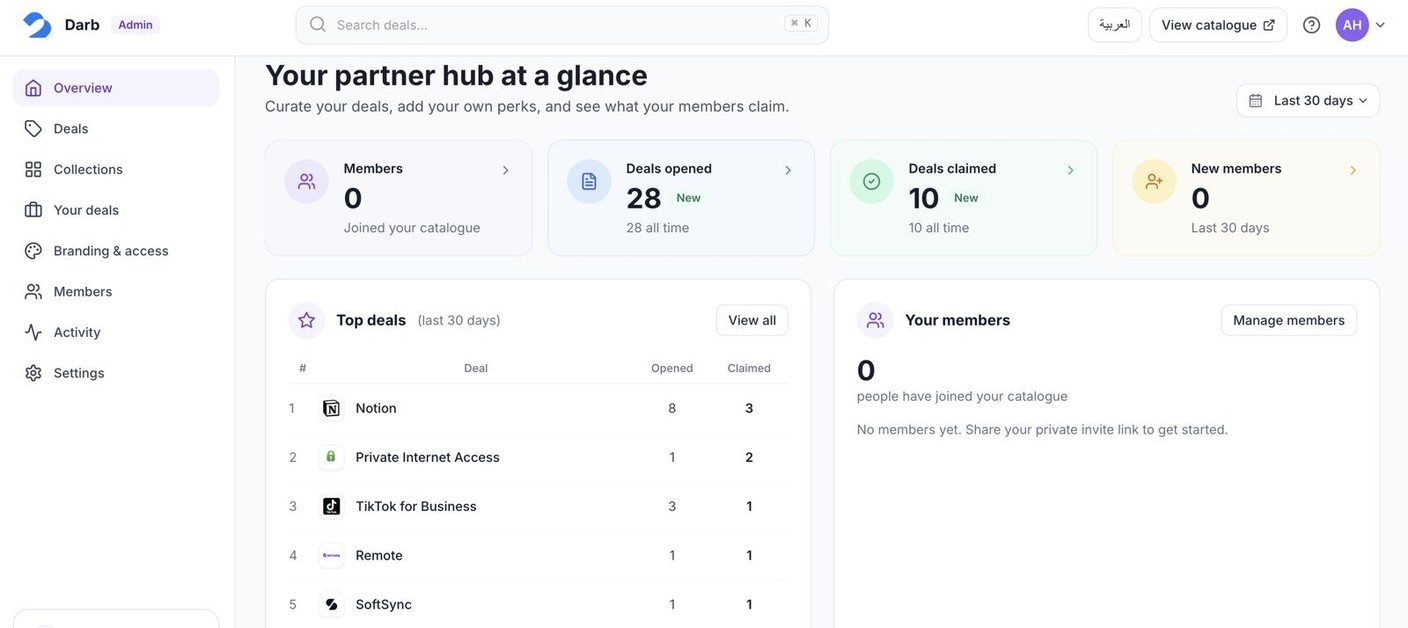
Lemzouri:My main goal for the next 12 months is the white-label platform. Banks, payment companies, accelerators and communities can offer our perks to their own customers under their brand, in English and Arabic. I want to improve it and sign more clients, because each client brings SaaSOffers to thousands of businesses at once. We are already in talks with a payment company in Saudi Arabia. Growing that side is how SaaSOffers grows, without depending on investors.
Startup.talk:Where do you want SaaSOffers to be in five years?
Lemzouri:The default place founders check before paying for any software, and the perks engine behind many accelerators, banks and fintechs, with offers for founders everywhere, not just in the US.
Startup.talk:What are your hopes and fears for a post AGI world?
Lemzouri:My hope is that building a company gets much cheaper, so more people around the world can start one, not just people near the big tech hubs. I'm from Meknes, so I know what that would mean. My fear is that information gets worse before it gets better, with AI repeating outdated or wrong data at scale. That's why I think verified, up-to-date sources will matter even more.
This interview was conducted in writing and has been edited lightly for length and clarity.
About SaaSOffers
SaaSOffers, founded by Ilyas Lemzouri in Morocco, is a directory of verified startup SaaS perks and credits, with AI-powered deal matching, accelerator listings and a white-label perks platform.
| Attribute | Verified Detail |
|---|---|
| Company | SaaSOffers |
| Founder(s) | Ilyas Lemzouri |
| Country | Morocco |
| Grew up | Meknes, Morocco |
| Product | Verified startup SaaS perks and credits |
| Users | 10,000+ founders |
| Next | White-label perks platform |
| Official Website | saasoffers.tech |
More Startups in Spotlight
For founders
Building something? Want to share your journey?
Tell us how it started, what nearly broke it and where it is headed. We will turn it into a story like this one.
Share your journeyFor readers
Want to read more human stories behind the startups?
New founder interviews and stories, as they are published.
Follow us on LinkedIn