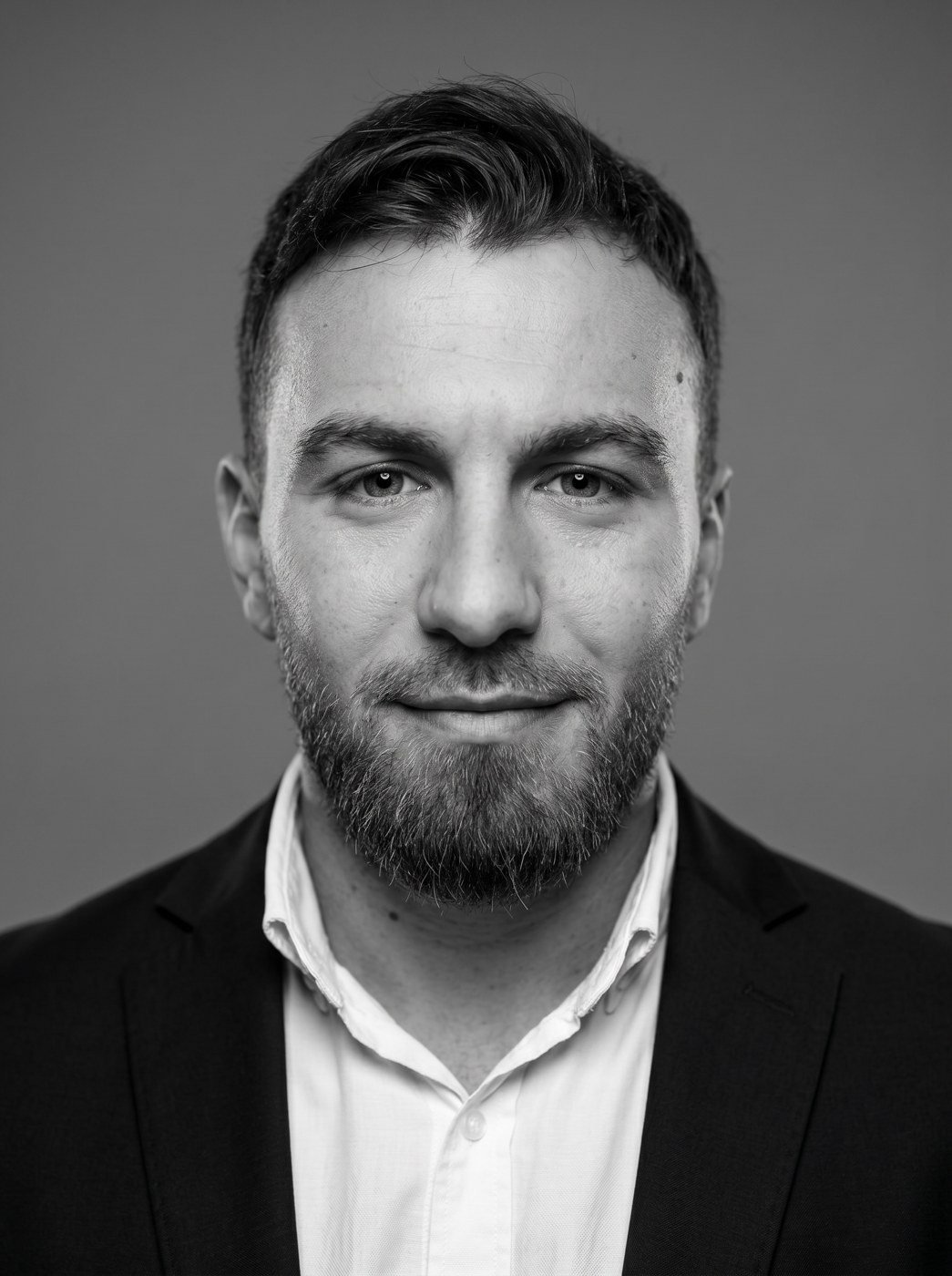
Harun Kacemer grew up in a small mountain village in Turkey and moved to Germany at eight. A first computer at ten, in 1999, led to a Pokémon-inspired game, and a search for a way to pay for a computer game online led, by chance, to Bitcoin. Understanding Ethereum raised a question Kacemer could not drop: if computing could be decentralised, why not telecommunications? Zentachain started in 2018 to answer it.
Zentachain is building a decentralised telecommunications network from Germany. Its messenger, Zentalk, is designed to work online through decentralised infrastructure and offline through ZentaNode devices and the ZentaMesh network, which Kacemer says has carried messages over distances of up to 10 kilometres with no internet or mobile coverage. The products are heading towards beta: the web version and the Zentalk browser first, then the mobile apps.
Key takeaways
- Kacemer’s case against today’s messengers is about verification: privacy should rest on infrastructure users can check, not on a company’s promises.
- Building in Germany was a deliberate choice. Kacemer says it can be five times harder than in the US, because European investors expect a working product and customers before they fund the infrastructure.
- The moat is the ecosystem: hardware, software, networking and cryptography built together over years, which is far harder to copy than a chat feature.
- The hardest moment came when early team members passed the technology on to other projects. Kacemer parted ways with 12 people and rebuilt almost from zero, and Göksel was the first to say: “Bro, I believe in you.”
- The 12-to-18-month goal is to bring Zentalk to market and reach one to two million users, with revenue to follow, for example from a small subscription.
Before any of this
Startup.talk:Where did you grow up, and what was childhood like?
Kacemer:I grew up in a small village in the mountains of Turkey, surrounded by nature. When I was eight years old, I moved to Germany, where I started school and began a new chapter of my life.
Growing up in the mountains gave me a strong connection to nature and a different perspective on life. Moving to Germany at such a young age was a big change, as I had to adapt to a new environment, language and culture.
Startup.talk:What first got you into building technology?
Kacemer:My interest in technology started in 1999, when I was ten years old. My mum bought me my first computer, which ran Windows. I quickly became fascinated by how computers worked. I didn't just want to use a computer; I wanted to understand what was happening inside it.
I started by exploring computer hardware and learning how the different components worked together. Later, my curiosity shifted towards software and programming. Eventually, I started developing my own game inspired by Pokémon.
I think it all started with curiosity and the desire to understand how things work and how I could build something myself.
Startup.talk:What was your first job, and what did it teach you?
Kacemer:My first job was as a waiter, which I started through an apprenticeship. I chose this path because I thought it was a decent, honest profession and wanted to give it a try.
However, after just a few weeks, I realised that I didn't feel comfortable in that environment and that this wasn't the right field for me. I didn't see myself doing this kind of work in the long term.
Looking back, the experience taught me something important: sometimes you have to try something to understand that it isn't right for you. It also helped me realise how important it is to find something you are genuinely passionate about.
The road to Zentachain
Startup.talk:What made you start Zentachain?
Kacemer:This is a very personal topic. I believe everyone has their own story, and some things are better kept private. But I can share the journey that eventually led me to create Zentachain.
My journey into crypto started quite unexpectedly. I was involved in the space very early, although at the time I didn't even know what Bitcoin was.
I remember searching the internet for hours because I wanted to buy a computer game but didn't have a PayPal account. I was looking for alternative online payment methods when I came across a website featuring a red dragon inside a sphere, with a B symbol. It was Bitcoin. I remember seeing an offer of 10 bitcoins for around 13 euros. I didn't understand what it was or how to use it, so I eventually closed the website.
Some time later, I visited a friend who asked me, "You know what Bitcoin is, right?" I said no. He told me I should definitely know about it. Suddenly, I remembered that website with the red dragon. That was the moment my journey really began.
I started researching Bitcoin and bought some almost immediately. The next day, I had already lost around 30% of my investment. But that didn't stop me. Instead, it made me more curious. I started exploring other cryptocurrencies, including Litecoin and Monero. I was constantly researching different projects, trying to understand which technologies had real potential. I even still have screenshots from the time when Monero was worth around one dollar.
Then Ethereum came along, and it completely changed my perspective.
At first, I couldn't understand the concept. The idea of a decentralised computer sounded almost impossible to me. How could you have a computer that doesn't belong to one central authority? I spent countless nights researching until I finally understood what Ethereum was trying to achieve.
That was a turning point for me. I realised that blockchain technology was about much more than digital money or alternative payment methods. It had the potential to decentralise entire industries and fundamentally change the way infrastructure works.
And that is where the idea behind Zentachain started to take shape.
I began asking myself a question: If Ethereum is building a decentralised computer, why shouldn't telecommunications have the same evolution? Why should communication networks remain dependent on traditional, centralised infrastructure? Why couldn't we build a decentralised telecommunications network?
I couldn't stop thinking about that question. I started researching the possibilities and exploring what it would take to make such a vision a reality.
Eventually, that idea became Zentachain. We started in 2018 with the vision of bringing decentralisation into telecommunications.
Looking back, my journey from discovering Bitcoin to understanding Ethereum was what led me to see the opportunity in decentralised telecommunications. Zentachain was the natural next step in that journey. I wasn't just interested in cryptocurrencies; I wanted to use the underlying technology to build something that could make a real difference.
Startup.talk:What problem were you seeing that convinced you to build Zentachain?
Kacemer:The problem was, and still is today, a very serious one: telecommunications and data security are massively underestimated.
We share enormous amounts of personal information and data every single day, often without really understanding where that information goes, who can access it, or what happens to it afterwards. Unfortunately, many people are only slowly beginning to realise how important this issue really is.
Back in 2019, when we started talking about these problems, it felt almost as if we were an alien project. Very few people were interested, and many simply couldn't understand what we were trying to explain. We tried our best to communicate our vision, but it was extremely difficult because people weren't ready to think about telecommunications and privacy in the way we did.
Over time, we saw more and more examples of governments monitoring people, companies sharing information, and private data becoming publicly exposed. Controversies involving major messaging platforms also reinforced our concerns.
For me, the biggest issue was always the lack of transparency. Take platforms such as WhatsApp and Telegram, for example. They communicate heavily around privacy and security, but ordinary users have very little ability to independently verify what actually happens behind the scenes.
How is data processed on their servers? What information is stored? Who can access it? How are connections routed? What happens when governments request information?
These are questions that deserve clear and verifiable answers.
I believe that simply telling people their data is secure should never be enough. A company operating multiple servers and handling enormous amounts of personal information should not expect users to trust it blindly. Privacy should not be based on promises. It should be based on transparency and proof.
And that's an important distinction: transparency means being able to demonstrate what happens inside the infrastructure, how data is handled, and how communication travels through the network. Users should not have to rely exclusively on what a company tells them.
This was one of the fundamental reasons why we decided to build Zentachain and develop our product, Zentalk.
Our goal was to approach communication differently, by making privacy, security and transparency fundamental parts of the infrastructure rather than just marketing promises.
We didn't want to build another messaging platform that simply claims to protect people's privacy. We wanted to build something where the underlying technology and architecture could provide a stronger foundation for trust.
“Privacy should not be based on promises. It should be based on transparency and proof.”Harun Kacemer
Startup.talk:What is it like to build Zentachain from Germany?
Kacemer:Building Zentachain from Germany has been extremely challenging. In my experience, it can be five times harder than building a technology company in the US or certain other parts of the world.
But the question is: why?
We deliberately chose Germany to establish Zentachain because we wanted to build within a strong legal framework, respect the regulations and create something we could stand behind with a clear conscience. We considered both our own interests and those of potential investors. We wanted to build something trustworthy within the European market, with solid foundations from day one.
However, this decision also comes with challenges.
One of the biggest differences I see between Europe and the US is the approach to funding and business development. In the US, it is sometimes possible to raise substantial amounts of capital with little more than an idea or an early prototype. Investors are often willing to take significant risks before a product is fully developed.
In Germany and much of Europe, the reality can be very different. You are expected to develop the product, demonstrate that it works, acquire customers and prove that there is a real market for it. Only after achieving that traction can you start building the massive infrastructure required to scale.
And this is where it becomes particularly difficult for a company like Zentachain.
We are not building just another software product. We are building technology that requires substantial infrastructure, long-term investment and resources. But before you can build that infrastructure on a large scale, you first need to prove yourself in the market and convince customers that your solution is worth using.
It creates a difficult situation: you need significant resources to build the infrastructure, but you need a proven product and customers to attract those resources.
That's the challenge.
As a team, we still believe Germany was the right choice. We wanted to build in Europe, follow the rules and create a company with a strong foundation. It might take longer, and the road might be much harder, but we believe in building something real and sustainable rather than simply raising money and chasing growth.
For us, the goal has never been just to build a company. It has always been to build something that lasts.
Startup.talk:How has Zentachain grown so far?
Kacemer:Zentachain has been a challenging but very valuable journey from the beginning. One of our biggest tasks was getting people to understand our vision, our concept and what we were actually trying to build.
Over time, we have continued developing our products and refining our approach. Our focus has always been to bring decentralised technology to the masses.
For us, the key is to build applications that are decentralised at their core, while giving users an experience as simple and familiar as WhatsApp. We believe that is essential for making decentralised communication accessible to everyone.
The product
Startup.talk:Why the name Zentachain?
Kacemer:The name Zentachain was inspired by the Greek alphabet, particularly the letter Zeta.
When you look at the Greek alphabet, you have names such as Eta, Theta and Zeta. We liked the sound and the idea behind Zeta, but we didn't want to simply take the name Zeta and use it as our brand. Honestly, that would have felt a little cheap and too obvious. We wanted to create something unique that would have its own identity.
You can see different naming inspirations across the technology and crypto industry. Ethereum and Theta are examples of projects with distinctive names inspired by different concepts. We also wanted to create a name with its own character rather than simply adopting an existing term.
That's how we came up with Zenta. We took inspiration from Zeta but gave it our own identity.
The second part, Chain, represents blockchain technology and the idea of connected, decentralised networks.
Putting both together gave us Zentachain — a name that reflects our technological foundation while remaining distinctive and recognisable.
Startup.talk:What do you deliberately leave out of Zentachain?
Kacemer:For me, decentralisation isn't just a technical feature. It's the foundation of Zentachain, and something I'm not willing to compromise on. I want to build something meaningful that truly serves people.
Startup.talk:What is the one detail in Zentachain you are proudest of?
Kacemer:What I'm proudest of is the foundation we built for Zentalk. Honestly, it was one of the hardest things we have ever done.
We spent years researching, programming and rebuilding Zentalk from scratch several times. We studied encryption, explored different technical approaches and tried countless solutions.
Eventually, we developed our own network technology called ZentaMesh, inspired by the concept of mesh networking. But that brought another major challenge: how do you connect an offline mesh network with blockchain technology so that the entire system works both offline and online?
That was the difficult part. We experimented with different approaches, went through several prototypes and even burned out ZentaNode devices along the way.
But we didn't give up. We eventually managed to establish offline communication over distances of up to 10 kilometres using ZentaNode and Zentalk.
I still remember the moment I saw it working. After years of research, development and countless failures, I knew we had achieved something special. That was the moment I realised all those years had paid off.
“We eventually managed to establish offline communication over distances of up to 10 kilometres using ZentaNode and Zentalk.”Harun Kacemer
Positioning
Startup.talk:Who is Zentachain for, and what job does it do for them? Describe the person who gets the most value.
Kacemer:I believe Zentachain is for everyone. Just like Ethereum or Bitcoin, our vision is to build something that everyone should have access to and be able to use.
The important thing to understand is that we are not building another cheap copy of an existing chat application with a few modifications. We are building a telecommunications network.
Our vision goes far beyond messaging. We want to create a new foundation for how people communicate, connect and share information.
Zentachain is not designed for just one particular group of people. It is a fundamental technological development that we believe should serve humanity as a whole.
For us, it's about building infrastructure for the future, not just another application for today.
Startup.talk:How do you view your positioning relative to the other companies in your space? Which competitor do you think of first?
Kacemer:We don't see Zentachain as an alternative to existing chat applications. As I mentioned before, Zentachain is being developed for humanity as a whole, and comparing us directly with WhatsApp or Telegram would only make sense if we were building another centralised messaging application.
I believe a much better comparison is Bitcoin or Ethereum. Not because we do exactly the same thing, but because we share a similar ambition: building fundamental technology and infrastructure that can change how an entire industry operates.
When people ask me about competitors, WhatsApp and Telegram are probably the first names they recognise. But I don't consider them direct competitors. Today's messaging applications are largely built around the same centralised concept. Many are simply clones of existing platforms with a few modifications or additional features.
We are approaching the problem from a completely different direction. We are not trying to build a better version of an existing chat application. We are building a telecommunications network.
For someone who wants a familiar reference point, WhatsApp and Telegram are useful comparisons. But to understand our actual vision and ambition, I believe Bitcoin and Ethereum are much closer references.
Startup.talk:What is your core moat that prevents competitors from replicating what you offer?
Kacemer:What makes Zentachain unique is its ecosystem. It's not just one product or one feature; it's how all our technologies work together.
Do you want to communicate offline? You use Zentalk together with ZentaNode through our ZentaMesh network. Do you want to communicate online through decentralised infrastructure without paying gas fees for communication? You use Zentalk Online.
Another important part is data ownership. Within the ZentaMesh network, data is distributed across the network, while the owner, or authorised signer, maintains control over decrypting, updating, modifying and deleting their data.
What makes this particularly difficult to replicate is the combination of hardware, software, networking and cryptography. We are not simply developing a messaging application. We have spent years building the underlying infrastructure that connects all these components.
And that's our real moat: the technology, the architecture, the research and the complete ecosystem working together.
Someone can copy a feature or build another chat application. But replicating an entire ecosystem with its own network, hardware and decentralised communication architecture is a completely different challenge.
We don't want to compete by adding more features. We want to build the infrastructure that others would have to rethink their approach to compete with.
Startup.talk:What are some of the use cases for Zentachain that are not obvious and can add a lot of value to users? List as many as possible.
Kacemer:I think many people still see Zentachain mainly as a communication platform, but there is much more potential behind it.
For example, imagine a situation where the internet is down, a natural disaster destroys communication infrastructure, or you are somewhere with no mobile network. With Zentalk, ZentaNode and ZentaMesh, people can still communicate locally without relying on traditional internet or mobile providers. This could be useful for emergency services, remote communities, construction sites, festivals or even people travelling in areas without network coverage.
Another interesting use case is for organisations and communities that want to build their own communication networks instead of depending entirely on major technology companies. It could also be interesting for businesses, journalists or humanitarian organisations that need private and reliable communication.
But what interests me most is what can be built on top of this infrastructure in the future. We don't want to limit Zentachain to messaging. Once you have your own decentralised telecommunications network, you create opportunities for many other applications and services.
That's why I see Zentachain as infrastructure rather than just an application. We are building something that can be used in everyday life, but also in situations where traditional communication systems are no longer available.
The hard part
Startup.talk:How many people or companies use Zentachain today?
Kacemer:At the moment, it's difficult to give an exact number because Zentalk and our other products are still in development, and we are currently working towards the beta releases.
I don't want to give numbers that could be misleading. What I can say is that our statistics already show traffic in the millions worldwide. We also receive a growing number of enquiries from people across different countries who are interested in what we are building.
We see the interest growing day by day, and our traffic continues to increase. We are getting closer to our next major milestone, but we still have work to do before the products are publicly available.
For now, I think it's important to focus on getting the technology right. Once our products are released, we will have a much clearer picture of how many people and companies are actually using Zentachain.
Startup.talk:What is a challenging time you had building Zentachain?
Kacemer:There have been several extremely difficult periods throughout the journey, both at the beginning and in the middle. I think challenges are always part of building something ambitious, but one thing I learned is how important it is to have the right team around you.
One of the hardest moments came when some of our early team members betrayed my trust and I discovered that our technology had been passed on to other blockchain projects. That forced me to make one of the first really difficult decisions as a founder. I had to part ways with 12 people, and suddenly I was standing there almost completely alone, practically back at zero.
After that, I had to go through an enormous amount of research and technical development again. Understanding the technology, investigating different approaches and trying to put everything together was extremely demanding.
There was also a period when everything started affecting me mentally. I was alone with so much responsibility, and at some point I began questioning myself. I wondered whether I was strong enough to do this and whether I could actually make it happen. Everything felt overwhelming.
Eventually, I realised that I needed to take a small break and recover mentally.
When you spend eight years researching and developing almost every single day, something like that can happen. During the first four years, I barely left my home. I would occasionally go outside for a short time, but then I would return to my work and continue researching and developing.
Looking back, I think one of the biggest lessons was that building something extraordinary requires more than technical knowledge and determination. You also need the right people around you, mental strength and the ability to recognise when you need to step back and recharge.
And perhaps most importantly, you need to find a way to keep going even when you find yourself starting from zero.

Startup.talk:Who believed in you before there was anything to show? What did they say or do?
Kacemer:It was Göksel. At a time when almost everything had fallen apart, the previous team was gone, and I was standing there completely alone, he came to me and said something I'll never forget:
"Bro, I believe in you. Teach me what you're doing, and I'll work with you."
Of course, my family believed in me too, and that means a lot. But even some of my friends didn't believe in what I was building. Many people simply couldn't understand my vision or why I was investing so much time and energy into something that didn't yet have anything tangible to show.
But Göksel was different. He wasn't family, he wasn't part of the original team, and he had no guarantee that this would ever work. He simply came to me and said he believed in me and wanted to learn what I was doing.
Honestly, I found that incredible. Someone coming out of nowhere and putting that kind of trust in you when you have practically nothing is something you don't forget.
I sometimes compare him to Hal Finney and myself to Satoshi Nakamoto. Not because we are anywhere near those people, but because of what that kind of early belief represents. Someone recognising a vision before the world sees its potential.
For me, Göksel will always be one of those people. I'll never forget that moment.
“Bro, I believe in you. Teach me what you're doing, and I'll work with you.”Harun Kacemer
What it is all for
Startup.talk:What would make you say Zentachain has succeeded?
Kacemer:For me, success doesn't simply mean investors, money or the size of a company. It's much more about what we actually build and what we leave behind in the long term.
I also want to be fair and honest towards our first investors. Our relationship had its ups and downs, which I think is quite normal on such a long and difficult journey. Even so, you have to acknowledge that they made an important contribution to the development of ZentaNode, ZentaMesh and Zentalk. I am truly grateful to them for that.
I believe this is exactly the point where the real rise of Zentachain began. We had people on our side who believed in the project and helped us turn an idea into real technology.
Ultimately, I would consider Zentachain successful if people all over the world use our ecosystem and we have created a working, decentralised telecommunications network that people can rely on.
I don't want Zentachain to be remembered as just another company. I want people to remember the technology we built and the impact we had on how humanity communicates.
(Answered in German and translated by Startup.talk.)
The road ahead
Startup.talk:What are your milestones for the next 12 to 18 months, in users and revenue?
Kacemer:Our biggest priority over the next 12 to 18 months is to bring Zentalk to the market. First, we want to complete and release the online and web versions, as well as the Zentalk browser. Once everything is stable, the mobile applications will follow.
During this period, we want to reach between one and two million users. After that, we plan to establish our own centralised exchange in Europe.
When it comes to revenue, I personally don't have a specific number in mind. My priority is to bring real value to people and build a product they genuinely want to use. If the product delivers what people need, revenue will follow naturally, for example through a small subscription.
We want to continuously reinvest our resources into further development. Our goal is to build a sustainable ecosystem that benefits both the users and the company. For me, people and technology always come first.
Startup.talk:Where do you want Zentachain to be in five years?
Kacemer:I see Zentachain becoming a major player in the telecommunications industry within the next five years. That's exactly the point. Even before our products have been officially released, we are already generating traffic in the millions worldwide. That doesn't happen without a reason.
Imagine what we could achieve once our entire ecosystem is publicly available and people can actually use it.
My vision is to establish Zentachain as a global decentralised telecommunications network, with a complete ecosystem that people around the world rely on every day.
I don't want us to become just another technology company. I want Zentachain to become a fundamental part of the future of communication.
Startup.talk:What are your hopes and fears for a post AGI world?
Kacemer:I think AI is a fantastic tool, and I believe humanity needs it. But we have to understand one important thing: AI is a tool. It is trained on enormous amounts of data and knowledge created by millions of people. I don't believe we should confuse the capabilities of a tool with human thinking, creativity and understanding.
I think AI will replace certain jobs, especially those based on repetitive tasks. But human creativity, independent thinking and many personal services will remain important.
There is another thing I notice about us as human beings. We tend to catastrophise very quickly. We often see everything in black and white. Something is either good or evil, and nothing in between. I think we are making exactly the same mistake when discussing AI.
For example, we hear reports from former employees of companies such as Anthropic or OpenAI who raise concerns about AI and say that it could be getting out of control. I don't think we should simply dismiss these concerns, but neither should we accept every statement as fact. We need evidence, data and proper research. Just because someone says AI is dangerous doesn't automatically make it true.
People have different personalities, experiences and perspectives. They don't suddenly become completely different people overnight. That's why I believe we should look at what someone actually says, what evidence they provide and whether their claims can be verified.
I also believe we will see many AI projects fail because people don't understand the technology behind what they are building. They follow a trend without doing their own research or truly understanding the subject.
For me, there will be two kinds of people in the future: those who know how to control and use AI, and those who allow AI to control them. That's a very important difference.
Let me give you a simple example. Imagine someone has a fishing rod but doesn't know how to use it. Having the tool doesn't mean they will catch a fish. The same applies to AI. Having access to AI is not enough. You need knowledge, understanding and the ability to use it correctly.
My hope is that AI becomes one of the greatest tools humanity has ever developed. My fear is that people will stop thinking for themselves and become dependent on it.
I don't think we should be afraid of AI itself. We should be more concerned about how humans choose to use it.
This interview was conducted in writing and has been edited lightly for length and clarity.
About Zentachain
Zentachain, founded by Harun Kacemer in Germany, is building a decentralised telecommunications network with the Zentalk messenger, ZentaNode devices and the ZentaMesh offline network.
| Attribute | Verified Detail |
|---|---|
| Company | Zentachain |
| Founder(s) | Harun Kacemer |
| Country | Germany |
| Grew up | Turkey and Germany |
| Founded | 2018 |
| Products | Zentalk, ZentaNode, ZentaMesh |
| Stage | Heading towards beta |
| Official Website | zentachain.io |
More Startups in Spotlight
For founders
Building something? Want to share your journey?
Tell us how it started, what nearly broke it and where it is headed. We will turn it into a story like this one.
Share your journeyFor readers
Want to read more human stories behind the startups?
New founder interviews and stories, as they are published.
Follow us on LinkedIn