
Guillermo Carone was born and raised in Barcelona, trained as an architect, and started building websites around 2006 because nobody else was going to publish the architecture writing Guillermo cared about. A year later that became WikiArquitectura, an architectural encyclopedia, and Guillermo has been building and ranking websites ever since.
GoPod started with a podcast at home: first a website for a spouse's show, then one for Guillermo's own. Today, built from Paris with co-founder Sam Baldwin, GoPod turns a podcast's RSS feed into a website on the show's own domain that stays in sync with every episode and turns episodes into search-friendly articles. It is closing in on 100 paying customers, and annual recurring revenue grew from around $3,000 in March 2026 to more than $12,000 in early November.
Key takeaways
- Podcast apps mostly serve people who already know a show; nobody searching Google for an episode's topic will ever find it there.
- GoPod deliberately leaves out hosting: shows keep publishing where they already do, and the site updates itself from the RSS feed.
- Growth came almost entirely from founder-led work: personalised emails to podcasters with a free preview of their future site.
- The hardest technical problem is a scary step outside the product: asking customers to change their domain's DNS settings.
- The biggest lesson: onboarding flows and lead magnets matter just as much for a small service as for huge websites.
Before any of this
Startup.talk:Where did you grow up, and what was childhood like?
Guillermo:I was born and raised in Barcelona. My parents were expats who had spent years as hippies and eventually became quite successful entrepreneurs in fashion and accessories.
It was a good, happy childhood, and both my parents were very present. With two entrepreneurs at home, business was simply part of life from a very early age. It was woven into everything we did, in a good way. We talked openly about money and business, and when we traveled we were always on the lookout for ideas we could bring back to the family business.
Startup.talk:What first got you into building technology?
Guillermo:I trained as an architect, not as a developer. Around 2006 I started building websites because I wanted to publish things about architecture and nobody was going to do it for me. A year later that turned into WikiArquitectura, an architectural encyclopedia, and I have been building and running websites ever since. Learning to code was always a means to publish something I cared about.
Startup.talk:What was your first job, and what did it teach you?
Guillermo:I have never had a proper job. From very early on, my parents gave me roles in the family business, from recording mixtapes to play in the shops to, later, learning about accounting. As soon as I went to university I started my first real business, ArchMedium, which organized architecture competitions for students. I have been building and running my own businesses ever since.
The road to GoPod
Startup.talk:What made you start GoPod?
Guillermo:It started with my wife's podcast. When she launched it, I built a website for her, of course. Then I started my own show, and of course it needed a website too.
Little by little, the gaps started to show. First it was “Which platform link should I share when I promote an episode to my community?” Then it was “How do I keep the website updated so it doesn't become one more thing to take care of?” From there, GoPod was a natural chain of events.
Startup.talk:What problem were you seeing that convinced you to build GoPod?
Guillermo:Podcasters put hours into every episode, and then that work lives only inside podcast apps, which mostly serve people who already know the show. Nobody searching Google for the topic of an episode will ever find it. The usual “website” is a profile page on the hosting company's domain, which does nothing for the show's own brand or search visibility. Building a real site means dealing with design, hosting, SEO and keeping episodes in sync, which most podcasters have neither the time nor the skills for.
“Nobody searching Google for the topic of an episode will ever find it.”Guillermo Carone
Startup.talk:What is it like to build GoPod from where you are?
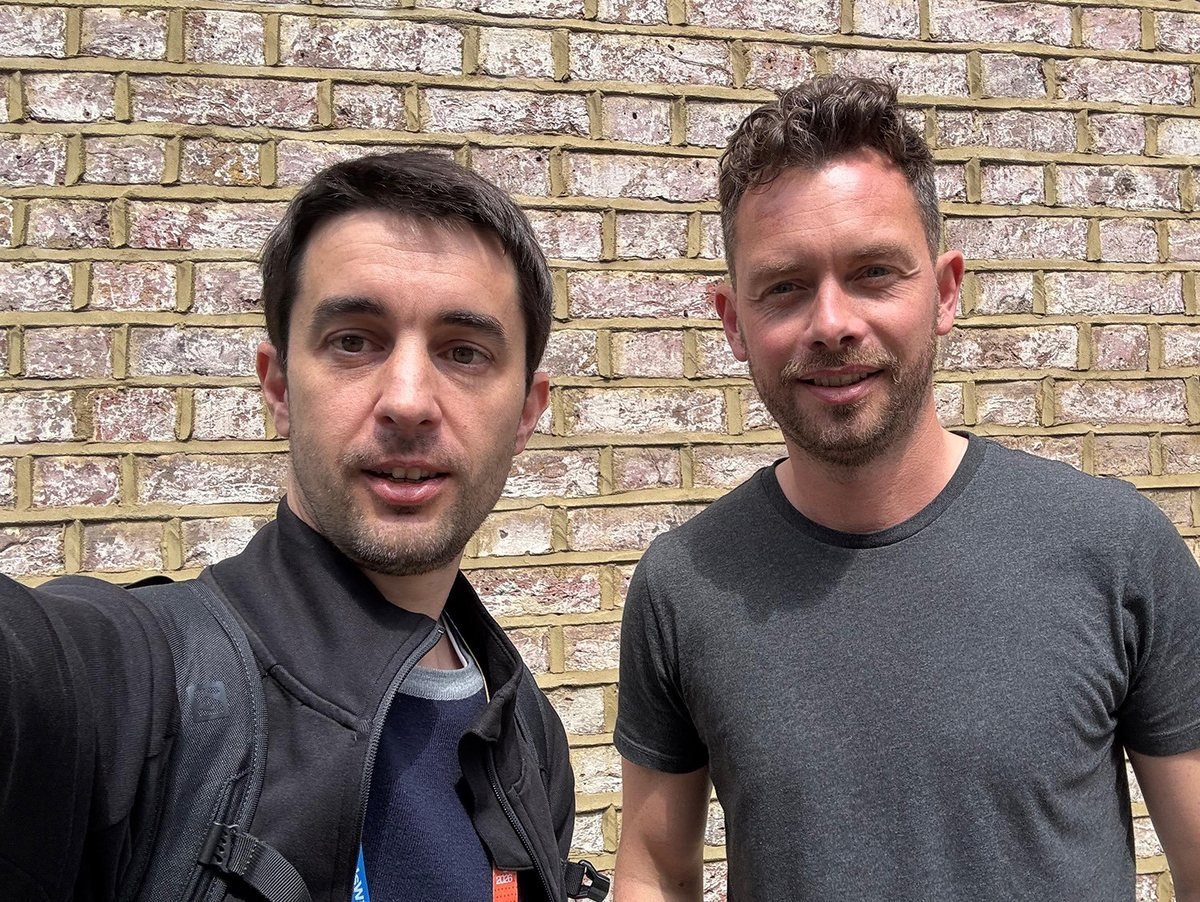
Guillermo:I build GoPod from Paris, and the company is registered in the United States. It is a very small team: I do product, design, development and most of the support, and my co-founder Sam runs email marketing and outbound. Most of our customers are in the US, so a lot of the work happens across time zones. Being this small means I talk to almost every customer directly, which has shaped the product more than anything else.
Startup.talk:How has GoPod grown so far?
Guillermo:Slowly at first, then steadily through 2026. We were around $3,000 in annual recurring revenue in March 2026, around $10,000 in October, and crossed $12,000 in early November. Almost all of it came from founder-led work: personalized emails to podcasters with a free preview of what their site could look like. In September we shipped the third version of our website builder, which made it much faster to get a podcast from RSS feed to a site they are proud to publish.
The product
Startup.talk:Why the name GoPod?
Guillermo:It was originally called Poddi.io. Before we launched, I showed it to an American friend, who pointed out that it sounded a lot like “potty”, as in potty training. That was obviously not good. So I went back to brainstorming, and GoPod felt like a good fit. It sounds like a tech product, but you can also read it as “Go, Pod!”, as in cheering for your show. That is exactly what we do for our customers' shows.
“you can also read it as “Go, Pod!”, as in cheering for your show.”Guillermo Carone
Startup.talk:What do you deliberately leave out of GoPod?
Guillermo:Hosting. GoPod is not a podcast host and we do not ask anyone to move their show. You keep publishing exactly where you do today and the site updates itself from your RSS feed. We also stay away from piling on features. There are dozens of tools we could build on top of a feed, but every one adds complexity, and our customers are mostly not technical. I would rather do a few things very well: a great site, good SEO, and articles that actually represent the episode.
Startup.talk:What is the one detail in GoPod you are proudest of?
Guillermo:The balance between restraint and flexibility. Compared to website builders like Squarespace or Wix, GoPod is deliberately restrained, yet flexible enough that every customer can build a site that really represents their show.
We don't give people thousands of options. They can't change every line height, padding or border radius, because they are not designers, and we want them to have an environment where they can build a site without breaking it. Even so, the sites our customers have made are genuinely unique and personal. Getting that balance right is what I'm proudest of.
“we want them to have an environment where they can build a site without breaking it.”Guillermo Carone
Positioning
Startup.talk:Who is GoPod for, and what job does it do for them? Describe the person who gets the most value.
Guillermo:GoPod is for committed podcasters who already have an archive, usually 20 episodes or more, but no real website. They publish regularly, want to grow, and care about looking professional to guests and sponsors, but they are not technical and do not want to hire a developer. GoPod gives them a website on their own domain that stays in sync with every new episode, makes each episode findable on Google, and turns episodes into readable articles. The person who gets the most value has a show full of useful, specific conversations that people are actively searching for, and nowhere for that search traffic to land.
Startup.talk:How do you view your positioning relative to the other companies in your space? Which competitor do you think of first?
Guillermo:I think of GoPod as Squarespace for podcasts. General builders like Squarespace, Wix or WordPress can do anything, but you have to set up and maintain the podcast part yourself. Podcast hosts give you a basic page, but it is on their domain and it is not built for search. There are also dedicated podcast website builders, and that is where we compete most directly. Our difference is the combination: real care for design and respecting the show's personality, a focus on SEO discoverability from day one, and real people helping you get it right.
Startup.talk:What is your core moat that prevents competitors from replicating what you offer?
Guillermo:Honestly, no single feature is impossible to copy. What is hard to copy is the combination, and the way we work. I have been building and ranking websites for almost twenty years and I run a podcast myself, so the product is built around what actually gets podcast content found. And we help every customer personally until they have a site they are proud of. That service, plus the experience behind it, is slow for a bigger company to replicate.
“What is hard to copy is the combination, and the way we work.”Guillermo Carone
Startup.talk:What are some of the use cases for GoPod that are not obvious and can add a lot of value to users? List as many as possible.
Guillermo:- Turning a back catalog of hundreds of episodes into a searchable library organized by topic, guest or series.
- Using the site as a media kit when pitching sponsors and guests.
- Coaches, consultants and authors using the podcast site as their main business site, with episodes as proof of expertise.
- Adding a podcast section to an existing business website on a subdomain, styled to match it so visitors do not notice the switch.
- Ministries and community shows collecting prayer or listener requests through the site.
- Articles from episodes giving readers who do not listen to podcasts a way in.
- Getting episodes cited by AI search tools like ChatGPT and Perplexity, which read the web, not podcast apps.
- Networks running several shows from one site.
- Keeping a show's archive online and findable after it stops publishing.
The hard part
Startup.talk:How many people or companies use GoPod today?
Guillermo:The number changes quickly, but we are closing in on 100 paying customers, and they are highly committed ones.
Startup.talk:What is a challenging time you had building GoPod?
Guillermo:There have been a few. On the technical side, the biggest one has been, and still is, that customers have to change the DNS settings of their domain to connect it to GoPod. For most people that is a scary step, and it happens outside our platform, where we have the least control. Making it as easy and unintimidating as possible is something we keep working on.
Startup.talk:Who believed in you before there was anything to show? What did they say or do?
Guillermo:Honestly, I have never looked for much outside validation. I have built a lot of things over the years, and not all of them succeeded, but every one of them taught me something. As long as I find what I am building interesting, I keep going. I work on the assumption that if I find something useful and interesting, other people will too. And even if they don't, if I am learning along the way it is usually worth it, because sooner or later I end up applying what I learned, even when it is not clear how at the time.
What building GoPod taught you
Startup.talk:What are the biggest lessons building GoPod has taught you so far? Pick the areas where you learned the most, such as customers, pricing and finance, marketing and distribution, product, hiring and team, or fundraising, and for each one tell us what you believed before, what actually happened, and what you do differently now.
Guillermo:By far the biggest lesson has been the importance of customer experience: onboarding flows, lead magnets and everything around them. I used to think those were for huge websites with tons of traffic, the kind that can run A/B tests all day. It turns out they matter just as much, or even more, for a small service like GoPod. There are many other lessons, but that one stands out.
What it is all for
Startup.talk:What would make you say GoPod has succeeded?
Guillermo:When GoPod is the obvious answer to “how do I make a website for my podcast”, and podcasters keep it for years because it keeps bringing people to their show. In many ways, I already consider it successful because the customers we do have are really happy. Now the next step in the success ladder is scaling it.
The road ahead
Startup.talk:What are your milestones for the next 12 to 18 months, in users and revenue?
Guillermo:Our next milestone is testing new customer acquisition channels and finding alternative ones that work for us in the long term. On users and revenue, I expect us to keep following our current trend. It has not been a straight line: growth was slower at the beginning and then started to speed up. I hope that acceleration continues.
Startup.talk:Where do you want GoPod to be in five years?
Guillermo:In five years I want GoPod to be the default website builder for podcasters. I also hope it grows into something more, maybe events, physical or digital. For many people podcasting is a passion, and when you bring a lot of passionate people together, great things can happen.
Startup.talk:What are your hopes and fears for a post AGI world?
Guillermo:AI is here to stay, and what we have seen so far is only the beginning. That makes the future very uncertain, but I look at it with optimism. I am more excited about building things today than I have ever been. In a post-AGI world, I think community will matter even more than it does today, and I believe GoPod is in a decent position to build on that.
This interview was conducted in writing and has been edited lightly for length and clarity.
About GoPod
GoPod, co-founded by Guillermo Carone and Sam Baldwin, turns a podcast's RSS feed into a professional, search-friendly website on the show's own domain, with articles generated from every episode.
| Attribute | Verified Detail |
|---|---|
| Company | GoPod |
| Founder(s) | Guillermo Carone and Sam Baldwin |
| Country | France |
| Grew up | Barcelona |
| Based | Paris |
| Trained as | Architect |
| Also built | WikiArquitectura |
| Runs | Email marketing and outbound |
More Startups in Spotlight
For founders
Building something? Want to share your journey?
Tell us how it started, what nearly broke it and where it is headed. We will turn it into a story like this one.
Share your journeyFor readers
Want to read more human stories behind the startups?
New founder interviews and stories, as they are published.
Follow us on LinkedIn