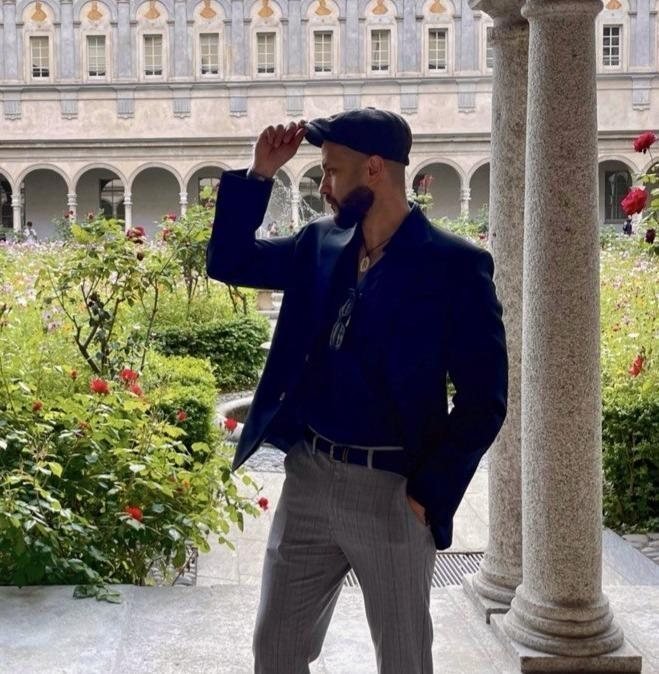
Reehanul Karim grew up in Kovai (Coimbatore), in the south of India, in a quiet family where the questions he asked did not always fit what was expected. A first job at 16, selling for Britannia and talking to schoolchildren, taught him to fear rejection less. Karim trained as an architect, still works as one by day, and lives and builds in Milan, Italy.
TruTalk is an intentional conversation app for people in the same room: one phone on the table deals one question at a time, with modes for couples, friends, families, groups and teams and a printed two-sided card deck on the way. Karim works on the questions with co-founder Maria Caso and hosts question nights in Milan. We spoke about why a question is only as good as the person who chose it, what the app deliberately leaves out, and why human conversation may matter more in an age of AI companions.
Key takeaways
- Every TruTalk question is chosen and approved by a person and dealt from a fixed library; there are no streaks, points or scores, and the app never listens to what is said at the table.
- The app is free on the web, TruTalk+ unlocks premium modes such as Date Nights and Family Ties for €4.99 a month, and a printed deck puts a lighter question on one side of each card and a deeper one on the other.
- Karim runs question nights in Milan, starting with Piano Piano at Open by Joivy in October and Spritz & Stories at Combo in November, and says the plan includes company nights and moving the app to the App Store and Google Play once it passes 100 subscribers.
- Karim treats TruTalk as a social tool, not therapy, and argues that human conversation will become more valuable, if harder to start, as more people talk to AI companions.
Before any of this
Startup.talk:Where did you grow up, and what was childhood like?
Karim:I grew up in Kovai (Coimbatore), in the south of India, in quite an introvert-coded family. Looking back, I was always curious about everything and asked a lot of questions, even when culture and society made sure to keep me in place: rules, mannerisms, how I “ought to be”, and what I should and shouldn’t ask. But that’s where nature trumps nurture. I learned that the quality of the conversations I was having impacted the quality of my life, and in retrospect, that’s what informed my mission now. In the age of digital distraction and rampant loneliness, the importance of being present with each other, and of human connection through conversation, stands out more than ever. That’s why it’s so relevant now.
Startup.talk:What first got you into building things?
Karim:I was an avid art-lover from a young age. I wrote, sketched, painted and created without any bias for medium; my earliest memories are of writing, and of creating landscapes and art about everyday life. I also loved meeting new people. I was still very reserved, but I wanted to reach out nonetheless, so I’d people-watch and imagine stories about the people around me, because I wanted to know the real ones. Creativity and imagination were at the core of my being, and architecture school turned that into a habit. You never really design an object; you design what people do around it. TruTalk™ is the same instinct at a smaller scale: a table, a few people, and what happens between them. And still without any bias for medium: an app, a physical deck of cards, each one a flint for deeper, more meaningful conversations.
Startup.talk:What was your first job, and what did it teach you?
Karim:My first job was something I made myself do at 16, because I wanted out of my comfort zone. I took a small sales gig with Britannia, a biscuit and confectionery brand that also ran charity and social campaigns, so I travelled to schools, handed things out to kids and talked with them, LOTS of them. For someone naturally reserved, it was seven months of pure unfiltered socialising: teachers, kids, strangers on the street, business folks. It taught me to fear rejection less and to put myself out there, and most importantly, it taught me the power of initiative. If you don’t start something, it doesn’t get done. I used that when I built TruTalk™ as a digital product, I use it when I host a table of new people at our events, and, at the very smallest scale, every time I start a conversation with a stranger.
Yes, you might be turned down. Yes, you might get a rude reaction. Yes, you might misread someone who didn’t want to be disturbed. But guess what? You don’t know unless you try. And when you do, sometimes you walk away with something valuable: another story, another perspective, another conversation that might change your mind about something.
The road to TruTalk
Startup.talk:What made you start TruTalk?
Karim:We talk all day, but we rarely get to what actually matters. That tension is a big part of why I started building TruTalk™. I noticed it one evening at a restaurant, on a date. We were having a fun time, really present with each other, and when she stood up to use the restroom, I started noticing the people sitting around us: couples, clearly on dates (it was a restaurant where people come for dates), but were on their phones for long stretches. I imagined they might have had a spat, or that something work-related had come up. The other possibility was sadder: that they’d stopped asking each other questions, stopped leading with curiosity, stopped wanting to explore more and ran evenings on auto-pilot and screen addiction. So I thought, if the “how” is the problem here, that might be solvable. And I started with a simple question: what if it were easier to get from small talk to the good part? Enter TruTalk™.
“We talk all day, but we rarely get to what actually matters.”Reehanul Karim
Startup.talk:Why do you think meaningful conversation is so hard to find in a world that is more connected than ever?
Karim:We didn’t stop needing each other. We stopped bumping into each other. And when we do sit down together, we reach for the easy question. Most questions are doorbells. “How was your day?” The answer is already waiting at the door. A good question has no ready answer: you have to go and find one, and the people at the table get to watch you do it. Research helps here. Across twelve experiments with more than 1,800 people, Kardas, Kumar and Epley (2021) found that people expected deep conversations with someone new to be more awkward than they turned out to be, and underestimated how much the other person wanted to know about them. The awkward part is mostly the prediction.
Startup.talk:How does your training as an architect shape the way you design a conversation ritual?
Karim:Completely. Structure is the key. Architects don’t just design rooms; they design how people move through them. A good building doesn’t drop you into the main hall from the street. It gives you a threshold first, then living, then private quarters. A TruTalk™ night works the same way. You sit at a small table with new people, a bowl goes round, and the first line is easy: say your name, then answer your slip. The deck comes out about twenty minutes later, lighter side first, and the deeper questions come when the table is ready. The night ends with one question the whole room answers. Even the small things are design decisions: friends split up, small tables, the music down a notch.

Startup.talk:What is it like to build TruTalk on the side while leading architecture projects in Milan?
Karim:By day I work as an architect. By night I’ve been building TruTalk™. In practice that means a lot of evenings where I miss going out with friends because there might be a prospective interview, research that needs to be done, designing the aesthetic, planning, prospecting and sometimes procrastinating when you’re close to burnout. But a labour of love is the best kind because you believe in the mission. When you believe in the mission, the vision builds itself. The two feed each other more than you’d think. Architecture gives every job a brief, a budget and a deadline, which is exactly what a side project needs. And TruTalk™ keeps reminding me that every brief is really about people.
The product
Startup.talk:Why the name TruTalk?
Karim:It just happened one day. I’d come back from a networking night where I’d met around 12 to 15 new faces, and most of them asked me the same things: How long have you been in Milan? What do you do for a living? And then everyone stays there, on the porch, and you come away not really knowing anybody. Later I vented a little to a close friend: “Ahhh, I wish people just talked about something that makes them click, or anything really, other than guarded, well-rehearsed small talk bull*. I don’t know ANY of the people I met, just names to faces. Why can’t they just skip the small talk and offer a bit of... true talk for f* sake!” Hence the name.
That’s what we were missing: not more talk, true talk. It’s short enough to say at a table, and the website turns it into an invitation: alright folks, let’s skip the weather and hear some stories. Let’s skip the small talk. Let’s... TruTalk™!
Startup.talk:What does it mean that depth has an order, and how is that built into the card sequence?
Karim:Nobody opens a dinner with “What are you most afraid of?” You start where anyone can answer, then go one step further. That’s hosting, not a formula, and it’s built into everything we make.
In the app, the deeper modes go tier by tier: Go Deeper moves from Icebreaker to Growth to Ask Anything, and Family Ties from Light-Hearted to Reflective to Vulnerable.
On the printed deck, every card has a lighter question on one side and a deeper one on the other, and you decide when to turn it over. At our nights, the first twenty minutes are slips from a bowl, and the deck comes after. The deeper question is always there. Nobody is pushed into the deep end of the pool; instead you’re encouraged to wade in.
Startup.talk:How did working with neuroscience researcher Maria Caso change the prompts?
Karim:Maria is the second pair of eyes on the questions. I’d been collecting a list of questions over the past few decades, but the library still wasn’t what it is now. She came in, looked at the questions from that first list, and went through them meticulously. She flagged the ones that didn’t work and broke down some interesting concepts for me, and I realised that questions can’t be based on vibes alone: they have to make sense in certain settings. She also signed off every card in the printed deck. I’d call her role editorial and advisory more than scientific; the science informs it. She has been incredible, because her mission is also my mission, and fortunately for us, that collaboration translates into a robust product. TruTalk™ is a social tool, not therapy and not a science product, and we’re careful never to claim more than a question can do.

Startup.talk:Why are the cards hand-written instead of generated by AI?
Karim:Because a question is only as good as the person who chose it. Every question in TruTalk™ is chosen and approved by a person before it goes live, and the app never makes one up on the spot: it deals from a fixed library. A machine can write a thousand questions in a minute. It can’t sit at a table on a Thursday night and notice which one made everyone go quiet in the good way, and which one made somebody look at the door. That’s the real test, and it happens out loud.
“A machine can write a thousand questions in a minute.”Reehanul Karim
Startup.talk:Who gets the most value from TruTalk: couples, old friends, families or teams?
Karim:People who already love each other but have run out of new questions. Couples a few years in. Old friends whose dinners have turned into carbon-copy catch-ups. Families who see each other at holidays and end up talking logistics and gossip updates. New people get a lot from it too, which is why we run nights in Milan: when nobody knows anyone, a question on a slip is the opening line. Teams are the newest group for us, and the one I’m most curious about.
Startup.talk:What do you deliberately leave out of TruTalk?
Karim:Most of what apps usually add. No streaks, no points, no scores: nobody wins. No feed to scroll. No notifications, unless you set a reminder yourself. And nothing listens. The app shows the question; the conversation happens out loud, between people. It knows a card was shown, not what anyone said, and I like it that way. We also leave out any promise to fix you. It’s not therapy. It’s a dinner, or an evening, with better questions for better conversations.
Positioning
Startup.talk:Who is TruTalk for, and what job does it do for them? Describe the person who gets the most value.
Karim:The person who brings people together. The friend who organises the dinner or game night and quietly hopes it won’t be the same conversation as last time. The partner who wants a Tuesday to feel like a date. The newcomer in Milan who’d like to meet people without “So, what do you do?” The job is simple: get the table past small talk, gently, without anyone having to be the one who makes it weird. TruTalk™ goes first, so you don’t have to.
Startup.talk:How do you view your positioning relative to We're Not Really Strangers, Paired, The And, Esther Perel's Where Should We Begin and simple lists of conversation questions? Is there another competitor you think of first?
Karim:They proved people want this, and I’m glad they exist. Where we sit is a little different. TruTalk™ is built for people in the same room. We have conversation cards too, but we also wanted to target the one thing in your pocket that takes you away from being present with someone. So we take the device that causes the distraction and turn it into the one that helps with presence: it goes on the table, one question at a time, at the table’s pace. The printed deck puts a lighter and a deeper question on the same card, so you always choose how far to go. And we run nights ourselves in Milan, which keeps us honest about what works out loud. As for lists of questions: a list gives you questions. A ritual gives you a bit of structure, some pace and the right to pass. The competitor I think of first isn’t a company. It’s “How was your day?” (small talk).
Startup.talk:What is your core moat in conversation games?
Karim:Honestly, anyone can write a question. The moat is everything around it. The craft: on the deck, each deeper side echoes its lighter side with a single turn, so going deeper feels like the same conversation, not a new one. The room: we try questions out loud with real people in Milan, so we learn what works at a table, not on a screen. And trust: no streaks, nothing listening, no pitch at the table. None of it is impossible to copy. It’s just slow, and most people won’t bother.
Startup.talk:What are some of the use cases for TruTalk that are not obvious and can add a lot of value to users? List as many as possible.
Karim:Long road trips, two to four hours and beyond: an obvious yet underrated place for great conversations. Whoever isn’t driving reads the card.
Flatmates on slow evenings, chilling in the common spaces.
Game nights that start with board games and turn into fun or deep conversations.
Long-distance couples and families who love talking to each other, but whose calls get used up on everyday details.
A new team’s first week: icebreakers before anyone has made up their mind about anyone.
Language practice: the deck is written in plain English, so learners can play too.
Grandparents and grandchildren, with questions both can answer.
The first twenty minutes of a book club, supper club or community night.
A date where you’d both rather skip the CV or checklist swap. When the question comes from a neutral third source, the agenda goes out the window in favour of curiosity and permission.
On your own, as a prompt for a journal.
Startup.talk:What is the one detail in TruTalk you are proudest of?
Karim:On the app: that it’s stable and accessible, ready to play on the go, whenever and wherever you want, at the flick of a thumb, on the one thing that’s always going to be on your person: your phone.
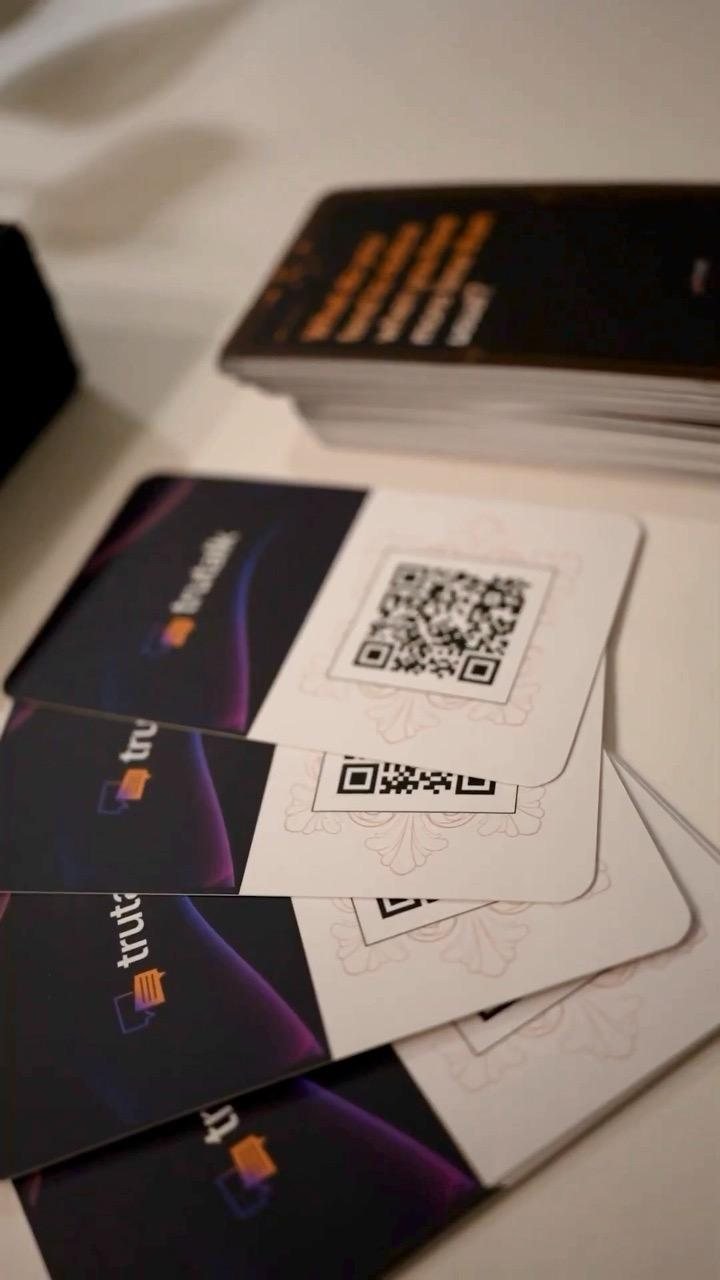
On the deck: the two sides. Every card has a lighter question on the ivory face and a deeper one on the black face. You hold your cards so the table can read your deeper sides, and you can’t. On your turn you answer the lighter question, or you turn the card over and answer the one everyone else has already read. Card No. 04: “Name the place in this city you would show a visitor first.” Turn it over: “What would you miss about this city if you left tomorrow?” By the end of the night, everyone has a row of answered cards in front of them: a record of how far the table went. And every hand has a Pass card, because nobody should have to explain why.
Launch
Startup.talk:What did you learn from the launch?
Karim:That people got the promise straight away, and that the hard part was getting someone to try it, not explaining it.
Startup.talk:Which feedback from the launch surprised you?
Karim:I expected questions about features. Instead, people told me about the last good conversation they’d had, and who it was with.
The hard part
Startup.talk:How many people use TruTalk today?
Karim:It’s early. The app is in beta and free on the web, and we’ve just started running nights in Milan: our first, Piano Piano, was at Open by Joivy in October, then Spritz & Stories at Combo in November. I’ll share numbers once there are a few months of them.
Startup.talk:What is a challenging time you had building TruTalk?
Karim:A small one that taught me a lot: for months, a number in my own dashboard was lying to me. The labels for “finished” and “left early” had been swapped, so I was reading my own data backwards. Since then I treat any number that looks too clean with suspicion, and I count things twice before I say them out loud.
Startup.talk:Who believed in you before there was anything to show? What did they say or do?
Karim:I’m grateful to my partner at the time in late 2024 when I first started building TruTalk™. I played the game with her more than with anyone, so I learned a lot about what worked and what didn’t. She really believed in me, and in the idea that this could be a game-changer for a lot of folks out there: people who struggle to start conversations, loved ones who lack a way to connect better, romantic partners who want to see more facets of their better half, and many more. I’m very grateful to my co-founder, Maria Caso, whom I call my co-dreamer because she believes in the same mission I do; and to the many friends and loved ones who supported me along the way, and still do!
Startup.talk:How will you earn money from TruTalk while keeping the web app free to start?
Karim:The free version is the way in, and the rest is a ladder, each step feeding the next. TruTalk+ unlocks the premium modes, like Date Nights, Family Ties and Team Connect, for €4.99 a month. Off the screen, there are ticketed nights in Milan, private nights for companies and communities, the printed deck once it’s on sale, and an ebook and courses. Then partnerships: B2B team building, live TruTalk™ plug-ins at other people’s events, and plug-ins for dating apps that want something more human-centric on their platform. Later, sponsors and brand partners who want to be part of the nights, as long as nobody pitches at the table.
What it is all for
Startup.talk:What would make you say TruTalk has succeeded?
Karim:When a table keeps going after the last prompt. When two people who met at one of our nights meet again without us. And, practically, when there’s a TruTalk™ night somewhere every week that I’m not hosting. We end our nights with a line, and it’s still my measure: the quality of our lives sometimes depends on the quality of our conversations, so leave the answers here, take the questions with you, and make sure you lead with curiosity!
Startup.talk:Will human conversation become more valuable or less valuable when many people talk to AI every day?
Karim:More valuable, and harder to start. Common Sense Media found in 2025 that 72% of US teens had tried an AI companion. An AI always has time for you, rarely disagrees and never needs anything back. A person might be tired, might push back, might ask you something you didn’t see coming. That friction is the point; it’s part of being known by someone. I don’t think the answer is to fight AI. It’s to make the human version easier to start, which is the whole idea behind TruTalk™.
“That friction is the point; it’s part of being known by someone.”Reehanul Karim
The road ahead
Startup.talk:What are your milestones for the next 12 months, in users and revenue?
Karim:I’d rather not publish user or revenue targets yet; I’ll share real numbers once there are a few months of them. The plan: a TruTalk™ night every week or two in Milan with partner venues and communities, the first company nights, the printed deck on sale, and migrating the app onto the App Store and Google Play once we pass 100 subscribers.
Startup.talk:Where do you want TruTalk to be in five years?
Karim:Beyond the phone, I imagine TruTalk™ as a slim card you keep in your wallet, or find on tables in homes, bars, and offices in cities I’ve never visited.
I want “Let’s TruTalk™” to become a natural invitation when conversations drift into small talk. Just 30 seconds, a little initiative, and a better question.
And eventually, people won’t need the card at all. They’ll simply lead with curiosity, making deeper conversations second nature. That's the vision!
Startup.talk:What are your hopes and fears for a post AGI world?
Karim:My hope is that machines take the work nobody wants and hand us back time, and that we spend some of it with each other. My fear is that we hand them the conversations too, because they’re easier. A machine will never be bored by you or need anything from you, which is exactly why it can’t stand in for a friend. So my hope is practical: that a table, a few people and a real question stay the thing everyone still wants, because it’s the one thing nobody can do for you.
This interview was conducted in writing and has been edited lightly for length and clarity.
About TruTalk
TruTalk is an intentional conversation app for people in the same room, founded by Reehanul Karim in Milan. One phone on the table deals one question at a time, with modes for couples, friends, families, groups and teams, plus question nights in Milan and a printed two-sided card deck coming soon. Free on the web, with TruTalk+ for premium modes. letstrutalk.com
| Attribute | Verified Detail |
|---|---|
| Company | TruTalk |
| Founder(s) | Reehanul Karim |
| Country | Italy |
| Grew up | Kovai (Coimbatore), India |
| Based in | Milan, Italy |
| Day job | Architect and creative technologist |
| Works with | Maria Caso on the questions |
| Funding | Self-funded |
More founder interviews
 Lensiq
 ScaScan
 PickMyVibe
 VoCalm
For founders
Building something? Want to share your journey?
Tell us how it started, what nearly broke it and where it is headed. We will turn it into a story like this one.
Share your journeyFor readers
Want to read more human stories behind the startups?
New founder interviews and stories, as they are published.
Follow us on LinkedIn