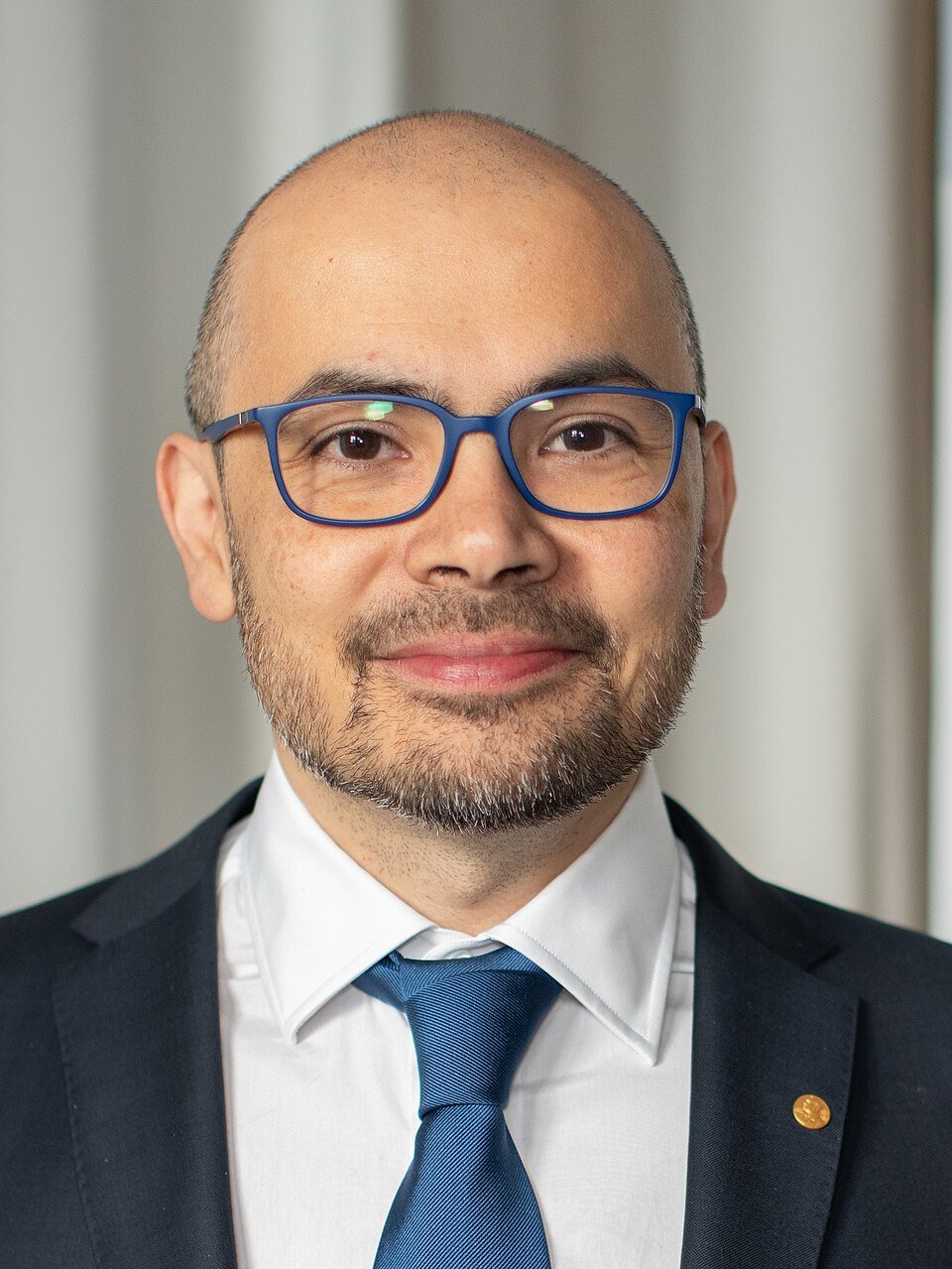
The first computer Demis Hassabis ever owned was paid for with a chessboard. In 1984, aged about eight, he bought a ZX Spectrum 48K with his tournament winnings.
He was born in London in 1976 and grew up in the north of the city, the son of a Greek Cypriot father and a Chinese Singaporean mother. The family name had been spelled Hassapis before he changed it to Hassabis. Chess came first. By thirteen he was a master with a rating of 2300 and captaining English junior teams.
What almost nobody pictures when they see him on a Nobel stage is a teenager in a games studio.
The Spectrum arrived and the board lost some of its hold. He taught himself to program from books and later wrote a Reversi-playing program on an Amiga, his first taste of making a machine decide.
What almost nobody pictures when they see him on a Nobel stage is a teenager in a games studio. After winning a magazine competition he joined Bullfrog Productions and, at 17, co-designed and lead-programmed Theme Park with Peter Molyneux. He is reported to have turned down a seven-figure offer around then, and went to Cambridge to study computer science, graduating in 1997 with a double first.
Games still pulled at him. He worked on Black & White at Lionhead, then in 1998 started his own studio, Elixir. It closed in 2005. A founder who has watched a company he built fold is not the same founder as one who has only risen.
He went back to school, this time for neuroscience. At UCL he took a PhD under Eleanor Maguire, studying memory and imagination, the machinery he wanted AI to borrow from. In 2010 he co-founded DeepMind with Shane Legg and Mustafa Suleyman, and in 2014 Google bought it for around GBP 400m.
The payoff came on a different scale. AlphaFold, the system for predicting protein structures, brought him a share of the 2024 Nobel Prize in Chemistry, with John Jumper, and a knighthood in the same year.
The quiet lesson is how little of the arc was a straight line. A boy with a chessboard, a teenage game designer, a founder whose first company closed, a neuroscience student. DeepMind drew on all of them, and none of it looked like preparation at the time.