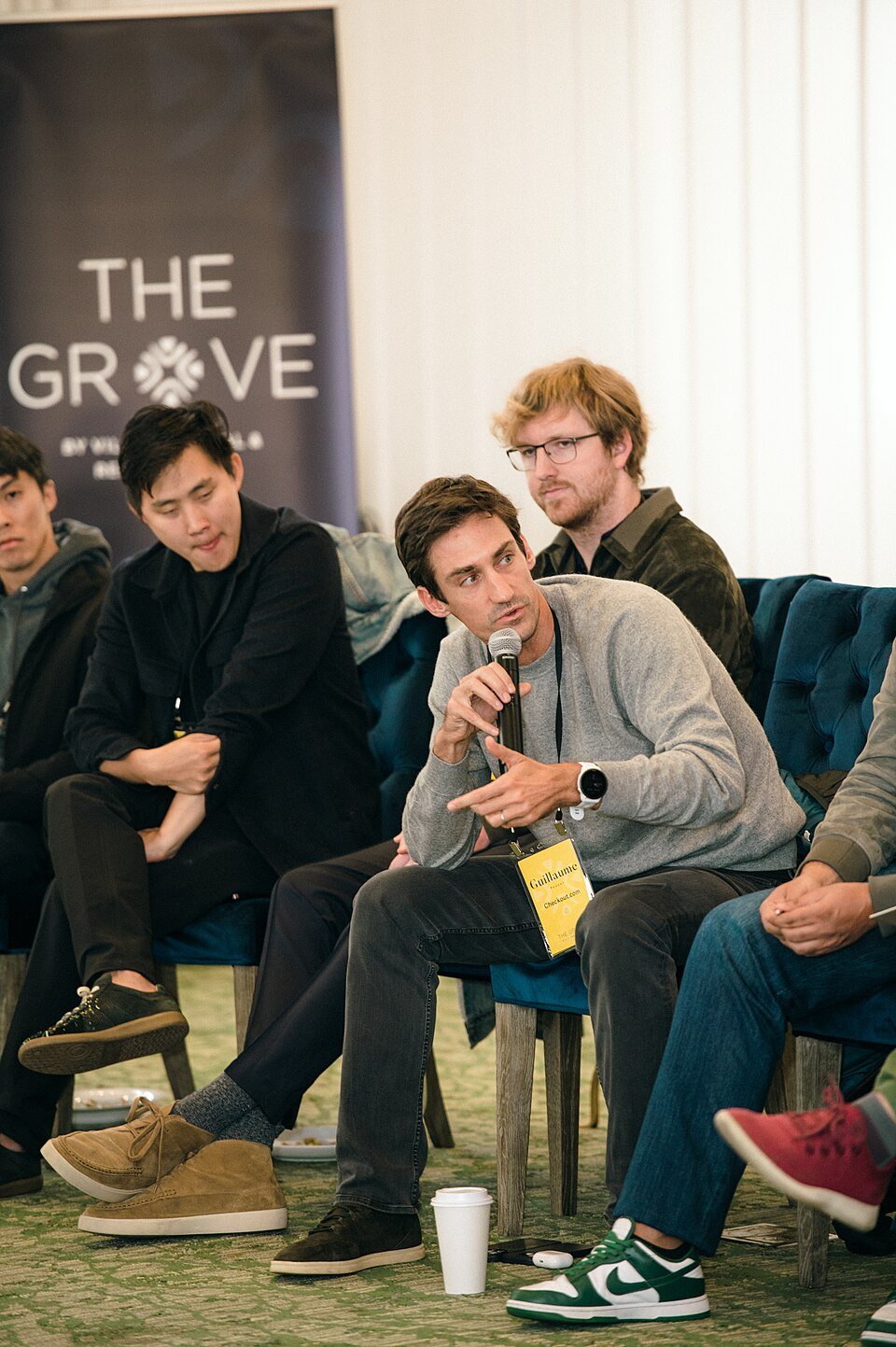
In 2005 Guillaume Pousaz walked out of his economics degree in Lausanne. His father had just been diagnosed with cancer, and the plan he had been following suddenly looked like somebody else's.
That plan was neat. Born in 1981 on the edge of Geneva, he had studied mathematical engineering at EPFL, one of Europe's hardest technical schools, and then started an economics degree at HEC Lausanne. He wanted to be an investment banker, and an offer from Citibank in London was there for the taking.
He wanted to be an investment banker, and an offer from Citibank in London was there for the taking.
He did not take the straight line. After leaving, he moved to California. The reason, as reported, was surfing. The Times later labelled him a quiet surfer. Nobody who has watched his company since would call it idle, but the detour tells you something. A man who walks away from a bank offer because life has just shifted has already decided that security is not the main thing.
What almost nobody remembers is how slowly it started. In 2006 he joined a payments firm, International Payments Consultants. He then co-founded NetMerchant, a service moving money from the US to Europe, which ran until 2009. That year he bought SMS Pay in Mauritius and set up Opus Payments in Singapore. It was small, and it was not glamorous. In 2012 it became Checkout.com.
Then came the unfashionable part. Checkout joined Visa and Mastercard in 2013 and became American Express's global acquirer in 2015. In 2017 it picked up a UK e-money licence. For years there was no big funding announcement. The first large outside round, $230 million, arrived only in 2019, and by January 2022 a $1 billion raise valued it at $40 billion, making it Europe's most valuable fintech startup at that moment.
The fall was just as public. By December 2022 its own internal valuation had been cut to $11 billion, and $9.35 billion the next year. Pousaz, now in London with a wife and three children, had to run a company whose headline value had been cut by roughly three quarters. He did it by getting profitable. In 2024 Checkout reported profit, with core revenue growing 45 percent, and a September 2025 buyback of employee shares put it at $12 billion.
The quiet part of the story may be the useful one. The boy who left school in grief and went to the beach built a company that never needed the world to look at it. For a founder, the lesson is plain: a detour taken for a real reason is not lost time. Pousaz came back to payments with a long view, years of small jobs behind him, and no need to impress anyone in the meantime.