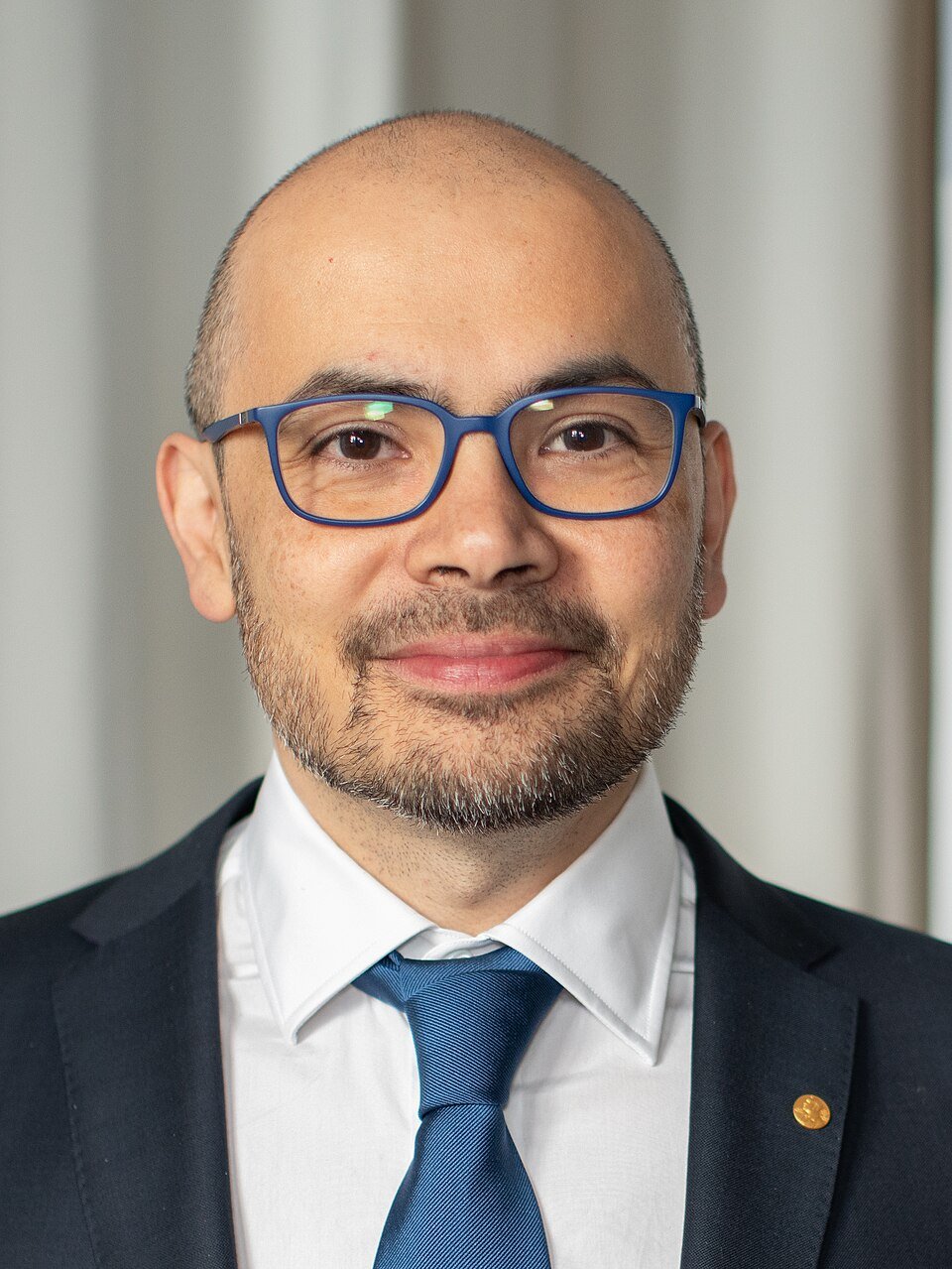
In 1984, an eight-year-old boy walked into a shop with chess winnings and came out with a ZX Spectrum 48K. Demis Hassabis had bought his first computer with prize money, and he taught himself to program it.
The house he came from was not rich. His father, Costas Hassapis, was a Greek Cypriot and an aspiring singer-songwriter who sold toys from a van. His mother, Chinese Singaporean, had been raised as an orphan, trained as a nurse and worked as a retail clerk and part-time cleaner. The family name was Hassapis, which Demis later changed by one letter. Chess was the escape hatch, and he was good: master standard at 13, with an Elo rating of 2300.
His father, Costas Hassapis, was a Greek Cypriot and an aspiring singer-songwriter who sold toys from a van.
At 17 he co-designed and lead-programmed Theme Park at Bullfrog Productions with Peter Molyneux. Success arrived early, and so did an offer. He turned down a seven-figure sum to stay in the games industry, and went to Queens' College, Cambridge, graduating in 1997 with a double first.
What almost nobody remembers is what came next. In 1998 he left Lionhead to found Elixir Studios. It made Republic and Evil Genius, but in April 2005 the studio closed and its technology rights were sold. It was a public failure for someone who had been a prodigy. He went back to school, earned a PhD in cognitive neuroscience at UCL in 2009 under Eleanor Maguire, and began to build the bridge between brains and machines that would become DeepMind.
The turn was AlphaFold. It showed that a machine could predict how proteins fold, a problem that had stalled biologists for decades. Isomorphic Labs was incorporated in February 2021 and announced in November 2021 as a London drug-discovery company spun out of DeepMind inside Alphabet. In January 2024 it signed deals with Novartis and Eli Lilly. In October 2024 Hassabis shared the Nobel Prize in Chemistry with John Jumper.
The money followed in two steps: US$600 million in April 2025, its first external round led by Thrive Capital, and US$2.1 billion in May 2026 with Alphabet, GV and the UK Sovereign AI Fund joining. By February 2026 it said its own drug design engine had beaten AlphaFold 3 on a protein-ligand benchmark.
The real test is still ahead: a drug that works in people. Software scales quickly, but medicine does not.
For a first-time founder, the odd lesson is that the closed studio mattered. Elixir's failure sent Hassabis to neuroscience, and that detour became the thing that nobody else had.