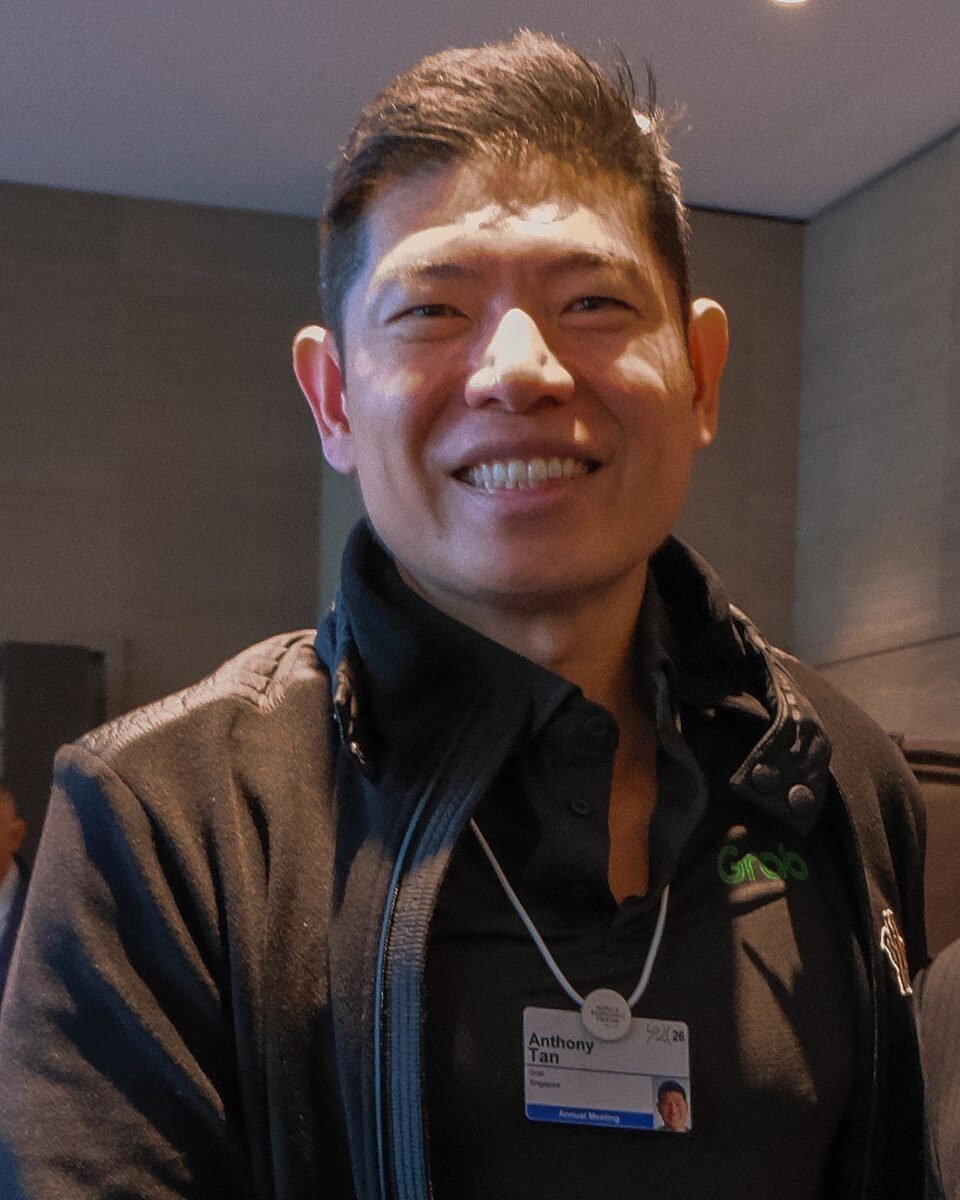
As a boy, Anthony Tan worked on the assembly line at his father's company. His father, Tan Heng Chew, ran Tan Chong Motor, the Nissan assembler and distributor, so the son of the boss spent time among the cars, not above them. At 11 he was already trading X-Men comics for a profit.
He was born in Kuala Lumpur in 1982, studied economics and public policy at the University of Chicago and then worked in supply chain and marketing at the family group. The obvious road led to the top of Tan Chong. He did not take it.
A Malaysian engineer from the University of Bath, she had joined McKinsey, which paid for her MBA, and she owed the firm her return afterwards.
The reason, by his own account, started with a complaint. At Harvard Business School a friend criticised Malaysia's taxis. Tan and his classmate Tan Hooi Ling wrote a business plan for a taxi booking app. It won second prize at the school's New Venture Competition in 2011. Second prize. Not first.
Hooi Ling had her own constraint. A Malaysian engineer from the University of Bath, she had joined McKinsey, which paid for her MBA, and she owed the firm her return afterwards. She has described herself as an introvert who would rather stay out of the spotlight.
In 2012 they launched MyTeksi in Kuala Lumpur, funded by a US$25,000 Harvard grant and Tan's own money. It became GrabTaxi, then Grab. The company moved to Singapore, and the fights began. Taxi drivers and motorbike taxi operators in Vietnam, Malaysia and Thailand pushed back. Regulators took years to catch up. In 2017 the company was hit by safety incidents, including the killing of a driver in the Philippines.
The turn was a war with Uber. In March 2018 Grab absorbed Uber's Southeast Asian business in exchange for a stake, which left Uber with 27.5 percent at the time and Grab with the region. It added food delivery, payments and a digital bank licence with Singtel. In December 2021 it listed on Nasdaq through the biggest SPAC deal then seen.
The price was paid in jobs. Grab cut about 360 people in 2020 and around 1,000 in 2023. Revenue reached US$2.80 billion in 2024, with a net loss of US$158 million, and the company reported its first full-year profit in early 2026.
Tan once walked away from the family business to build something unproven. What he kept from that factory floor is harder to see. The founder who had watched cars assembled by hand built a company that moves people, food and money, and never stopped fixing the parts.