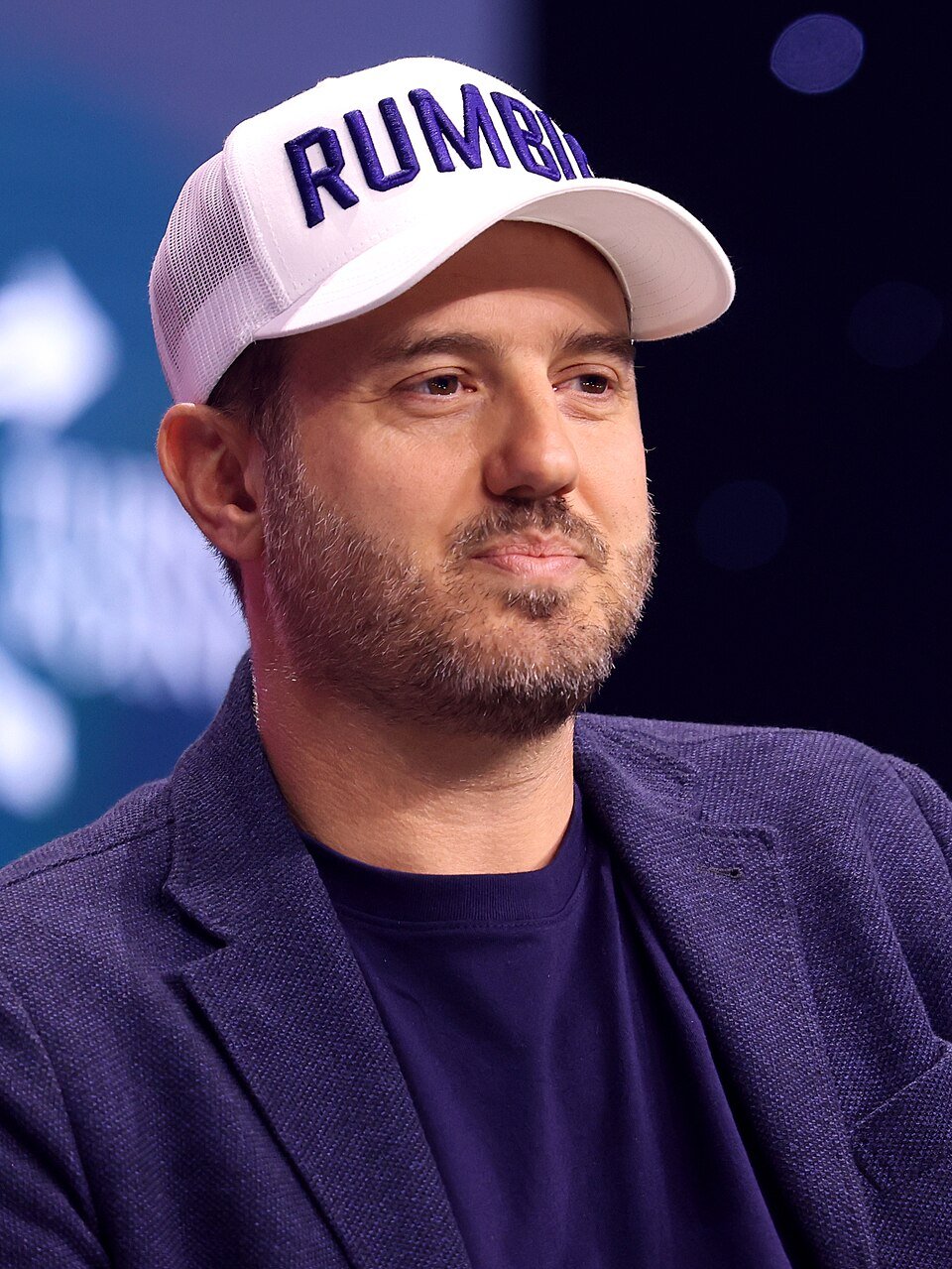
Rumble's founder has spent a decade being described by his critics and his fans. He has rarely described himself.
Chris Pavlovski is a Canadian businessman whose family is from Macedonia. Public record says little more about his early years, and he has kept his private life out of the spotlight. What is documented is that in 2013 he started two companies at once. One was Rumble, launched in Toronto on October 30 as a place where independent creators could upload videos and earn from them. The other was Cosmic Development, an IT services firm. Years later, it would quietly supply the content moderation for the first.
Audiences arrived in waves, many of them people banned or frustrated elsewhere.
The early Rumble was small and unglamorous. It was a challenger to YouTube at a time when YouTube looked unbeatable. For years it grew slowly, sustained by a founder who owned most of it and by a belief that creators wanted a second home.
The turn came from outside. In January 2021 Rumble sued Google for more than US$2bn, claiming its search results favoured YouTube. That May, Narya Capital, backed by Peter Thiel and the then senator JD Vance, put in US$25m at a valuation of about US$500m. Later that year Rumble bought Locals, the creator subscription site. Donald Trump joined in 2021, and in 2022 the platform began hosting Truth Social. Audiences arrived in waves, many of them people banned or frustrated elsewhere.
The cost was reputational and legal. France blocked Rumble in 2022 after it declined to remove Russian state media accounts. The SEC confirmed an investigation in 2024, which the company blamed on short sellers; it was later cleared. Brazil suspended the service in February 2025 after Rumble refused to follow court orders. Critics say the site moderates less than rivals on hate speech and hosts misinformation.
Through it all, the money grew. Rumble went public on Nasdaq in September 2022 through a SPAC merger brokered with Cantor Fitzgerald, and moved its headquarters to Florida in 2023. After the 2024 US election, Tether invested US$775m. Revenue was US$95.5m in 2024, though the company was still unprofitable, and the stock's rise made Pavlovski a billionaire in January 2025.
In 2025 he agreed to buy Northern Data for US$767m, and in June 2026 the company renamed itself RUM Group and added an AI and GPU unit, Quake. The video site that began as a YouTube alternative is now also a bet on computing infrastructure.
For a founder, the quieter lesson sits in that 2013 pairing. Pavlovski built the thing people could see and the thing nobody noticed, the back office that made it run. Controversial platforms are often decided less by the front page than by the boring machinery underneath.