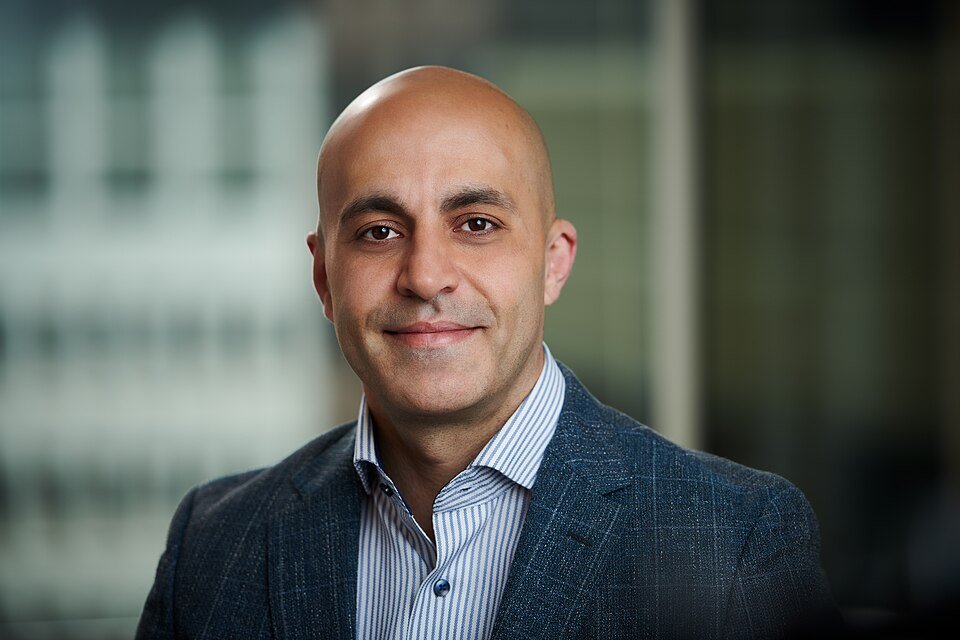
In 2009, a Swedish academic with a start-up behind him arrived at Berkeley as a visiting scholar. Ali Ghodsi was born in Iran in 1978 and educated in Sweden: a master's and MBA at Mid-Sweden University, a PhD at KTH in Stockholm. He had co-founded a peer-to-peer data company, Peerialism, and taught briefly at KTH. Now he walked into a lab full of people working on a problem he would end up making his career.
The lab was AMPLab. Matei Zaharia, a Romanian-Canadian student who had been an ACM programming contest medallist at Waterloo, had built something there that year: Apache Spark, a faster alternative to MapReduce. He was a doctoral student of Ion Stoica and Scott Shenker. Ghodsi worked with all of them and helped start Spark and Mesos.
The tool spread because it was free and fast. But free software does not pay salaries. In 2013, seven people from the project founded Databricks to commercialise it: Ghodsi, Zaharia, Stoica, Andy Konwinski, Arsalan Tavakoli-Shiraji, Patrick Wendell and Reynold Xin. Andreessen Horowitz put in a $13.9 million Series A.
Ghodsi began as president of engineering. The first chief executive was Ion Stoica, who had come to the US in 1994 from Romania to start a PhD, and who in 1995 co-published a scheduling algorithm said to have become the Linux scheduler. In January 2016 Ghodsi took over as CEO, when the company was still raising modest rounds: $33 million in 2014, $60 million in 2016, $140 million in 2017. The sources I read say little about the struggle in those years. What they do show is the order of moves. Run on every big cloud, including Azure from 2017. Keep the formats open, so customers feel they are not trapped. Then build a lakehouse, a blend of data warehouse and data lake.
The money later became enormous. A $1 billion round at $28 billion in January 2021, then $38 billion that August. In December 2024, a $10 billion round at $62 billion. The company bought MosaicML in 2023 and Tabular in 2024, and kept adding AI products.
The pace is the story. In February 2026 Databricks reported a $5.4 billion revenue run rate, growing above 65 percent. By August 2026 it was about $7 billion, and a Coatue-led round closed at a $190 billion valuation. It is still private. Forbes's 2026 list put Zaharia and Stoica at about $5 billion each, and Stoica gave $25 million to Berkeley in 2021.
The lesson for founders is in the order of operations. They gave the technology away first, let it become the standard, and only then charged for convenience around it. The risk is that your best product is free, and you are competing with yourself.