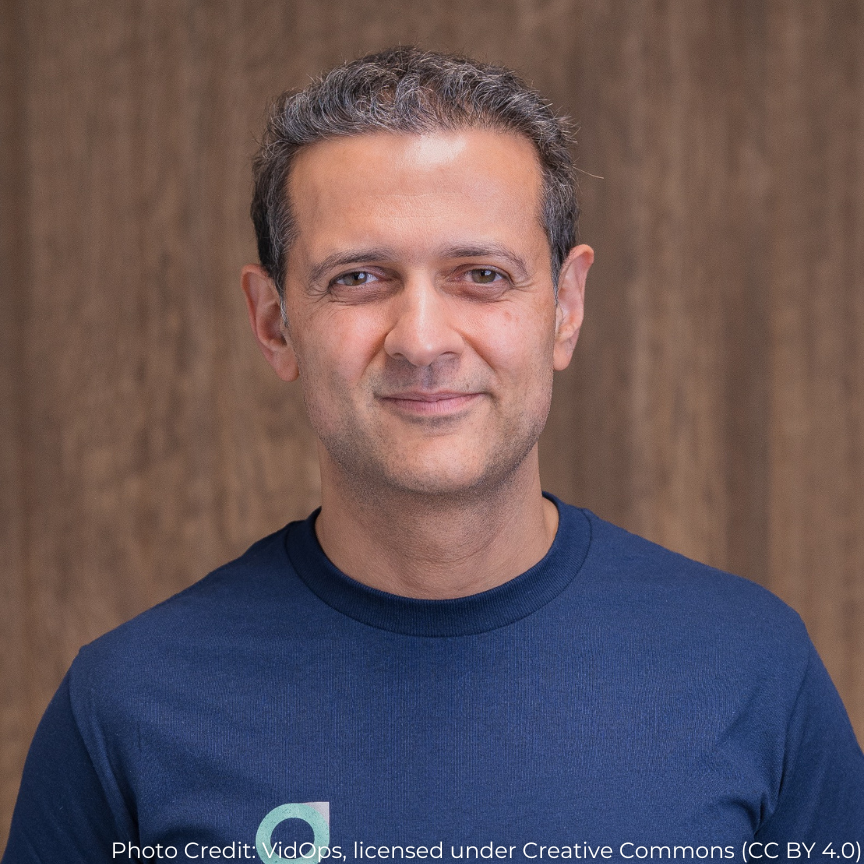
Rishi Khosla walked into University College London in 1992 at just 17.
He was born in London in 1975 and went to secondary school in South Harrow. His father had an engineering degree and later sold construction equipment in the Middle East, which meant long absences and, for a stretch, a household that moved. The family spent time in Delhi, living with relatives. That detail is easy to skip, but it frames a man who would later build a bank for businesses that traditional lenders overlooked.
The bet was that software could assess a growing firm's future, not just its past, so a bank without branches could lend with confidence.
After UCL came a degree in economics and a master's in accounting and finance at the London School of Economics. In 1995 he joined the Dutch bank ABN AMRO, then GE Capital in 1999. Later he worked for Lakshmi Mittal, running a private-equity portfolio focused on fintech. In that job he became an early investor in PayPal. He had seen, from the inside, both how banks decide who gets money and how technology could change that.
What almost nobody outside finance knew was how thin the field was. In March 2015 Khosla and co-founder Joel Perlman, who had earlier built a research firm called Copal Amba, got a full banking licence from the PRA and FCA, making OakNorth the third new British bank in more than 150 years. Products launched in September that year.
Then they did something unusual. In May 2016 OakNorth became the first bank fully hosted on the cloud, working with Amazon Web Services. The bet was that software could assess a growing firm's future, not just its past, so a bank without branches could lend with confidence.
The road was not free of friction. Khosla has lobbied against capital rules that favour large banks. In March 2023 OakNorth submitted a rescue bid for the UK arm of Silicon Valley Bank. It did not win it, yet the move put the name in front of the whole City.
The numbers say the model works. Net income was GBP 159.3M in 2024, and revenue reached GBP 309.9M in 2025. The Financial Times had ranked it first on its FT 1000 list of Europe's fastest-growing companies in 2020, the year Khosla received an OBE. In 2019 SoftBank's Vision Fund and Clermont Group invested $440M.
The insight a founder can take is the simple one buried in his biography. A son of a travelling salesman learned young that opportunity depends on who is willing to look closely at you. Then he built a bank that looks closely.