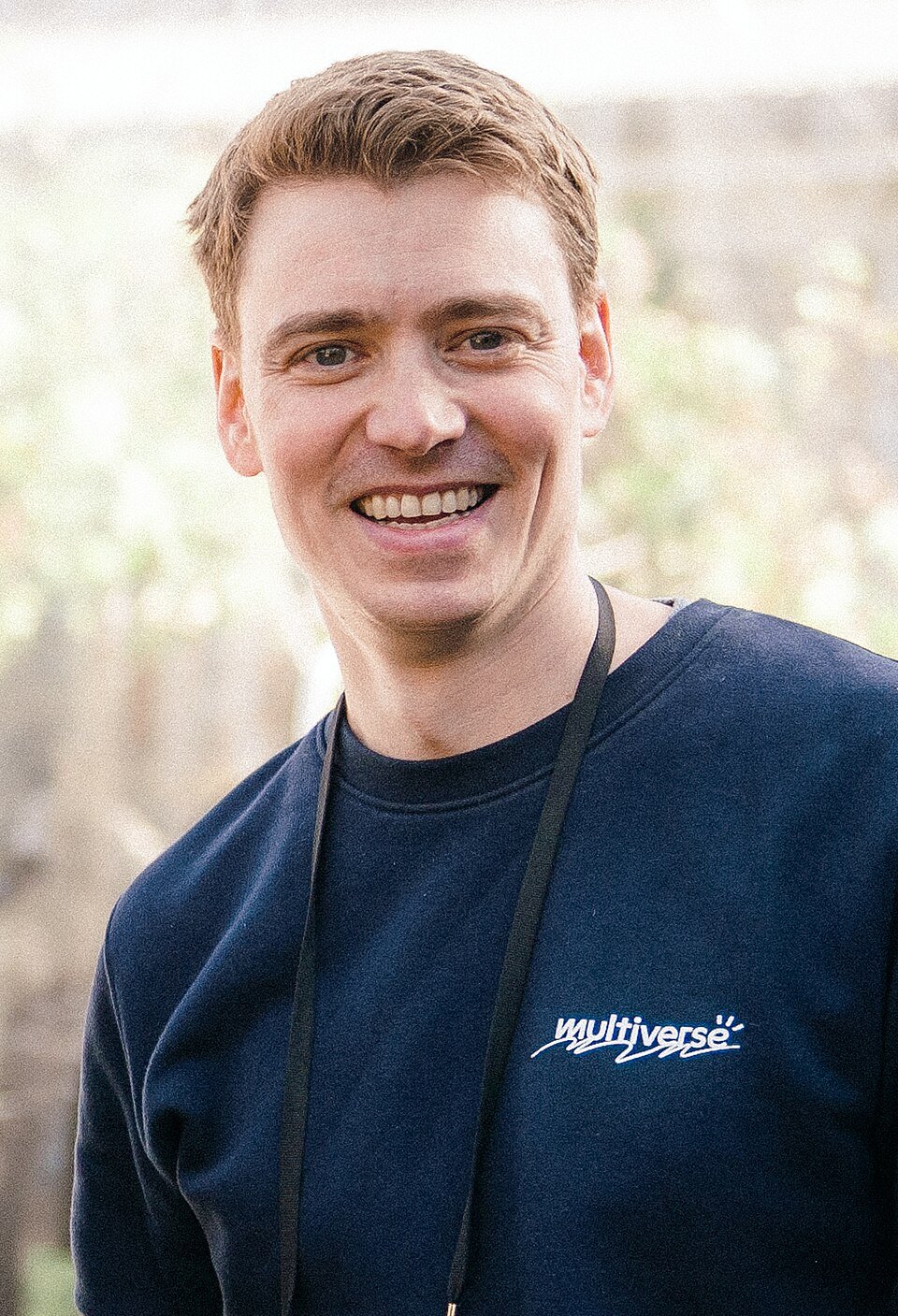
In 2001 Euan Blair applied to Trinity College, Oxford. The papers followed it closely. His parents, Tony and Cherie Blair, complained to the Press Complaints Commission about the coverage, and the complaint was upheld. A 2002 Telegraph headline put the outcome plainly: he misses out.
He was seventeen, the prime minister's eldest son, and one of four deputy head pupils at the London Oratory School. A year earlier, at sixteen, police had found him drunk in Leicester Square after his last GCSE. He apologised and was not prosecuted. Those are the moments the public remembers.
He went to Bristol instead and read ancient history, graduating in 2005 with a 2:1. Then a Yale master's in international relations, paid in part by a GBP 50,000 scholarship. The early jobs read like a politician's son trying doors: an unpaid internship in the US House, another with a Democrat he left after two weeks in 2006, a short stint at a PR firm, a runner's job on a film. None of it stuck.
What almost nobody connects is the pattern. The person who did not get the famous university place went on, in 2016, to found WhiteHat with Sophie Adelman, a company that offers school leavers a different road into work. It launched with a GBP 3 million seed round from Lightspeed in 2018.
The road was not smooth. Losses ran to GBP 40.5 million on GBP 45.2 million of revenue in the year to March 2023, and GBP 60.6 million on GBP 58.4 million the year after. Fortune reported layoffs and a pivot to upskilling in 2024. In February 2026 Ofsted rated the firm 'Needs Attention'.
Yet the company, renamed Multiverse in 2021, hit a GBP 1.2 billion valuation in June 2022, bought SearchLight in 2024 and reported its first cash-flow-positive quarter in early 2026. Revenue reached GBP 79.6 million for the year to March 2025. Blair owns about 20 percent and has appeared on the Sunday Times Rich List at roughly GBP 350 million.
He has not, in anything I read, tied the Oxford rejection to the company. That link is mine to notice, not his to confirm. Still, a founder with an unusually public early failure can build for exactly the people that failure lets you see. The lesson is quieter than redemption: your first rejection can tell you who the product is for.