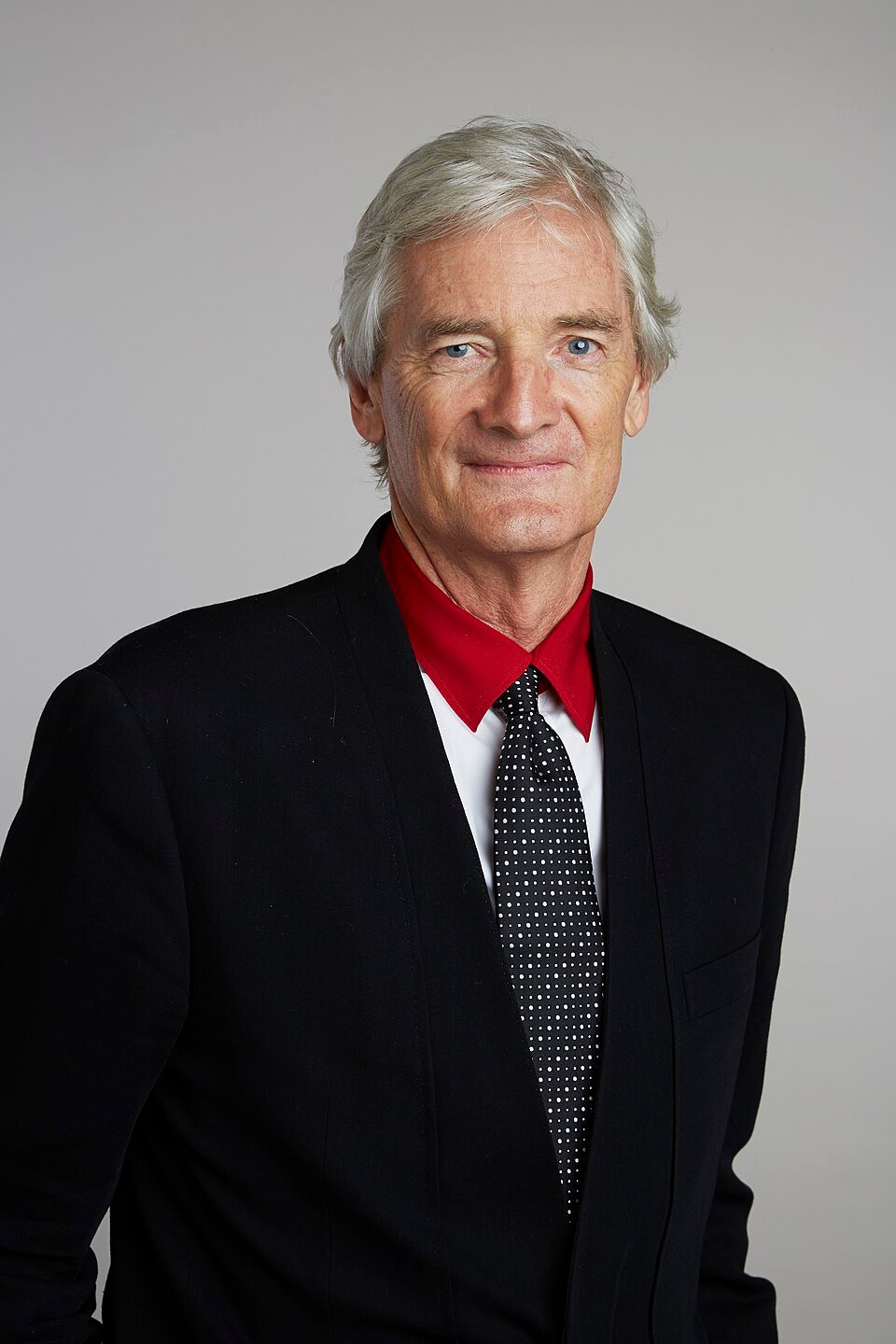
James Dyson was nine when his father Alec died of prostate cancer. The family home, he later said, was penniless. What nobody in Norfolk knew was that a headmaster would decide the rest of his life.
Born in Cromer in 1947, one of three children, he was sent to Gresham's School, a boarding school in Holt. The headmaster agreed to pay his fees. The boy found something there: long-distance running. He has credited it with teaching him determination, the habit of going on when everything hurts.
Nobody in Britain would touch a vacuum without a bag, because bag sales were their profit.
After a year at Byam Shaw School of Art he went to the Royal College of Art, first furniture and interior design, then industrial design. While still a student he worked on the Sea Truck. His first invention of his own was the Ballbarrow, a wheelbarrow with a ball instead of a wheel, and it was featured on the BBC's Tomorrow's World.
The vacuum cleaner began in annoyance. His Hoover Junior clogged and lost suction. He borrowed an idea from a sawmill, cyclonic separation, and then spent five years and about 5,127 prototypes making it work. His wife Deirdre, an art teacher, paid the bills. 'There were 5,126 failures,' he said in a 2007 interview. 'But I learned from each one.'
Then came the part that hurt most. Major manufacturers turned him down. Nobody in Britain would touch a vacuum without a bag, because bag sales were their profit. He took it instead to Japan, where the G-Force, bright pink, sold by catalogue for the equivalent of about $2,000. Only then did he found his own company, Dyson, and the Dual Cyclone became the UK's fastest-selling vacuum.
Success brought wars. In 1999 he sued Hoover and won, with the court finding they had deliberately copied a fundamental part of his patent; Hoover paid £4 million. In 2017 he committed £2 billion of his own money to an electric car, only to scrap it in October 2019. In January 2019 he moved headquarters to Singapore.
Today Dyson is owned entirely by the family, with 2025 revenue of £6.13 billion. Forbes puts his own net worth at $15.1 billion as of September 2026.
The quiet lesson is that a founder's stubbornness is usually built young, from loss and from one person who paid the fees. Persistence is rarely a trait. It is a response to being given a chance and refusing to waste it.