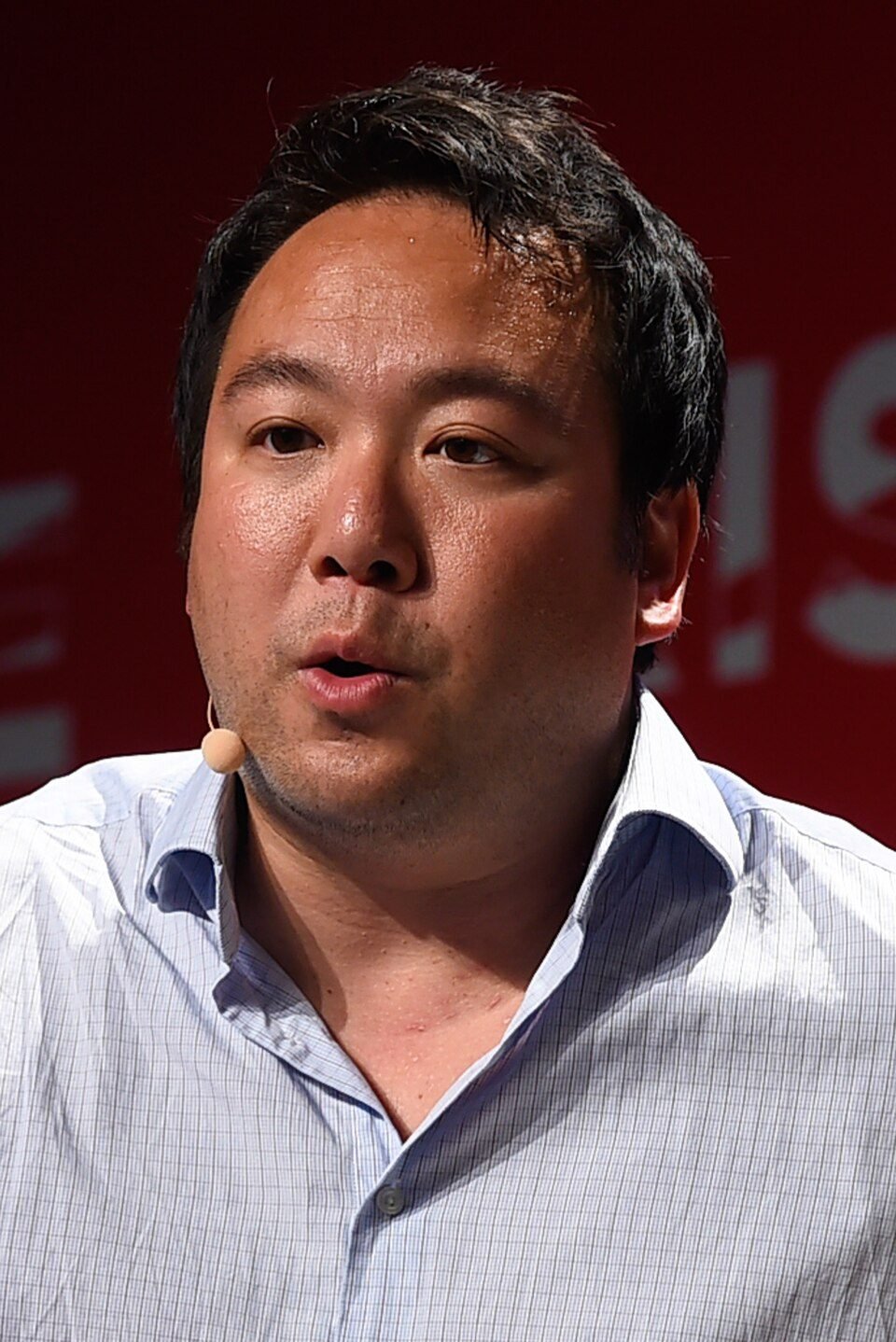
For the first eight months of Deliveroo's life, the chief executive was also the delivery boy.
Will Shu rode the orders himself, every day. Not as a stunt. He wanted to know what the customer felt when a bag arrived late, and what the restaurant felt when a rider showed up and the kitchen was not ready. Almost nobody who later argued about gig-work knew that the man at the top had started the job on a bike.
Years of court cases over pay, sick pay and self-employed status followed.
He was born in Connecticut in December 1979 to Taiwanese American parents, studied at Northwestern, and in 2001 landed in London as an analyst at Morgan Stanley. Banking meant long nights. The office was full of tired people and the delivery options were bleak. He later moved through hedge-fund jobs, then went back to the US in 2010 for an MBA at Wharton. The itch to build something stayed.
He started Deliveroo in 2013 with Greg Orlowski, a software engineer and childhood friend. For two years it grew mainly by word of mouth in London before it opened in Paris, Berlin and Dublin in 2015. Money followed fast: GBP 2.75M in 2014 from Index and Hoxton, then Accel, then rounds so large they became routine, including $575M led by Amazon in 2019.
The fall-out was loud. In 2016 striking London riders gave the company a nickname, "Slaveroo", that outlets later repeated. Years of court cases over pay, sick pay and self-employed status followed. A founder who had once ridden the same streets now had to answer for the people riding them. There were retreats too: Germany, Spain, the Netherlands, Hong Kong, Australia.
The low point was public. Deliveroo listed in London on 31 March 2021 at 390p and closed the day at 284p, down 14%. It was widely called one of the worst debuts in the city's history. At the float the company gave GBP 16M to its most active riders, up to GBP 10,000 each, an acknowledgment, perhaps, of who had built the thing.
Then, calm. By FY2024 revenue was GBP 2,071.9M with a net loss of just GBP 0.1M. DoorDash bid, the boards agreed on a GBP 2.9bn deal in May 2025, and it completed in October.
What stays with me is the habit rather than the exit. Shu reportedly still takes the odd shift himself, every few weeks. Founders talk about staying close to the customer. He literally went back to the street. It is the cheapest form of market research there is, and the one most people stop doing the moment they can afford not to.