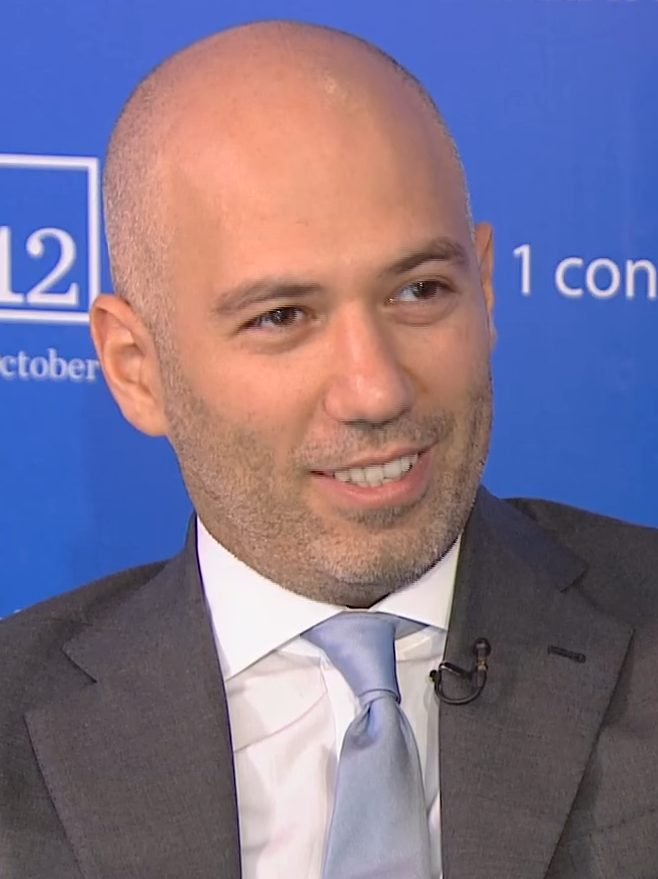
Denis Sverdlov's parents made fan blades for electrical turbines. They were engineers at a state factory in Saint Petersburg, and that is the home he grew up in, after being born in 1978 in the Georgian village of Agara.
He studied economics rather than engineering, graduating from the Saint Petersburg State University of Engineering and Economics. In 2000 he started an IT consulting firm, IT Vision, then co-founded Korus Consulting from 2003 to 2007. Then came Yota, a mobile broadband company he co-founded. Wikipedia records that it reached operating profit within five months of launch, and MegaFon bought it in 2012 for $1.2bn.
The idea was radical: electric vans and buses built in small, low-cost microfactories.
What almost nobody remembers is the next move. Sverdlov joined the Russian government as deputy minister of communications and stayed about fifteen months. He left in 2013 after a law stopped officials from holding foreign assets. He had to choose, and chose his own business.
He moved his family from France to London in September 2015 and founded Arrival the same year. He ran it as CEO from March 2016 to November 2022. The idea was radical: electric vans and buses built in small, low-cost microfactories. He also started Roborace, a driverless electric racing series that folded in 2022.
The peak came in March 2021, when Arrival went public by merging with the SPAC CIIG Merger Corp. It debuted at a valuation of roughly $13.6bn to $13.8bn, the largest listing in British startup history. By April 2021 he was worth $11.7bn on Bloomberg's index.
Then the price turned. By April 2022 he had lost billionaire status, and his 94 per cent fall was called the largest wealth loss outside China in 2021. He stepped down in November 2022. In February 2024 Arrival was delisted and the UK arm went into administration.
The lesson for a founder is how the public market treats a promise. A son of factory engineers tried to reinvent how factories work, but a valuation set on a story is a bill that comes due before the product does.