In 2015 the Transport Ministry banned motorbike taxi apps. By the end of the same day the ban was gone, overturned after President Joko Widodo criticised it. It was the first of many fights Gojek would have with the state, and the cheapest one it ever won.
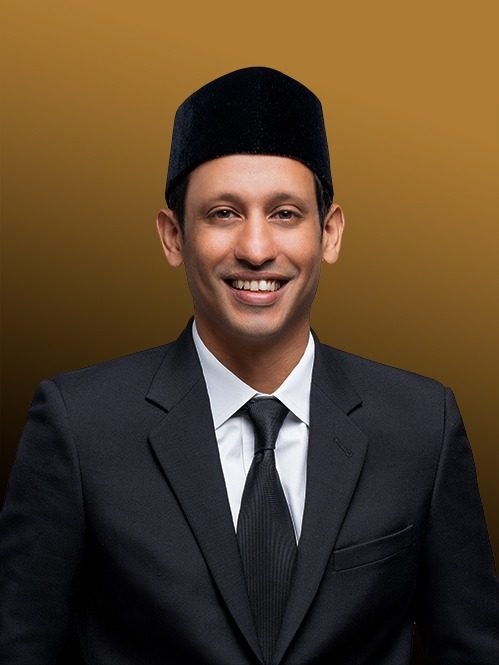
Nadiem Makarim was not supposed to be a motorbike man. He was born in Singapore in 1984 to Indonesian parents, and his mother's father, Hamid Algadri, had been a fighter in the independence struggle. He went to the United World College of Southeast Asia in Singapore, then to Brown University for international relations, then Harvard Business School. He spent about three years at McKinsey. Everything pointed to a boardroom.
What almost nobody remembers is how thin that first version was: a switchboard, a handful of riders and a promise.
What bent the path was the ojek. Back in Jakarta he rode motorbike taxis constantly, and he saw the waste on both sides: drivers waiting for hours with no fare, passengers walking the pavement hunting for one. Before an app existed, he started with a telephone. In 2010 Gojek opened as a call centre with about 20 drivers. A friend from high school, Michaelangelo Moran, designed the first logo.
For years it stayed small and unglamorous. What almost nobody remembers is how thin that first version was: a switchboard, a handful of riders and a promise. Money came late. A first round arrived from NSI Ventures at the end of 2014, then Sequoia India and Northstar in early 2015, just as the app finally launched in January. Nearly 30 million downloads followed within two years.
Then the growth got expensive. Gojek added food, payments and dozens of lifestyle services, and by December 2019 it quietly shut most of the lifestyle ones because growth had stalled. In June 2020 it laid off 430 people. Drivers protested over tariffs and incentives again and again, in 2015, 2018, 2020, 2021 and 2024.
Nadiem himself left in 2019 to join the cabinet as education minister. In May 2021 Gojek merged with Tokopedia to form GoTo, with 2020 gross transaction volume above US$22 billion. Years later his own story turned: he was named a suspect in a ministry procurement case in 2025 and, per reports, convicted in June 2026, which he has denied and said he would appeal.
For a founder, the lesson sits in the 20 drivers. A multi-billion-dollar company did not begin with software. It began with a phone, a few riders and a plain observation about wasted time. The tech came after the pain was proven.