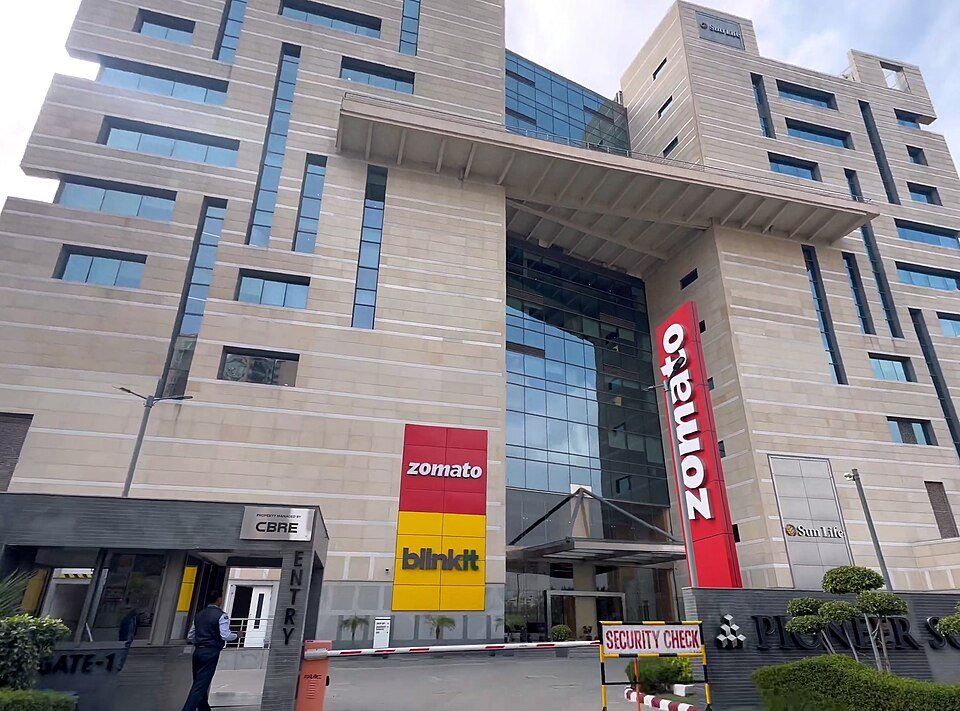
In March 2009, Deepinder Goyal's parents found their son working from home and could not work out why. Their worry grew, and peaked when he told them he had left his consulting job at Bain to build a restaurant website. They urged him to go back to a "job". Years later, he says, they are "extremely happy and proud now".
He came from Muktsar, a small town in Punjab. In 1998 he arrived at a talent-exam camp in Chandigarh looking, as a book on his life puts it, as lost as he felt, and it was there that he met Albinder, the friend who would stay close. After Class 10 they finished school together at DAV College. At a coaching centre for the JEE, both boys were put in the last batch, D. Teachers hardly noticed them, and one had to carry chairs into the corridor so they could see the whiteboard. The book calls it a confirmation of every self-doubt he had carried.
At a coaching centre for the JEE, both boys were put in the last batch, D.
Under the pressure he chose to skip the exam for a year and told a disappointed family. He had always avoided the notoriously hard physics books, convinced he was no good at the subject. Then one day, out of curiosity, he picked up a roommate's copy of HC Verma and got absorbed. Without anything left to prove, he took the exam on a whim and cleared it on his first attempt, and went on to finish an integrated M.Tech in mathematics and computing at IIT Delhi in 2005. When his parents came to help him pack up his PG room, his father, Harbans Lal Goyal, was exasperated by the mess. Above the desk hung a poster that read "I was born to lead, not to be ruled." His father joked that he should first learn to do his own laundry.
It was not his first try at putting food online. Around 2005 he had built foodlet.com, a delivery site that drew hardly any users and was shut after nearly a year. "2005 was way too early," he said in a 2015 interview.
Zomato began with a small irritation. At Bain, colleagues struggled to order lunch from the canteen, so Goyal and Pankaj Chaddah put the canteen menu and nearby restaurants online. That became FoodieBay in July 2008. In its first year it listed more than 1,400 Delhi-NCR restaurants without spending on marketing, and the company, DC Foodiebay Online Services, was formally incorporated on 18 January 2010. In November 2009 the two quit their jobs. Then came an unexpected email from Sanjeev Bikhchandani. He had tracked down Goyal's contact details himself and wrote that he used the site and was a fan. Goyal replied within a day, they met within two, and the deal followed within three. Info Edge's investment in 2010 is reported at about ₹4.7 crore, roughly $1 million. In November that year FoodieBay became Zomato, partly to avoid a clash with eBay and partly because the founders were not sure they would stay with food.
The price of ambition was paid in public. In 2015 a data breach exposed about 62.5 million users, and Zomato cut roughly a tenth of its staff as global expansion proved costly. Chaddah left in 2018. After the 2021 IPO the company retreated from every market but India and the UAE, and later shut its parcel service.
What carried it through was Blinkit and a sharper focus on India. For the quarter ending September 2026 Eternal, Zomato's listed parent, reported a net profit of ₹125 crore, up 92% from a year earlier. One profile reports that in January 2026 Goyal stepped down as Group CEO to chase higher-risk ideas.
The thread through his story is a boy who avoided the hardest subject because he believed he was bad at it, and who cleared the exam once the fear of proving himself was gone. Many founders carry a label like that. It is worth checking whether it was ever true.