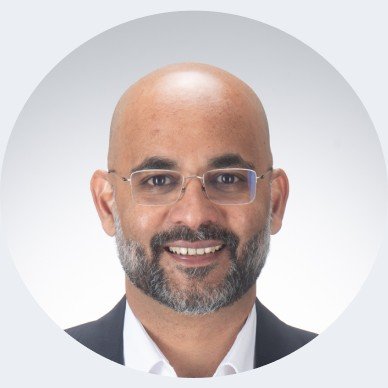
In PhonePe's early days the team worked from what Sameer Nigam calls a "dingy office" outside HSR Layout. There was no parking, and people would come and deflate the tyres of their cars. He tells the story now as a reminder to stay scrappy.
Nigam is "Mumbai born and bred". He met Rahul Chari as an undergraduate in Bombay in 1995, and Chari's wife was a junior of theirs in college. Around 2000-2001, just starting his career in Los Angeles, he met Burzin Engineer. Their first venture together was a digital-content distribution business, Mime360, founded in 2009 and bought by Flipkart in 2011, and before that a music business, and they knew little about the Indian market or the industry. They were, he says, "having a ton of fun building" anyway. It taught them that money in that industry does not come easily.
Their small startup had built a platform that powered Gaana and other companies, even though it made no money.
The next lesson was about letting go. Their small startup had built a platform that powered Gaana and other companies, even though it made no money. "We were just married to the IP," Nigam has admitted. Binny Bansal gave them a month to decide. Within that month, downloads from ordinary consumers topped three years of work on the other side. It was a hard lesson in giving up a dream.
Even the decision to sell to Flipkart was, in his words, "one of the hardest ones in life", though investors were eager to back them. The first meeting had been a leap of faith: a half-day conversation and a handshake with Binny, with the paperwork coming much later. After a long whiteboard pitch from Sachin Bansal, Burzin told the others they were "either just crazy or going to change the world". Rahul, meanwhile, was tired from the Flipkart years and said he wanted a very small team, like WhatsApp.
UPI was a long shot, and Nigam put the odds at roughly "one percent". They took it anyway. The app went live in August 2016 with Yes Bank as its first UPI partner, and on 14 January 2017 ICICI Bank blocked PhonePe transactions. The regulator first told ICICI to restore access, then reversed itself, saying PhonePe had broken UPI norms. By February it was resolved.
He is candid about the culture. He says colleagues argue about product "like cats and dogs", but never personally. During Covid the company kept salaries and bonuses intact.
Today PhonePe has about 700 million users. In the year to March 2026 it earned operating revenue of ₹7,920.5 crore but lost ₹2,792 crore, and in March 2026 it deferred a planned IPO of about $1.3 billion.
The reveal is in the 'married to the IP' moment. Many founders cling to the thing they built even when users are voting for something else. Nigam's team had a month to look at the numbers, and the numbers answered.