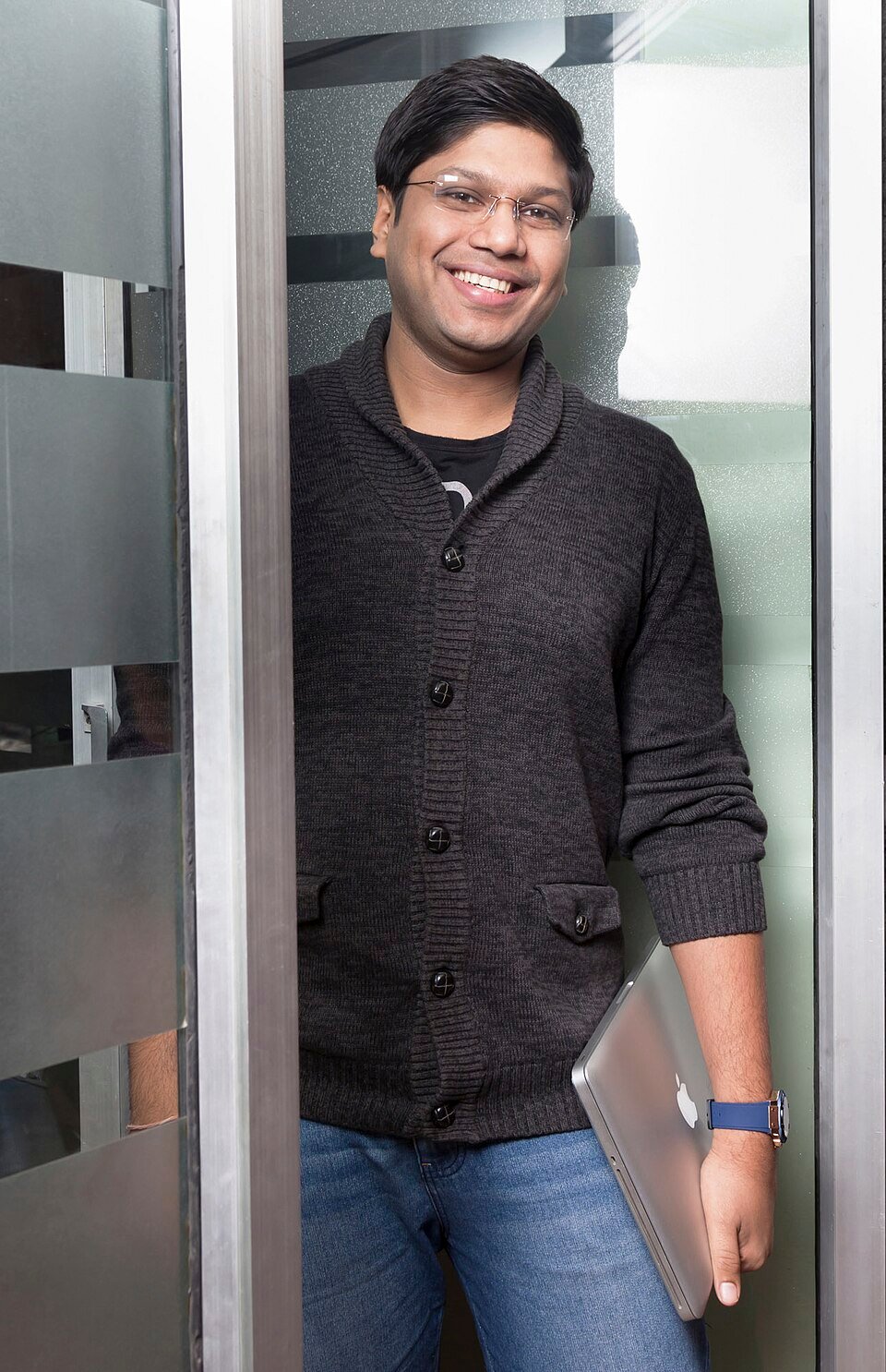
A venture capitalist asked Peyush Bansal for a business plan. He did not have one. In a conversation with Blume Ventures, Bansal recalled that his team said they could prepare it, and the investment was signed within about a week.
That was the company at the start: 14 freshers working out of the garage of his parents' house in Greater Kailash, New Delhi. Bansal was born in New Delhi in 1985 and went to Don Bosco, then to McGill in Montreal for electrical engineering. He landed at Microsoft in the United States, work he has described as solving big problems. In 2007 he quit that well-paid job and came home.
That was the company at the start: 14 freshers working out of the garage of his parents' house in Greater Kailash, New Delhi.
What pulled him back was a line he had read: India is "the blind capital of the world." Many people who needed glasses simply did not wear them. He has said his mission is to help make 50% of India see clearly. Yet the first things he built had nothing to do with eyes. Valyoo Technologies, registered in 2008, began with a college classifieds site, then a US e-commerce play. Lenskart.com arrived in November 2010, selling contact lenses.
Then came the years of too many bets. Investor advice to copy Titan's playbook produced Watchkart, Bagskart and Jewelskart. Eyewear took only about 30% of the team's effort, even though the other lines brought in most of the revenue. It was Ronnie Screwvala who suggested he concentrate on glasses. Bansal chose Lenskart, which meant giving up about 80% of revenue almost overnight. By the end of 2014 the side businesses were closed.
The next wall was fear. Many customers were afraid of eye tests, and people browsed the website without buying. His answer was to open stores and offer free eye check-ups, and over time to build its own factory and store network. SoftBank's $275 million in December 2019 made it a unicorn.
Success brought its own trouble. Franchise owners in Karnataka filed an FIR in October 2024 alleging unfair practices, including company stores opening near theirs; the High Court stayed the probe in January 2025. In April 2026 an internal style guide set off a social media storm, and Bansal called it a training draft.
Lenskart listed in November 2025 at ₹402 a share, opened soft near ₹390, and by May 2026 had a market value of about ₹86,800 crore. FY25 revenue was ₹6,652 crore. The hardest decision in its history was not what to build but what to give up: a company that kills 80% of its own revenue to bet on the one thing it believes in.