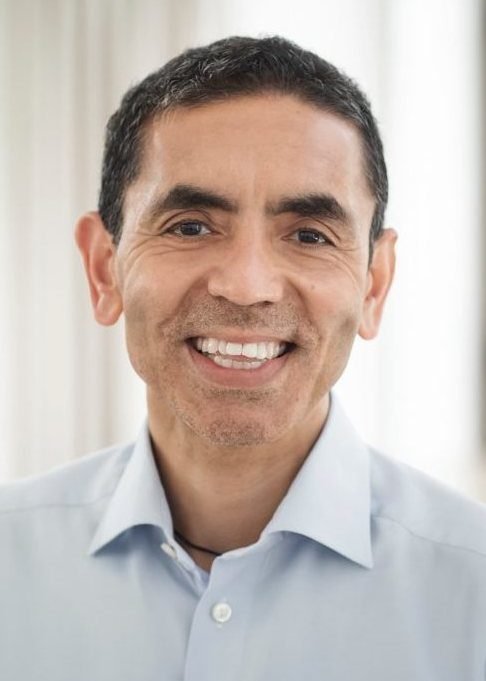
A teacher looked at a Turkish boy in Cologne and recommended the lowest secondary school.
Uğur Şahin had been born in İskenderun in 1965. At four he moved with his mother to Germany to join his father, who worked at the Ford factories in Cologne. He loved football and borrowed popular science books from the library. When it came time to choose a school, his primary teacher suggested a Hauptschule, the track that leads away from university. It was a German neighbour who stepped in. Şahin went to the gymnasium instead.
Fox Business reported that they left the lab at lunchtime to marry at the registry office and were back in their white coats afterwards.
What almost nobody remembers when they tell the vaccine story is that it did not begin with a virus. It began with two doctors in Homburg. Şahin, by then a hematologist and oncologist, met Özlem Türeci, a medical student at Saarland University Hospital, born in Siegen to a surgeon from Istanbul. As a child she had been inspired by the nuns who worked at her father's Catholic hospital. What they shared was a belief that the immune system could be taught to hunt tumours.
They co-founded Ganymed in 2001 and married in 2002. Fox Business reported that they left the lab at lunchtime to marry at the registry office and were back in their white coats afterwards. In 2008 they started BioNTech in Mainz, with money from the Strüngmann brothers that outlets put between €150m and €180m. Katalin Karikó, a future Nobel laureate, joined in 2013. The company listed on Nasdaq in October 2019.
Then, in January 2020, they put the company's effort behind a COVID vaccine. They called it Project Lightspeed. They paired with Pfizer, started trials in April, and announced 95% efficacy in November. By August 2021 the market value had briefly passed US$100bn. Bloomberg put Şahin's fortune at US$7.22bn in February 2022. He and Türeci became the first Germans of Turkish roots among the country's hundred richest. The family reportedly lives modestly.
The price came afterwards. A vaccine offer disclosed in 2021 had asked for €54.08 per dose in June 2020, and the price was later cut to €19.50. Demand collapsed. For 2025 the company reported revenue of €2.87bn and a net loss of €1.14bn. In May 2026 it announced it would end COVID vaccine production in Germany and close several sites, shifting toward oncology. In March 2026 it was reported that Şahin and Türeci would leave by the end of the year to start a new biotech.
The boy who nearly missed the gymnasium ended where he began: in a lab, working on cancer. The lesson is not that talent breaks through. It is that someone, a neighbour in this case, has to open the door at the right moment, and you must remember to hold it for others.