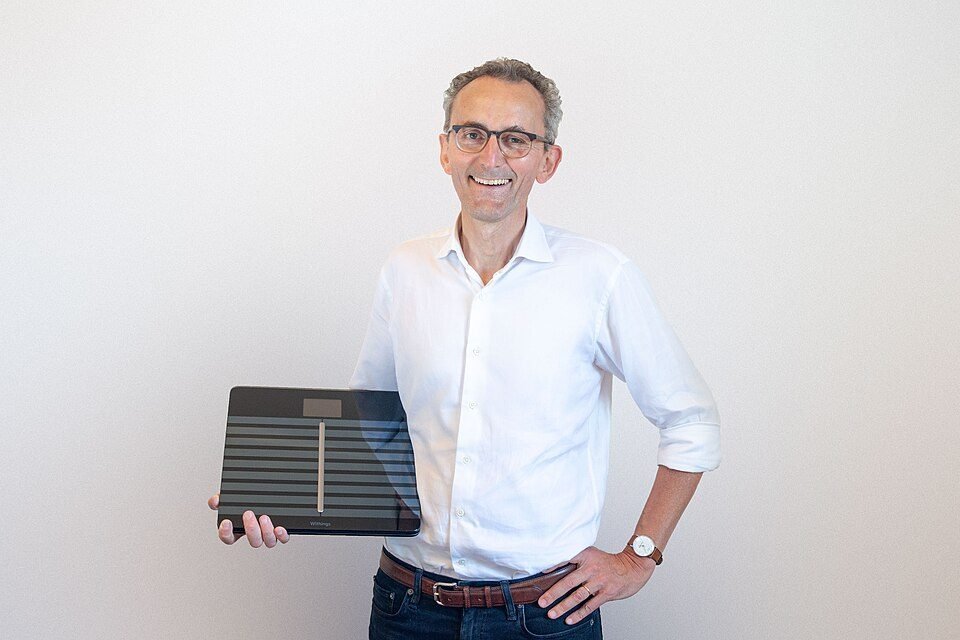
On 31 May 2018, Éric Carreel got back a company he had already sold.
He had been born in Amiens in 1959 and trained as an engineer at ESPCI in Paris, graduating in 1984. After a stretch in radio research he founded Inventel in 1990 with the physicist Jacques Lewiner. Inventel built the Livebox for France Télécom, and Thomson bought it in 2005. He could have stopped there.
An internal memo, reported at the time, said the business had struggled to scale.
Instead, in June 2008, he co-founded Withings with Cédric Hutchings and Frédéric Potter. The first product was a Wi-Fi body scale in 2009, billed as the first connected scale. A blood pressure monitor came in 2011, a baby scale in 2012. Ventech put in $3.8 million in 2010, and a $30 million round in 2013 brought Bpifrance, Idinvest and 360 Capital to the table.
Then came the offer that looked like victory. Nokia agreed in April 2016 to buy Withings, reportedly for about $192 million. Hutchings moved to Silicon Valley to run Nokia Digital Health. The Withings name was phased out; by June 2017 it was gone.
What happened next was costly. Nokia wrote down $164 million, almost the entire purchase price, in October 2017. An internal memo, reported at the time, said the business had struggled to scale. Nokia wanted to return to its telecom roots and began a strategic review.
Carreel stepped in. In May 2018 he bought the health business back and relaunched Withings in September. The price was never disclosed. About 200 people came with it, mostly at the Issy-les-Moulineaux headquarters. Hutchings did not join; Carreel said he was working on another project. Asked by VentureBeat what had gone wrong, he declined: he had no comment on what was in the past.
The second life was quieter and more medical. Body Scan won FDA clearance in 2023, a urine-testing device called U-Scan followed, and the company bought Impeto Medical and the fitness app 8fit in 2022. Maddyness reports the company reached profit in 2025, seven years after the restart. Not every move has pleased users: from October 2026, new accounts need a paid Withings+ subscription for automatic sync to outside apps, and customers complained.
For founders, the lesson is in the order of events. The exit was not the end of the story; the buyer's retreat became the founder's second chance. He did not argue about why it failed, he went and fetched it back.