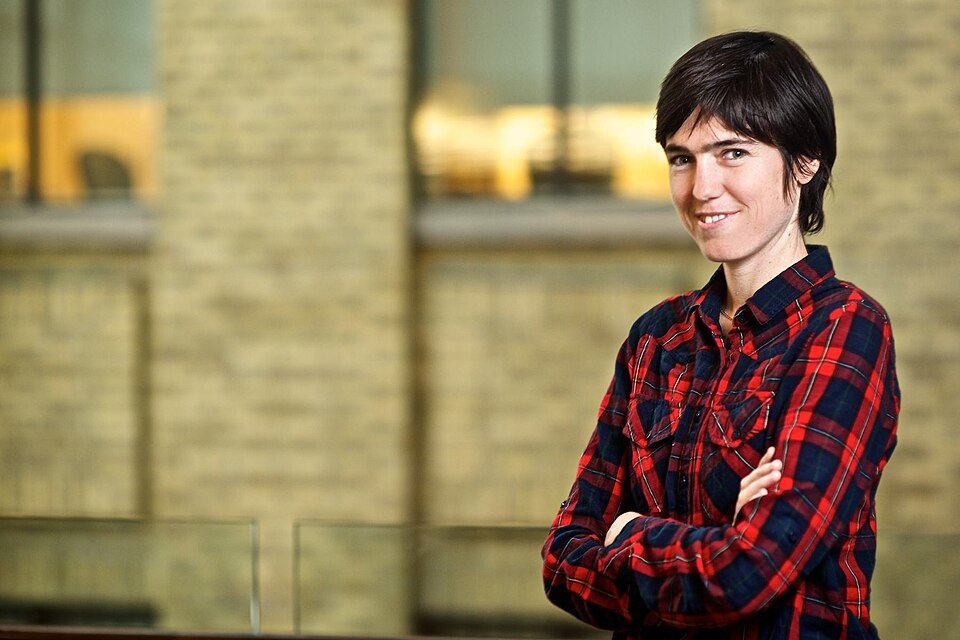
Raquel Urtasun was born on 30 January 1976 in Pamplona, Spain, and did not arrive in Canada until 2014. She was thirty-eight, a professor with a doctorate from Switzerland, two postdocs behind her and years at a Chicago institute. Seven years after landing she was running one of the best-funded startups in the country.
The path was long. A degree in telecommunication engineering in Navarra in 2000. A PhD at EPFL in 2006. A postdoc with Trevor Darrell at MIT and then at Berkeley. Then Toyota Technological Institute at Chicago, where she taught from 2009 until she moved to the University of Toronto. There she co-founded the Vector Institute alongside Geoffrey Hinton, and became one of the more visible faces of Canadian AI.
Rather than collect ever more road miles, Waabi would build its driver inside a simulator and use generative AI to make the testing realistic.
In 2017 Uber hired her as chief scientist and head of R&D for its self-driving unit. It was a front-row seat to how hard the problem is. What she did next is the record: she left Uber in 2021 and started Waabi.
The pitch was a different recipe. Rather than collect ever more road miles, Waabi would build its driver inside a simulator and use generative AI to make the testing realistic. The first big cheque, US$83.5 million in June 2021 led by Khosla Ventures, was the largest Series A in Canadian history. In 2022 came Waabi World, the simulator itself.
Partners followed the logic. Nvidia worked with it from March 2024. A US$200 million Series B that June was led by Uber and Khosla. In February 2025 Volvo Autonomous Solutions signed on, and in October 2025 the Volvo VNL autonomous truck was launched. In January 2026 came a US$750 million Series C and a separate US$250 million from Uber linked to deploying 25,000 robotaxis.
The price of a big bet is time. Autonomous driving has swallowed billions and humbled many companies, and Waabi is still trying to prove at scale what its simulator promises. Urtasun has been recognised along the way: a place on Time's 2023 list of influential people in AI, the Order of Ontario, a Fellowship of the Royal Society in 2026.
For a founder, the lesson is about the late start. She did not build a company in her twenties. She built one after she had spent decades learning a problem and watched a giant fail to solve it the usual way. Experience was the asset.