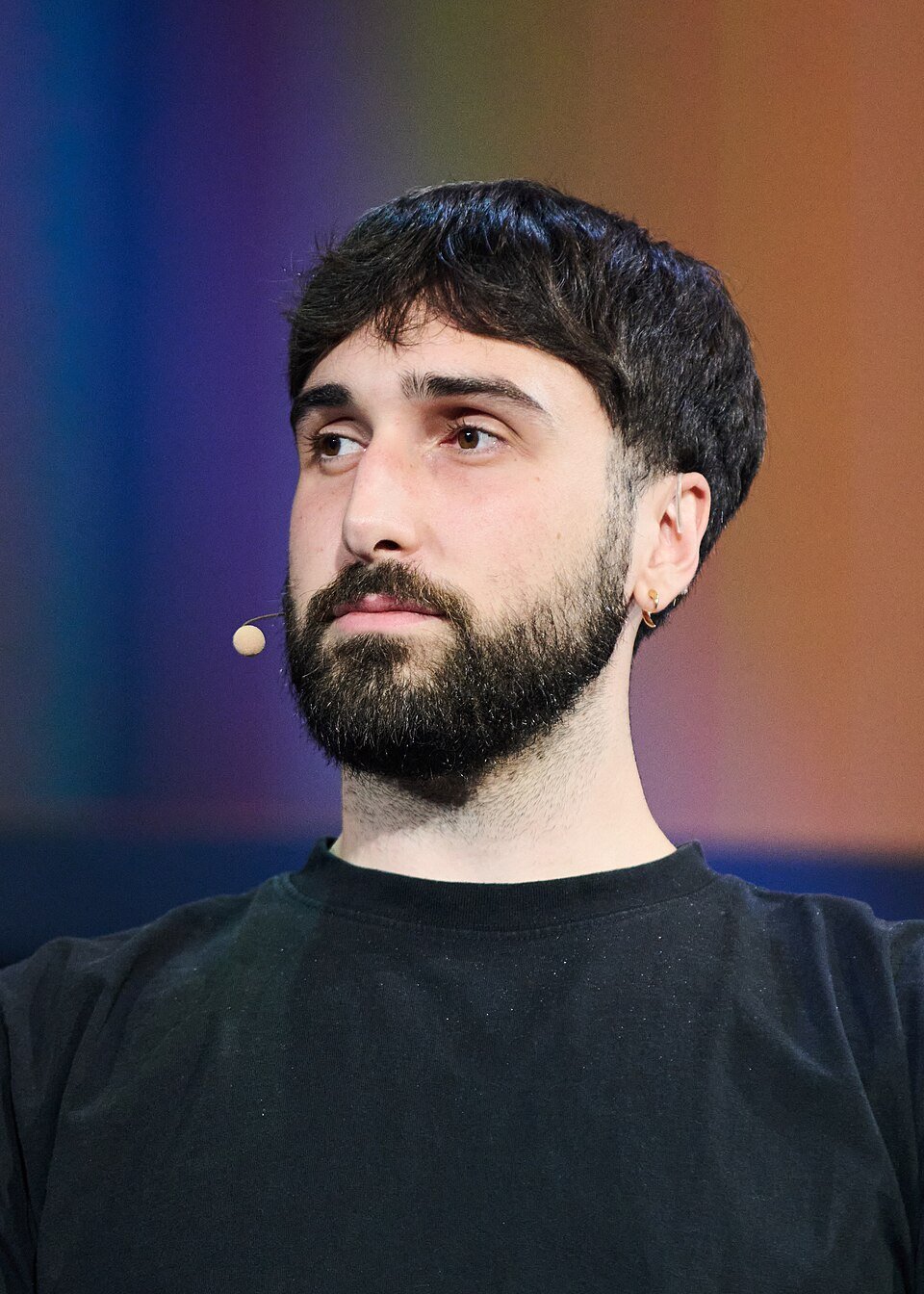
At twenty, Aidan Gomez was an intern. His name was on one of the most consequential papers in modern computing.
In 2017 he was at Google Brain, one of eight authors of 'Attention Is All You Need', the paper that introduced the transformer, the architecture underneath today's chatbots. He was the youngest in the room by a distance, and probably the only one who still had undergraduate exams in his recent past.
What almost nobody anticipated was how hard it would be to raise money at home.
He came from small-town Ontario. Born in Toronto, he grew up in Brighton, then returned to study computer science and mathematics at the University of Toronto. He later went to Oxford to work on a PhD. At Toronto he worked with Ivan Zhang at FOR.ai, a research collective, and he knew Nick Frosst, a Google Brain researcher, from the same Toronto circle.
The pull of a startup was strong, and the cost was real. In 2019 the three founded Cohere, and Gomez paused the Oxford doctorate to do it. He finished the degree only in 2024, five years into running a company, something few chief executives can say.
What almost nobody anticipated was how hard it would be to raise money at home. The New York Times reported that Cohere struggled to attract US investors, even as capital poured into rivals. Early backers, though, believed: Index Ventures led a US$40 million Series A in September 2021, and Tiger Global led US$125 million in 2022. By June 2023 the valuation had reached US$2.2 billion, with Oracle, Salesforce and Nvidia on the cap table.
It has not been smooth. In February 2025, 14 publishers, including The Atlantic, Conde Nast and Forbes, sued for copyright infringement over alleged unauthorised use of their content. The company has also been pushed toward a deal with Germany's Aleph Alpha, backed by US$600 million from Schwarz Gruppe, which the Times said would value the combined business near US$20 billion.
Revenue has grown from an annualised US$22 million in March 2024 to a reported US$240 million in February 2026.
The quiet lesson in Gomez's path is that timing can turn a junior into a founder. He did not wait for a title. He simply happened to be in the room, did the work, and then, unusually, built on it himself.